The best 3-bank boat battery chargers provide independent charging for multiple 12V batteries, with clear modes for lead-acid, AGM, calcium, and lithium chemistries. This guide analyzes five top options to fit cruising, fishing, and day-use boats. Choose this if you need reliable on-board maintenance, temperature compensation, and protection features. The table below summarizes key specs to help you compare at a glance.
| Product | Total Amps | Per Bank | Battery Types | Notes |
|---|---|---|---|---|
| NOCO Genius GEN5X3 | 15A | 5A / bank | Lead-Acid, Lithium | Waterproof marine design; multiple charging modes |
| FirstPower Pro Upgraded 3 Bank 10X3 | 30A | 10A / bank | Lead-Acid, Lithium | IP68 waterproof; Force Mode for dead batteries |
| SOARFLY 3 Bank 30A | 30A | 10A / bank | Lead-Acid, Lithium | Three independent banks; 3 charging modes |
| anegine 3 Bank 30A | 30A | 10A / bank | Lead-Acid, LiFePO4, Lithium | IP68 waterproof; Force Mode for dead batteries |
| Minn Kota 1823155 MK 315D | 15A | 5A / bank | Lead-Acid, AGM, Li-ion | Automatic temperature compensation; digital control |
Each option targets different needs: compact offshore-ready units for smaller boats, higher-capacity multi-bank chargers for larger vessels, or models with advanced repair modes for long-term battery health. The following sections detail five top choices with clear pros, who they’re best for, and practical limits.
NOCO Genius GEN5X3: 3-Bank Charger
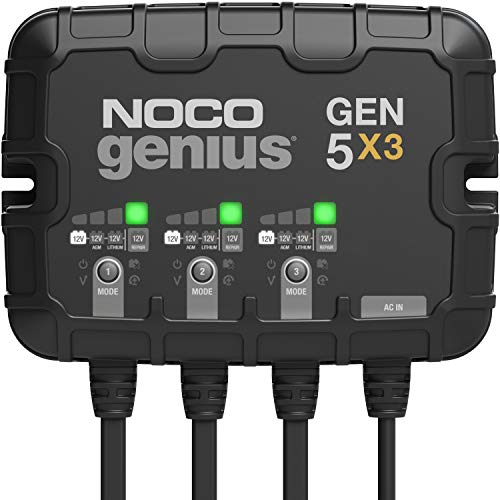
The GEN5X3 provides 15 amps total (5 amps per bank) with independent charging for 12V batteries in marine, boat, starter, and deep-cycle systems. It supports 12V, 12V AGM, 12V Lithium, and a 12V Repair Mode. Best for boaters who want a compact, waterproof onboard charger with temperature compensation and robust overcharge protection. Choose this if you need a three-bank solution that fits tight spaces and wants flexibility across battery chemistries. A potential limitation is that total output cap may be lower than higher-Amp alternatives for very large banked systems.
FirstPower Pro Upgraded 3 Bank 10X3, 30A

This 3-bank charger delivers 10A per bank for a total of 30A, suitable for a range of lead-acid and lithium 12V batteries. It features IP68 waterproofing, three charging modes, and independent bank control with a Force Mode option to revive deeply discharged cells. Best for larger boats or fleets where higher per-bank charging is desirable and long-term reliability in harsh environments matters. Note that the higher total current requires adequate power supply while on board.
SOARFLY 3 Bank Marine Charger 30A

SOARFLY’s charger provides three independent 10A banks with three intelligent modes. It supports 12V SLA/AGM, 12V Li-ion, and 12V Calcium, with a Force Mode to charge dead batteries. Best for boaters who need flexible mode selection per bank and robust water resistance. A limitation to watch is water exposure risk in very wet environments if seals wear over time, though IP68 rating offers strong protection when properly installed.
anegine 3 Bank Marine Charger 30A
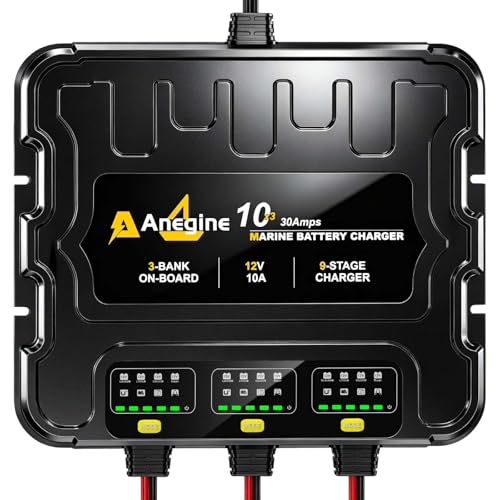
This 3-bank charger delivers up to 10A per bank and includes Force Mode for reviving deeply discharged batteries, plus IP68 waterproof protection. It supports lead-acid, AGM, EFB, LiFePO4, and lithium chemistries. Best for boats needing reliable, high-capacity charging with resilient water sealing. Limitations include similar maintenance needs as other IP68 devices and a requirement for correct mode selection to match your battery chemistry for optimal results.
Minn Kota 1823155 MK 315D

The Minn Kota MK 315D offers 3 banks at 5A per bank with automatic temperature compensation and a digital control system. Best for smaller boats or installations where compact, precise charging and user-friendly status indicators are valuable. Better for users prioritizing accurate charge timing and straightforward operation over higher total amperage. A limitation is the lower total output which may extend charging times on larger battery banks.
Buying Guide
- Battery chemistry compatibility: Ensure the charger supports your battery types (lead-acid, AGM, calcium, LiFePO4, Li-ion) and uses appropriate charging modes per bank.
- Per-bank amperage needs: For large deep-cycle or lithium setups, higher per-bank amperage (10A per bank or more) reduces charging time but requires a sturdy power source.
- Waterproof rating and installation: IP68 or better is ideal for exposed marine environments. Confirm mounting options fit your boat’s layout.
- Mode flexibility: Independent bank modes help tailor charging to each battery’s chemistry. Force/Repair modes can revive dead batteries but should be used per manufacturer guidance.
- Temperature compensation: Chargers with automatic temperature sensing prevent overcharging in hot conditions and undercharging in cold conditions.
- Maintenance and monitoring: Look for status indicators, repair modes, and watchdog protections to simplify long-term upkeep on the water.
FAQ
- What is a 3-bank charger best for?
– It’s ideal when you have multiple 12V batteries on a boat, such as a starting battery, house bank, and an auxiliary battery, needing simultaneous but independent charging. - Can I mix battery chemistries on a 3-bank charger?
– Yes, many models support multiple chemistries (lead-acid, AGM, LiFePO4, Li-ion) per bank, but verify each bank’s mode aligns with the battery type you install. - What does a Force Mode do?
– Force Mode attempts to start charging even if a battery is deeply discharged (below 1V) to revive it. Use as directed by the charger’s manual. - Is IP68 waterproofing necessary for on-board chargers?
– IP68 provides strong protection against water intrusion, which is beneficial on boats exposed to splashes and rain. - Should I choose a higher total amperage charger for my boat?
– If you have larger or multiple batteries that require frequent topping off, a higher total amperage per bank can speed charging, but ensure your boat’s electrical system can supply it safely.