Need reliable boat anchors and hardware for diverse conditions? This guide highlights five top kits that balance price, durability, and ease of use. Best for small to mid-sized boats, pontoons, and dinghies, these selections cover sand, mud, and rocky bottoms. Each option is designed for quick setup and dependable holding power, with materials chosen for marine environments. The buyer profiles below help you pick the right kit for your craft and typical anchoring locations.
| Product | Size / Coverage | Best For |
|---|---|---|
| MARINE SYSTEM Fluke Anchor Kit (8 lb) | 8 lb; 3/8″ rope; 6.5 ft chain | Small boats to 22 ft; sandy or muddy bottoms |
| FUCNEN Galvanized Fluke Anchor Kit (5 lb) | 5 lb; 3/8″ x 50 ft rope; chain 1/4″ x 6.5 ft | Pontoons, dinghies, small fishing boats |
| Leero Heavy Duty Anchor Kit (5 lb) | 5 lb; 6.5 ft chain; 100 ft nylon rope | Portables for pontoons and small craft |
| MARINE SYSTEM Anchor Kit (13 lb) | 13 lb; 3/8″ rope x 100 ft; 6.5 ft chain | Mid-size boats; coastal or lake use |
| SajoSolid Danforth Anchor Kit (18 lb) | 18 lb; 6.5 ft chain; 100 ft rope | Medium to larger boats; varied bottoms |
MARINE SYSTEM Fluke Anchor Kit — 8 lb
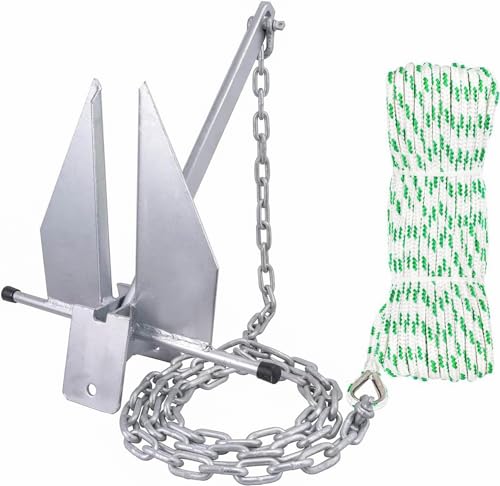
The 8 lb hot-dipped galvanized fluke anchor is paired with a 3/8″ x 75′ nylon rope and a 6.5′ chain. This kit is best for boats in the 12–22 ft range, offering a balanced hold in sand and mud while resisting corrosion. Best for casual coastal days or lake cruising where quick anchoring is valued. Caution: larger waves or strong currents may require the next-size anchor.
FUCNEN Galvanized Fluke Anchor Kit — 5 lb
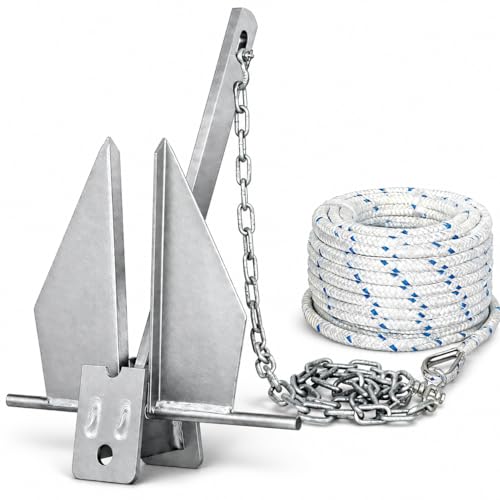
Includes a complete set: 5 lb hot-dip galvanized fluke anchor, 1/4″ x 6.5 ft chain, two bow shackles, a stainless steel thimble, and a 3/8″ x 50 ft nylon rope. Suited for boats 8–16 ft, including pontoons and dinghies. Better for calm to moderate conditions and sandy or muddy bottoms. Caution: the shorter rope length may require a longer line for deeper waters.
Leero Heavy Duty Anchor Kit — 5 lb

Includes a 5 lb Danforth-style anchor, a 6.5 ft steel chain, two 5/16″ D-ring shackles, and a 100 ft nylon rope. The hot-dipped galvanized construction provides rust resistance for lake, river, and near-coastal use. Best for compact boats and quick deployment. Limitation: longer rope is helpful for deeper waters or gusty conditions.
MARINE SYSTEM Anchor Kit — 13 lb
The 13 lb hot-dipped galvanized fluke anchor is designed for boats 20–32 ft, with a 3/8″ rope measuring 100 ft and a 6.5 ft chain. This kit provides strong holding power in more demanding conditions or larger vessels. Choose this if you routinely anchor in coastal or windy environments. Caution: heavier weight requires more handling during deployment and retrieval.
SajoSolid Danforth Anchor Kit — 18 lb
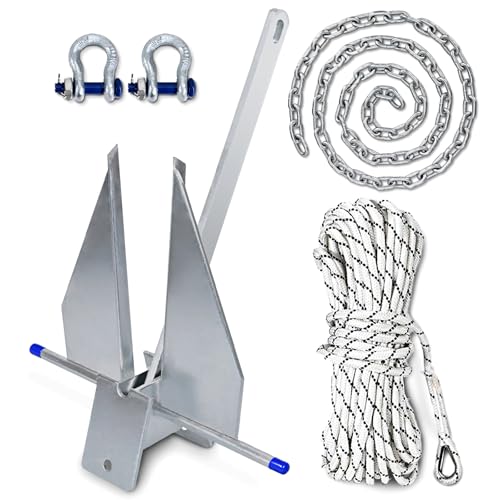
The complete 18 lb Danforth anchor kit features a 6.5 ft chain and a 100 ft rope, with two 5/16″ shackles. The heavy-duty galvanized finish resists seawater corrosion, and the anchor design emphasizes rapid penetration for deep digging in sand or mud. Best for medium to larger boats that require robust anchoring. Limitation: heavier setup may be less suitable for very small craft or shallow-water anchoring.
Buying Guide: How to Choose Boat Anchors and Equipment
What size anchor do I need?
Anchor size should match your boat length and typical bottoms. Smaller boats (8–16 ft) usually do well with 4–5 lb to 8–10 lb anchors. Mid-sized boats (16–26 ft) benefit from 10–13 lb anchors, while larger craft may require 18 lb or more. Always consider wind, current, and water depth.
What bottom type matters most?
Fluke or Danforth anchors perform well in sand and mud, providing solid penetration and quick holding. In rocky or filled bottoms, a heavier anchor or alternative designs may improve reliability. If you anchor in mixed bottoms, having a kit with a longer chain and rope helps maintain proper angle for holding power.
Material and corrosion resistance
Hot-dip galvanized steel offers strong corrosion resistance in saltwater and freshwater. Stainless steel components (thimble, pins) increase durability in harsh environments but at a higher price. Look for a kit with galvanization for long-lasting performance in marine settings.
Rope, chain, and shackles considerations
Longer rope and chain provide better holding and easier handling in windy conditions. A proven combination is a sturdy chain (5–6 ft for small setups) paired with a longer nylon rope (50–100 ft) to allow ample scope. Shackles should be robust and properly pinned to prevent failure.
Portability and storage
Small-boat kits emphasize portability and quick stowage. Folding or compact designs help with space limitations on PWCs, pontoons, and small boats. If storage is tight, prioritize lighter weights and smaller footprints without sacrificing essential components.
What about maintenance?
Rinse hardware after use, dry thoroughly, and inspect for corrosion or wear. Replace worn shackles, thimbles, or damaged rope to maintain anchoring reliability. Regularly inspect the anchor’s flukes and fix any deformation promptly.
Quick comparison at a glance
- Best for small boats: MARINE SYSTEM 8 lb kit for easy handling and quick setup.
- Better for pontoons and dinghies: FUCNEN or Leero 5 lb kits with longer rope and chain.
- Best for larger craft: MARINE SYSTEM 13 lb and SajoSolid 18 lb kits for tougher conditions.
FAQ
- What is the most versatile anchor size for a 16–22 ft boat?
- Should I choose a fluke or Danforth anchor kit?
- Is a longer rope better?
- Do I need separate shackles and thimbles?
- Can I mix anchors on different trips?
- How do I store anchors safely?
Many boats in this range perform well with 8–13 lb anchors, depending on bottom type and typical conditions. Consider a kit that includes a longer rope and a short chain for better scope.
Fluke/Danforth anchors are effective in sandy and muddy bottoms. If you anchor in rocky seas, select a heavier model and ensure robust chain and rope.
Yes. A longer rope allows greater scope, which improves holding in wind and current. Aim for 5–7 times water depth as a guideline, adjusting for conditions.
Yes. Shackles and thimbles protect rope and chain connections, reducing wear and improving reliability during deployment and retrieval.
Yes. For varied conditions, you may carry different kits or components to adapt quickly. Ensure you have compatible rope and chain sizes for each anchor.
Rinse with clean water, dry completely, and store in a dry, ventilated area away from sharp edges to avoid corrosion or injury during handling.