Answering the practical needs of boaters searching for a reliable anchor kit with rope, this guide compares five top options sized for common small to midsize craft. Each product is evaluated for harbor and lake use, ease of setup, and overall value. Ideal buyers include pontoon owners, dinghy riders, weekend anglers, and coastal cruisers who want an all-in-one solution without additional purchases. The following table highlights key basics to help you compare at a glance.
| Product | Weight | Best For |
|---|---|---|
| JY PERFORMANCE Boat Anchor Kit | 5 lb | Pontoon, small fishing boats; all-in-one kit |
| Leero Heavy Duty Boat Anchor Kit | 5 lb | Almost any 8–15 ft craft; durable galvanized hardware |
| Young Marine Portable Galvanized Fluke Kit | 8–10 lb options | Smaller to mid-sized boats; portability |
| MARINE SYSTEM Anchor Kit Fluke | 10 lb | Pontoon and deck boats; balanced gear |
| Better Boat 13 lb Anchor Kit | 13 lb | 20–32 ft boats; stronger holding in wind/current |
JY PERFORMANCE Boat Anchor Kit for 8-16 ft Boats

Includes a 5 lb galvanized fluke anchor, 6.5 ft steel chain, two D-ring shackles, and 100 ft of nylon rope. Designed to fit 8–16 ft boats, this all-in-one kit covers most small pontoon, dinghy, and bass boats. The fluke anchor is optimized for sand and mud bottoms, and the weighted chain adds grip for moderate currents. Best for casual lake days or shorebound excursions where a compact, ready-to-use setup matters.
Best for: Pontoon and small fishing boats that need a ready-to-go kit with included rope and shackles. Choose this if you want a compact, economical package with standard hardware.
Caution: Larger waves or unusually rocky bottoms may require a heavier or differently shaped anchor for optimal hold.
Leero Heavy Duty Boat Anchor Kit

This 5 lb Danforth-style kit includes a 6.5 ft steel chain, two 5/16″ D-ring shackles, and 100 ft nylon rope. The hot-dipped galvanized hardware resists rust, and the nylon rope offers durability under load. It is a solid choice for boats around 8–16 ft with mixed bottom types, offering reliable anchorage for calm to moderate conditions.
Best for: Boaters seeking a sturdy, corrosion-resistant setup with ample rope length and chain for seafaring weekends.
Caution: For rough surf or strong currents, pairing with a heavier anchor or longer chain may improve stability.
Young Marine Portable Galvanized Fluke Kit

Designed for boats in the 12–22 ft range, this kit offers an 8 lb galvanized fluke anchor with 75 ft nylon rope and 6.5 ft of chain. The combination ensures secure holds in varying bottom conditions and is easily portable for boaters who value mobility along with dependable anchoring.
Best for: Slightly larger dinghies, small sailboats, or kayaks that need a balance of weight and rope length while remaining manageable.
Caution: The 8 lb choice may be light in strong winds or current; consider upgrading to a heavier anchor if you frequently anchor in exposed waters.
MARINE SYSTEM Anchor Kit Fluke
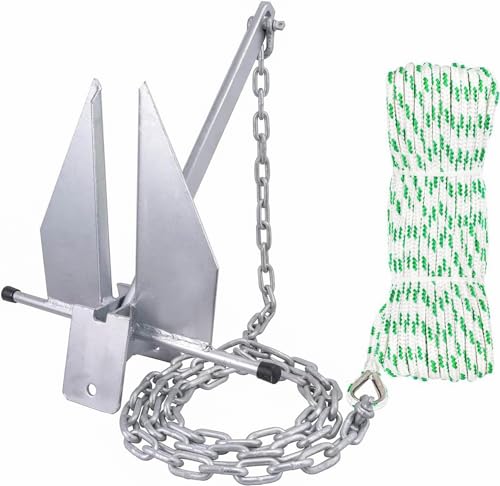
This 10 lb fluke anchor kit is sized for boats in the 16–26 ft range and includes a 75 ft nylon rope, 6.5 ft chain, and stainless steel thimble. The hot-dipped galvanized hardware resists corrosion, and the larger weight offers solid holding in windy conditions or deeper water.
Best for: Medium to larger boats that need greater holding power and a ready-to-rig package for coastal or lake cruising.
Caution: Heavier components mean more storage space is required; ensure your vessel can carry the extra weight and rope length.
Better Boat 13 lb Boat Anchor Kit

This kit centers on a 13 lb galvanized fluke anchor suitable for boats up to 32 ft, with 8 ft of 5/16 inch chain and 100 ft of 3/8 inch nylon rope, plus stainless steel bow shackles. The hot-dip galvanization reduces rust in salt and freshwater, delivering robust holding power for challenging conditions.
Best for: Heavier boats or coastal and saltwater use where stronger anchoring is needed to counter wind, current, and tidal changes.
Caution: The larger rope and chain add weight; check storage space and balance on smaller vessels.
Buying Guide: Key Considerations for the Right Anchor Kit
- Boat size and weight: Match anchor mass and chain length to your boat’s length and typical conditions. Larger boats benefit from heavier anchors and longer chains.
- Bottom type: Fluke anchors excel in sand and mud; cast iron and heavier builds offer versatility across bottom types but may require additional rope and chain for deep-water holds.
- Rope vs. chain: Nylon rope provides strength and flexibility; a short chain segment improves weight distribution and reduces rope wear. An all-in-one kit is convenient for beginners.
- Portability vs. permanent storage: Smaller boats benefit from compact kits; larger boats may justify heavier anchors with longer rope and chain.
- Corrosion resistance: Galvanized hardware resists rust in salt and fresh water. Consider the environment where you sail most often.
- Ease of deployment: Kits with clearly labeled shackles and thimbles simplify rigging, especially for solo boaters or beginners.
FAQs
- What anchor weight should I choose for a pontoon boat? For most pontoon boats, a 5–13 lb anchor with adequate chain and rope handles typical lake or coastal use, depending on water depth and bottom type.
- Is a rope-only kit enough for saltwater use? A nylon rope with some chain is generally recommended; saltwater environments demand more corrosion-resistant hardware and longer life spans.
- What bottom types require heavier anchors? Rocky and weedy bottoms typically require stronger anchors, while sandy bottoms may hold well with lighter fluke designs.
- Can I mix and match components from different kits? Yes, but ensure rope length, chain weight, and shackle sizes match your boat’s needs and storage capacity.
- How do I store an anchor kit on a small boat? Use a dedicated anchor locker or stow in a bow compartment with quick-release access for safe, efficient deployment.
- Should I insure against anchor failure? If you frequently sail in exposed areas, consider redundancy options or a second anchor for emergency use.