If you need reliable boat motion detectors, this guide helps you pick devices designed for maritime environments and real-time alerts. The top picks here are suited for different buyers: yacht owners seeking integrated security, weekend boaters needing easy setup, and remote dock users wanting long-range sensing. The list focuses on devices that support quick alerts, simple installation, and clear coverage. Below is a quick buying table to compare the five highlighted products.
| Product | Brand | Best For | Key Benefit |
|---|---|---|---|
| Vanemar Wireless Boat Motion Sensor | Vanemar | Integrated boat security systems | Real-time alerts and easy setup |
| CPVAN 125dB Motion Sensor Alarm (CP2 Pro) | CPVAN | Immediate deterrence in tight spaces | Loud siren and long remote control |
| Luckydeer 125dB Motion Sensor Alarm | luckydeer | Standalone indoor/outdoor protection | Infrared accuracy with remote |
| HTZSAFE Driveway Alarm Kit | HTZSAFE | Outdoor perimeter monitoring | Long wireless range with weather resistance |
| TECKNET 125dB Motion Detector Alarm (CP2 Pro variant) | TECKNET | Flexible home/boat protection | Two modes and long-range remote |
Vanemar Wireless Boat Motion Sensor

Best for yacht and boat owners who want seamless integration with an existing security network. This sensor delivers real-time intrusion alerts to connected devices, enabling rapid responses to potential breaches. Its placement-friendly design supports easy mounting on a bulkhead or railing. The system is particularly suited for boats already using the Vanemar Gateway to centralize security coverage.
Why choose this: Real-time notifications give crew and dock staff immediate awareness of movement, helping prevent theft or unauthorized access when you’re away from the vessel. It’s optimized for boats seeking a modular layer that expands an existing security ecosystem.
Limitation to note: Requires the Vanemar Gateway for complete operation, so new setups without the gateway may not realize full benefits. Installation remains straightforward, but users should confirm compatibility with their current security plan.
CPVAN 125dB Motion Sensor Alarm (CP2 Pro)

Best for: small spaces, driveways, garages, and boats where a strong deterrent is needed. This device uses a high-volume 125dB siren and a long-range remote control (up to 328 feet) to deter intruders and alert caretakers quickly. It’s a practical choice when you need a loud, immediate response from a compact unit.
Why this stands out: The 40-foot PIR detector offers targeted sensing, reducing false alarms in busy environments. Two modes (loud alarm and chime) provide flexible alerting for different scenarios, such as welcoming visitors or deterring intruders.
Limitation to note: Not waterproof, so it’s best placed indoors or in sheltered marine areas. Power options rely on batteries, which may require periodic replacement for uninterrupted operation.
CPVAN 125dB Motion Sensor Alarm (CP2 Pro White)

Best for: homeowners and small boat decks needing robust deterrence with a durable, easy-to-use sensor. This variant mirrors the CP2 Pro capabilities with a white housing that blends into interior spaces, providing the same 125dB siren and long-range remote control.
Why this fits: The device’s PIR accuracy reduces false alarms and offers two modes to adapt to various security needs, including doors, stairs, and boats docked indoors or in covered areas.
Limitation to note: Waterproofing remains a concern; ensure placement avoids direct water exposure to preserve performance over time.
Luckydeer 125dB Motion Sensor Alarm

Best for: standalone home, shed, and garage setups that also guard boats and docks. Luckydeer combines a 125dB siren with a remote for convenient arming and disarming, enabling round-the-clock protection without complex wiring.
Why this is chosen: Advanced infrared detection prevents false alarms while delivering strong deterrence when movement is detected. It serves well as a standalone security layer on smaller vessels or adjacent storage areas.
Limitation to note: Detection range is typically 16-26 feet and may be affected by walls or doorways, so placement should account for line-of-sight paths to covered spaces.
HTZSAFE Driveway Alarm Kit

Best for: wide outdoor perimeters around docks, boathouses, and driveways where weather resistance and long-range signals are important. This kit includes both sensors and a receiver, creating a practical perimeter solution for boats stored outdoors.
Why this suits: A wireless range up to a half-mile and IP-rated weather resistance make it suitable for harsh marine environments. The adjustable sensor sensitivity helps tailor alerts to vehicle and pedestrian movement, reducing unnecessary alarms.
Caution: Actual range varies with terrain and interference. Ensure line-of-sight and test in your docking area before relying on it for critical security needs.
HTZSAFE Portable Outdoor Perimeter Alarm
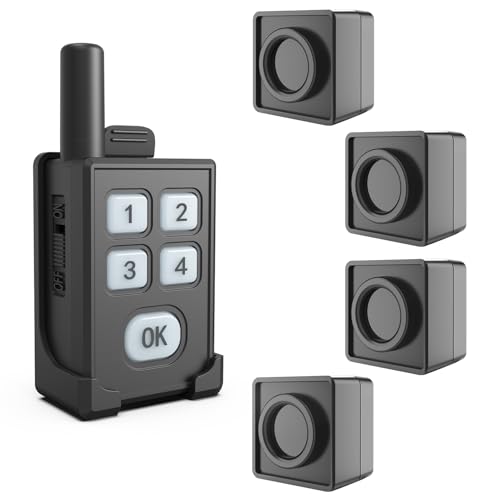
Best for: campers, boats at remote docks, and outdoor enthusiasts who need lightweight protection on the go. This kit is designed for portability with weather resistance and a compact receiver, making it suitable for camping or seasonal marina use.
Why this stands out: Each detector has an IP65 rating and a long wireless range, ensuring alerts reach you even in exposed environments. The three alarm modes (Light, Sound, Vibration) provide flexible notification options for different scenarios.
Limitation to note: The system requires batteries and periodic maintenance to ensure all sensors stay powered during long trips or seasonal storage.
Buying Guide: How to Choose the Right Boat Motion Detector
What coverage do you need?
For small to mid-sized boats, a single sensor placed at entry points may suffice. For larger vessels or marinas, a multi-sensor setup with a central hub or gateway can provide comprehensive coverage and easier monitoring.
How loud should the alert be?
125dB is common and effective for deterring intruders, but consider your environment. If you’re near neighbors or inside a harbor shack, a sensor with a selectable volume or a chime mode can be beneficial to avoid alarms going unheard or causing disturbances.
What about placement and weather?
Choose sensors with weather resistance for outdoor deck use. Indoor or sheltered placements should still guard critical access points. Verify IP ratings and mounting options to ensure stable operation in a marine setting.
Power and maintenance considerations
Battery-powered units are easy to install but require periodic checks. Some devices offer USB charging or rechargeable batteries. For remote boats, ensure you have a plan for power continuity and easy remote monitoring if you rely on app alerts.
Compatibility with existing systems
If you already use a security gateway or hub, select sensors designed to integrate with that ecosystem. This ensures real-time alerts consolidate across your security network rather than operating in isolation.
Cost vs. value
Balance upfront cost with long-term protection. A multi-sensor system with a central hub may be more expensive but provides more reliable coverage for boats stored at remote docks, while standalone alarms can be cost-effective for smaller setups or temporary protection.
FAQ
- What is the typical range of these boat motion detectors?
Most outdoor models offer long-range wireless or remote control connectivity, commonly up to 328 feet or 1/2 mile depending on the kit, terrain, and interference.
- Do these detectors require professional installation?
Many are designed for quick setup with straightforward mounting. Some require a gateway or hub for full integration into an existing security system.
- Can these sensors work indoors and outdoors?
Yes, many models are suitable for both environments, but waterproofing and IP ratings should guide placement for outdoor use.
- What should I do about false alarms?
Choose models with accurate PIR detection and consider placement where lines of sight minimize interference from leaves, wind, or small animals.
- Is a loud alarm sufficient deterrence?
Typically, yes. A 125dB siren is designed to deter intruders while alerting nearby people. Some models also offer chime or doorbell modes for different scenarios.
- Do these devices require a subscription?
Most listed items operate locally with on-device alerts; some app-based monitoring may require a subscription, depending on the ecosystem.