Answer: For boat safety, choose compact, marine-rated extinguishers that handle Class B and C fires and resist corrosion. The top options below are suited for skippers, crew, and weekend boaters seeking quick, reliable fire suppression on deck and in engine rooms. This guide highlights five models with clear strengths, so you can decide which is best for your vessel.
| Product | Best For | Why Selected |
|---|---|---|
| Kidde Fire Extinguisher for Boats, Single-Use 5BC | Smaller boats and kayaks | Excellent corrosion resistance with all-metal construction; broad marine fire coverage (B and C). |
| First Alert Fire Extinguisher | Marine Fire Extinguisher, FE1A10GR | Compact cockpits and crewed boats | UL rated 1-A:10-B:C; durable all-metal components; versatile for multiple fire types. |
| First Alert Marine1 Fire Extinguisher, UL Rated 1-A:10-B:C Bundle | Boats needing mounting and readiness | Includes bracket; coast-guard approved when mounted; strong all-metal build. |
| Kidde Fire Extinguisher for Boats, Single-Use 10BC | Longer-range boat protection | Higher B+C rating; fast discharge; robust construction. |
| Kidde Mariner 5 Fire Extinguisher for Boats, 5BC | Mid-size boats and cruisers | Marine-focused design with corrosion resistance; proven Class B/C coverage. |
Kidde Fire Extinguisher for Boats, Single-Use 5BC
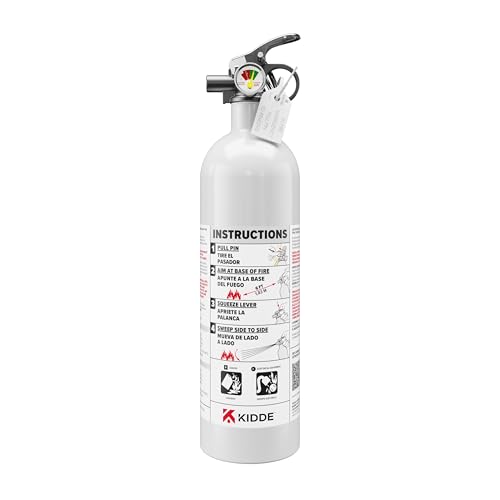
Best for: small to mid-sized boats needing reliable B and C class fire suppression. This extinguisher combines corrosion-resistant aluminum and stainless-steel components with a rugged all-metal construction. It features a metal valve assembly, a rust-resistant lever, and a safety pin for quick access in emergencies. Choose this if you prioritize durable materials and straightforward marine use.
Why selected: It targets common marine fires—flammable liquids, gases, and electrical equipment—while offering durable construction that stands up to the harsh marine environment. A potential limitation is the single-use design, which means it must be replaced after discharge rather than recharged.
First Alert Fire Extinguisher | Marine Fire Extinguisher, FE1A10GR
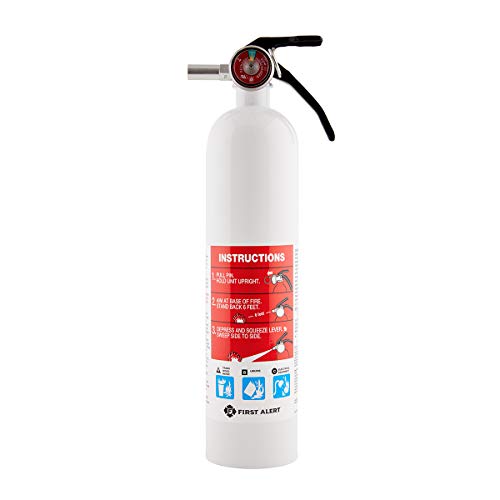
Best for: boaters who want a UL-rated, multipurpose extinguisher with proven performance for wood, paper, plastics, liquids, oils, and electrical fires. Its 1-A:10-B:C rating makes it a versatile on-board tool for mixed-fire scenarios. The all-metal construction offers durability, and the unit is rechargeable by certified professionals after use.
Why selected: This option provides a robust balance of broad fire coverage and marine-grade metal components. Limitation: Recharge after use requires professional servicing, which may add downtime and cost for uninterrupted on-board readiness.
First Alert Marine1 Fire Extinguisher, UL Rated 1-A:10-B:C Bundle

Best for: boat owners who want an all-metal mounted extinguisher with an included bracket and strap for easy, quick access. It’s suitable for coastal or inland waterways with mixed fire risks including electrical equipment and flammable substances.
Why selected: The bundle improves mounting security and readiness. Limitation: The mounting bracket is included, but the extinguisher still requires regular inspection and periodic maintenance per local regulations.
Kidde Fire Extinguisher for Boats, Single-Use 10BC
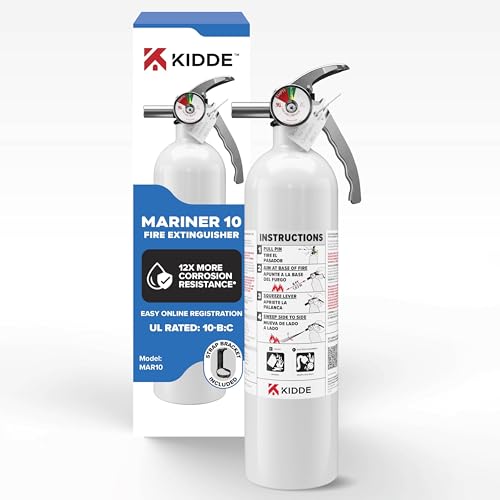
Best for: larger boats needing stronger B and C class protection with a faster discharge. It has a 8-12 second discharge time and a 6-8 foot range, with an operating pressure near 100 PSI. This makes it suitable for engines and galley areas that present flammable liquid risks.
Why selected: Higher rating provides broader protection against typical marine fire hazards. Limitation: As a single-use unit, replacement is necessary after discharge, potentially requiring more frequent inventory checks.
Kidde Mariner 5 Fire Extinguisher for Boats, 5BC

Best for: mid-size boats and cruisers seeking an efficient 5BC extinguisher with marine-grade corrosion resistance. It covers flammable liquids, gases, and electrical equipment fires with a compact form factor.
Why selected: The Mariner 5 is tailored for marine use with durable materials and reliable performance. Limitation: Output range is slightly narrower than larger units, so placement should ensure an effective spray path in the engine room or cockpit area.
Buying Guide: Key Purchase Considerations
- Fire types on boats: Prioritize units rated for Class B (flammable liquids) and Class C (electrical) fires. Most marine extinguishers cover both.
- Construction and corrosion resistance: Marine environments demand durable metal components and corrosion-resistant materials to last between seasons.
- Single-use versus rechargeable: Single-use extinguishers are more common but require replacement after discharge. Rechargeable options offer long-term cost but require maintenance by professionals.
- Size and mounting: Choose a size that fits your boat’s layout and ensure secure mounting. Bundles with brackets simplify installation and readiness.
- Discharge time and range: Shorter discharge times reduce effective reach. Consider the layout and potential fire origin points (engine room, galley, cockpit) when choosing a range.
- Maintenance and compliance: Regular inspections, proper labeling, and adherence to local boating safety requirements help ensure readiness when needed.
- Placement strategy: Place extinguishers in accessible locations near the most likely fire sources, and provide quick-path instructions for all crew members.
Frequently Asked Questions
- Q: What class of fires should a marine extinguisher cover for boats?
A: Most marine extinguishers cover Class B (flammable liquids) and Class C (electrical) fires; some also address Class A (ordinary combustibles) depending on the model. - Q: How often should boat extinguishers be inspected?
A: Inspect monthly for accessibility, pressure gauge status, and secure mounting. Have devices serviced or replaced as recommended by the manufacturer. - Q: Is a rechargeable extinguisher better than a single-use one for boats?
A: Rechargeable units can reduce long-term costs and waste, but require professional inspection after use and periodic maintenance. - Q: Where should extinguishers be mounted on a boat?
A: Mount in accessible locations near high-risk areas such as the engine room, galley, and bilge. Use brackets or straps for secure placement. - Q: Do I need multiple extinguishers on board?
A: Yes. A primary unit near the engine and a secondary unit in another high-risk area improves quick response in emergencies. - Q: Can I replace a discharged extinguisher with any model?
A: It’s best to replace with a model meeting the same or higher Class B/C rating and suitable marine construction.