Answering the question “which autopilot is best for a kicker motor,” this guide highlights five practical options. These autopilots are designed for small gasoline outboard setups and help maintain heading or steer routes under challenging conditions. The buyers most likely to benefit are weekend sailors, anglers, and offshore kayaker enthusiasts who want reliable hands-free steering on small boats. Below is a quick summary table of the selected products to compare core roles and suitability at a glance.
| Product | Best For | Notes |
|---|---|---|
| Reactor 40 Kicker Autopilot with GHC 50 | Full autopilot control on small boats | Includes GHC 50 instrument for display |
| Garmin 010-00705-95 Reactor 40 Kicker Autopilot Without GHC 20 | Compact setup with handheld control | Works with compatible MFD or GHC 20 |
| MAGNETOE Reactor 40 Kicker Autopilot with GHC 50 | Garmin-compatible feel, modern interface | Fresh brand option with Kicker integration |
| Garmin 010-00705-94 Reactor 40 Kicker Autopilot with GHC 20 | Entry-level Kicker autopilot | Includes bright handheld display |
| Mechanical Linear Actuator for Kicker Autopilots | Precise steering control upgrades | Actuator accessory for Reactor 40 systems |
Reactor 40 Kicker Autopilot With GHC 50 Instrument

This autpilot setup is designed to integrate with Garmin’s GHC 50 display for primary control and data visualization. It’s best for boaters who want a complete, on-seat instrument experience and reliable heading maintenance on small gas-powered craft. The GHC 50 provides feedback and route management to help you stay on course even when winds or currents shift.
Who it’s best for: sailors seeking a ready-to-use, instrument-integrated autopilot system for kicker motors. Why selected: it combines precise heading hold with a display that simplifies navigation and throttle adjustments in one package. Caution: ensure compatible mounting points and the GHC 50 is in good working order with your boat’s electronics ecosystem.
Garmin Reactor 40 Kicker Autopilot Without GHC 20

Designed for boats with small gasoline outboards up to 20 horsepower, this option emphasizes heading hold and route control to keep you on course in varying conditions. It includes a floating handheld remote with a bright display, requiring a compatible MFD or GHC 20 autopilot display to function.
Best for: boaters who want a compact, hands-free steering solution with a dedicated remote. Choose this if you already own a compatible Garmin display and want straightforward autopilot operation. Limitation: requires compatible ANT technology-capable MFD or GHC 20 display for full functionality.
MAGNETOE Reactor 40 Kicker Autopilot With GHC 50
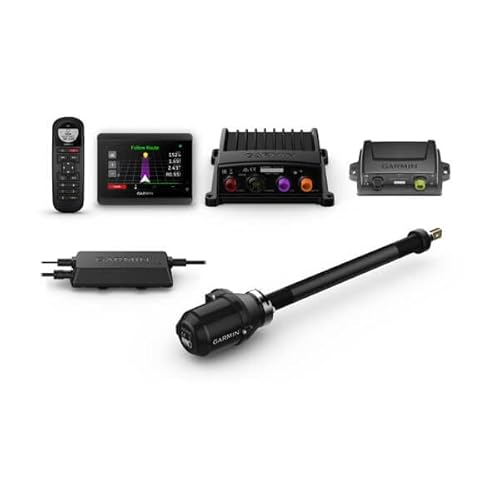
MAGNETOE’s Reactor 40 Kicker Autopilot is presented as a compatible companion for small gas-powered boats and Garmin-charted displays. It emphasizes ease of throttle tuning and integration with existing Garmin chartplotters to control the autopilot’s steering. Best for: users seeking a modern autopilot experience with straightforward throttle adjustments. Caution: verify compatibility with your current Garmin setup before purchase to avoid integration issues.
Garmin Reactor 40 Kicker Autopilot With GHC 20 Control/Display

This variation mirrors the heading-hold and route-following capabilities with a lightweight control/display package. It’s tailored for boats with similar engine power and emphasizes a bright handheld remote to monitor autopilot status. Best for: users who want a reliable autopilot and a simple display setup. Limitation: requires a compatible MFD or GHC 20 autopilot module to operate effectively.
Garmin Reactor 40 Kicker Autopilot With GHC 50 Instrument
This option highlights quick throttle control with a full GHC 50 instrument integration. It’s best for boats that want an embedded instrument experience and responsive steering automation. Choose this if you need a single-package autopilot and display solution. Caution: verify that your boat’s steering mechanism supports the integration with the GHC 50 display.
Buying Guide: Key Considerations For Kicker Autopilots
What power and size of boat are supported? Match the autopilot’s thrust and steering actuator capacity to your kicker motor’s horsepower and boat weight. For very small boats, a compact system with a handheld remote may be sufficient, while larger inflows of wind or currents may benefit from a full instrument display integration.
What displays and compatibility are required? Some units rely on Garmin MFDs or the GHC series. Check whether you already own compatible displays to avoid additional purchases. If not, consider systems that include their own display.
What mounting and installation considerations exist? Ensure appropriate mounting points for the autopilot’s hardware and any actuators. Some kits include steering actuators and mounting hardware; others may require separate components.
What maintenance and reliability matter? Look for systems with robust remote controls, straightforward throttle tuning, and clear status indicators. A floating handheld remote is particularly helpful on open decks or in rough weather.
What risks or limitations should be acknowledged? Autopilots may require regular software updates and battery power for remotes. Some units depend on compatible electronics ecosystems; verify compatibility with your MFD and sensors before purchasing.
FAQ: Quick Answers For Buyers
- What horsepower should my kicker have for these autopilots? Most Reactor 40 kicker autopilots target small gasoline outboards up to roughly 20 horsepower, though check the exact specification for each model.
- Do these autopilots require a separate display? Some models include a GHC 50 or GHC 20 display, while others work with compatible Garmin MFDs or displays.
- Is a handheld remote necessary? A floating handheld remote is common for easy control on deck and during weather changes.
- Can I mix autopilot models with different Garmin displays? Compatibility varies; confirm with the product documentation to ensure proper communication between autopilot, MFD, and transducers.
- Are there limitations when using an autopilot with a kicker motor on rough seas? Heading hold can be affected by strong currents or large waves; in such cases, manual controls might be necessary for precise maneuvering.
- Is installation difficult? Depending on the kit, installation can range from straightforward to requiring professional mounting and wiring; verify hardware availability and mounting requirements before purchase.