Answering the common buyer question: which antifouling paint is best for boats? This guide highlights five reliable options that balance performance, ease of use, and environmental considerations. The selections cover multiple boat types (fiberglass, wood, and steel) and water conditions, with clear notes on suitability, best uses, and any limitations. Ideal buyers include frequent sailors seeking long-lasting protection, casual marine enthusiasts needing simple maintenance, and owners operating in varied waters who want a single product line across seasons.
| Product | Type | Best For |
|---|---|---|
| TotalBoat Underdog Black (Gallon) | Ablative | Frequent-use boats in saltwater; boats needing easy reapplication next season |
| TotalBoat JD Select Ablative Black (Gallon) | Ablative | Fiberglass, wood, steel in salt and fresh water; environmentally conscious, low odor |
| TotalBoat JD Select Ablative Black (Quart) | Ablative | Smaller projects or touch-ups; quick turnaround without compromising protection |
| Rust-Oleum 396967 Marine Flat Boat Bottom Antifouling Paint (Quart) | Antifouling (copper-release) | Fiberglass, wood or steel hulls needing straightforward, affordable protection |
| TotalBoat Spartan Antifouling Blue (Gallon) | Ablative | Sailboats and powerboats in varied waters; multi-season protection with reactivation options |
TotalBoat Underdog Marine Antifouling Bottom Paint (Black, Gallon)
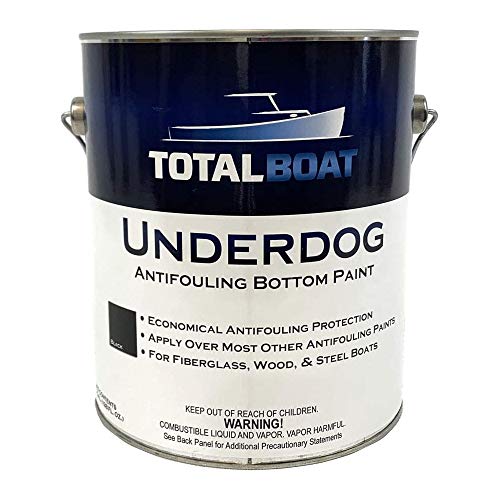
Best for boats used frequently in saltwater. This economical, single-season antifouling bottom paint releases fresh biocide as water moves under the hull, helping to prevent barnacles and mussels from clinging to fiberglass, wood, or steel bottoms. The coating is ablative, meaning it wears away with use, reducing buildup and simplifying next-season prep. Suitable for properly prepared hulls and ideal for sailboats, power boats, and work boats that require dependable antifouling with easy recoat potential. Caution: performance can vary with long-term dry docking; scuffing may be needed to reactivate after extended haulings.
TotalBoat JD Select Ablative Antifouling Bottom Paint (Black, Gallon)

Best for fiberglass, wood, and steel boats in both salt and fresh water. This ablative coating self-polishes as the boat moves, minimizing paint buildup and reducing sanding work next season. The low-odor, low-VOC formula cleans up with soap and water, making it friendlier for marinas with environmental restrictions. Choose this if you value easier cleanup and reduced maintenance while maintaining continuous antifouling protection. Caution: performance may vary with nonstandard hull preparation or extreme fouling conditions.
TotalBoat JD Select Ablative Antifouling Bottom Paint (Black, Quart)

Best for smaller boats or touch-ups where you still want effective antifouling. This 1-quart option provides the same self-polishing, low-odor benefits as the gallon version, making it practical for limited projects or patching. It remains suitable for fiberglass, wood, and steel hulls in both salt and fresh water. Limitation: smaller containers may require more frequent mixing and reapplication planning to match a full-season schedule.
Rust-Oleum 396967 Marine Antifouling Paint (Quart, Black)

Best for those seeking a straightforward copper-release solution targeting barnacles and other growth on fiberglass, wood, or steel. The formula releases copper gradually to prevent fouling, and it can be recoated after four hours with a launch window of about 16 hours. Coverage up to 110 sq ft offers a practical option for mid-sized hulls. Limitation: copper-based paints may require careful environmental consideration and surface prep to maximize protection.
TotalBoat Spartan Antifouling Bottom Paint (Blue, Gallon)

Best for high-fouling conditions in fresh, salt, or brackish waters. Spartan uses a copolymer ablative formula with a high copper content (38% cuprous oxide) for maximum protection, delivering smooth, abrasion-resistant performance. It can be burned to achieve a racing finish and reduces paint buildup with continued protection whether the boat is anchored or underway. Not ideal for those who require ultra-low VOCs in extremely restricted marinas. Caution: ensure proper hull preparation to maximize efficacy.
Buying Guide
Key questions to guide your antifouling paint choice:
- What water conditions will you operate in? High-fouling, mixed, or calm waters call for different copper contents and ablation levels.
- Is your boat frequently hauled or launched? Ablative finishes perform best when actively used; they shed coating over time to reduce buildup.
- What hull material do you have? Fiberglass, wood, and steel all respond differently to various coatings and prep requirements.
- Do you need low odor and low VOCs? If so, look for water-based or low-VOC options designed for marinas with restrictions.
- What maintenance schedule works for you? Ablatives typically require less sanding next season, but reapplication timing matters.
FAQ
- What is ablative antifouling paint? It gradually wears away as the boat moves, exposing fresh biocide and renewing protection each season.
- Can I use these paints in a marina with environmental restrictions? Many JD Select and similar low-VOC options are designed to meet such restrictions, but always check local regulations.
- Do these paints require a special prep? Yes, proper surface cleaning, scuffing, and often a primer suited to your hull material improve adhesion and longevity.
- How long does each paint take to cure before launching? Curing times vary by product; refer to the product data sheet for maximum safety.
- Are there safety considerations when applying antifouling paints? Wear protective gear, ensure good ventilation, and follow disposal guidelines for leftover paint and rags.
- Can I switch between ablative and non-ablative paints mid-season? Switching types may require thorough cleaning and abrading to ensure proper adhesion.