Answering the question: if you need an AIS transponder with Class A capabilities, these options cover high-end, marine-safe performance and reliability. This guide focuses on truly capable Class A models where available, plus strong Class B contenders for broader compatibility. Each pick is evaluated for who benefits most, such as commercial operators, pleasure boats with high traffic, or institutions needing robust integration with NMEA systems and GPS. Below is a quick buyer’s table to compare key details at a glance.
| Product | Class | Best For | Notes |
|---|---|---|---|
| Furuno FA170 Class A AIS Transponder | Class A | Commercial vessels, large fleets | Comprehensive port and network features |
| SupplyMount ZDIGCLA2000 CLA2000 Deep Sea Class A AIS Transponder | Class A | OEM-replacement aware buyers | Aftermarket deep-sea option |
| AIS Transponder – AIS 800 | Class B | Smaller vessels needing AIS 800 compatibility | Direct OE replacement style |
| Em-trak B951 Class B AIS Transceiver | Class B | Coastal operators, day-to-day navigation | 5W SOTDMA model |
| Em-trak B953 Class B AIS Transceiver | Class B | VHF splitters and integration | 5W SOTDMA with splitter |
Garmin AIS 800 Class B Transceiver

Product overview indicates a robust Class B transceiver suitable for boats requiring reliable AIS broadcasting and reception. Best for marina pilots and small to mid-size commercial operators who rely on Garmin’s ecosystem. Consider this when you want seamless integration with Garmin MFDs and supported charting systems. A limitation to note is that this unit is Class B, not Class A, which may affect compliance for certain commercial operations.
Furuno FA170 Class A AIS Transponder
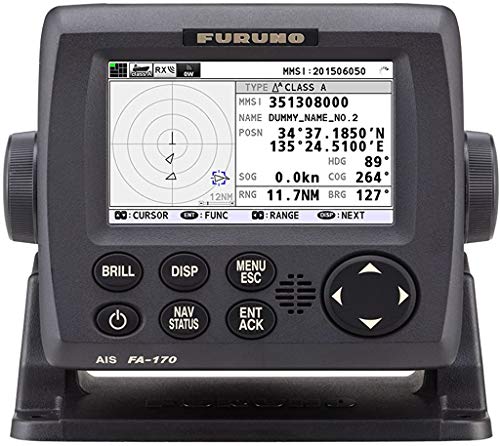
Best for: commercial vessels operating in busy waterways that require high-priority AIS reporting and extensive port-side networking. Why selected: Furuno FA170 is a dedicated Class A transponder with multiple ports and the ability to handle larger AIS datasets, supporting more reliable ship tracking. Limitations: Class A units typically demand more installation space and power management than Class B units.
SupplyMount ZDIGCLA2000 – CLA2000 Class A Transponder

Best for: buyers seeking an aftermarket replacement that aims to match OEM specifications with reliable performance. Why selected: This unit is designed to be an aftermarket replacement for CLA2000 and emphasizes industry-standard quality and compatibility. Limitation: Verify part-number match with existing equipment before purchase to avoid compatibility issues.
AIS Transponder – AIS 800 | Part Synergy

Best for: buyers who need a direct OE replacement matching factory specifications. Why selected: This Part Synergy option mirrors original design intent for straightforward fitment and compatibility. Limitation: Limited information on long-term warranties or official certifications in listing data.
em-trak B923 Class B AIS Transceiver

Best for: users needing a compact Class B transceiver with reliable performance and SOTDMA capability. Why selected: It offers robust data handling for daily navigation and collision avoidance on vessels with modest AIS requirements. Limitation: Being a Class B device, it will not meet Class A regulatory requirements where mandated by some commercial operations.
em-trak B951 Class B AIS Transceiver

Best for: coastal operators prioritizing a 5W SOTDMA transceiver with quick AIS updates. Why selected: The B951 is designed for reliable vessel tracking and collision avoidance with good transmission efficiency. Limitation: As a Class B option, it may not satisfy Class A jurisdictional requirements for certain vessel categories.
em-trak B953 Class B AIS Transceiver

Best for: boats that require an AIS transceiver with integrated VHF antenna splitting. Why selected: The B953 offers SOTDMA 5W output with an antenna splitter option for flexible installation. Limitation: Like other Class B units, it does not meet Class A regulatory demands where required.
Buying Guide: Key Considerations for AIS Transponder Purchases
- Class A vs Class B: Class A transponders provide higher priority and are typically required for commercial vessels. Class B units are common on smaller boats and pleasure craft but may not satisfy regulatory mandates in some regions.
- NMEA 2000 and 0183 compatibility: Ensure the device supports your existing navigation network and chartplotters for seamless data sharing.
- GPS and SOTDMA vs CSTDMA: SOTDMA offers more frequent AIS transmissions, beneficial near busy ports. CSTDMA is common on many Class B devices.
- Ports and expandability: Check the number of in/out ports, alarm outputs, and LAN capabilities to fit current and future equipment.
- Power requirements and voltage range: Confirm compatibility with your vessel’s electrical system (typically 9.6–31.2V DC).
- Durability and waterproofing: IPX-rated units perform better in harsh marine environments; consider installation location accordingly.
- OEM vs aftermarket: Aftermarket or replacement units can offer cost savings but verify compatibility with existing systems and mounting footprints.
- Ease of installation: Direct-fit solutions save time; professional installation may be advised for Class A systems.
FAQ
- What is the difference between AIS Class A and Class B transceivers?
Class A transceivers broadcast more frequently and are required for many commercial vessels. Class B units are typically used on smaller boats and may have reduced reporting frequency. - Do I need Class A for recreational sailing?
Generally not, unless you operate in jurisdictions or on routes requiring Class A compliance. For most leisure boats, Class B is sufficient. - Can I replace my AIS unit with an aftermarket option?
Yes, but verify compatibility with your existing system and ensure the part matches your vessel’s requirements and mounting footprint. - What should I consider when choosing between GPS-integrated units and standalone AIS?
GPS integration simplifies data accuracy for position reporting and reduces external dependency, making updates more reliable on navigation displays. - Is SOTDMA better than CSTDMA?
Yes, SOTDMA generally provides more frequent and reliable AIS transmissions, which can improve vessel tracking in busy waterways. - Do these devices require professional installation?
For Class A systems or vessels with complex networks, professional installation is often recommended to ensure proper wiring and certification compatibility.