Answering common buyer needs, these five 5-degree transom wedges optimize engine trim, planing, and hole-shot performance. They are best for boaters seeking improved stability, faster planing, or dialing in engine attitude without extensive modification. The top picks vary by compatibility, material, and whether the wedge provides positive or negative tuck. The summary table below highlights key attributes to compare at a glance.
| Product | Best For | Material | Notes |
|---|---|---|---|
| T-H Marine TW-2-DP | Bradley/holeshot tuning | Cast aluminum | 5° negative tuck, standard 4-bolt |
| Bob’s Machine 319-200000 | Low-speed planing problems | Metal wedge | Positive or negative trim capable |
| A.A 5 Degree Set | All brands, new setups | Unknown (metal wedge) | 5° positive tilt |
| Asaki TW-2-DP | Universal fit, OEM-like match | Aluminum | 5° negative tuck, TW2DP reference |
| ProPart Transom Wedge | Honda/Yamaha/Suzuki etc. | Aftermarket OEM spec | 5° trim wedge |
T-H Marine 5 Degree Positive/Negative Wedge (TW-2-DP)

The T-H Marine TW-2-DP wedge adds a 5-degree correction to adjust the transom tilt, enabling better engine trim for holeshot and planing performance. It uses a cast aluminum build to provide solid support between the engine bracket and transom and fits standard 4-bolt patterns. Best for boaters seeking a straightforward retrofit that maintains a robust mounting interface. If your setup uses a non-standard bolt pattern or you require a non-conventional tilt, this option may require additional adapters. Caution: verify the 4-bolt compatibility with your outboard model before purchasing.
Bob’s Machine 319-200000 Transom Wedge — 5°

Bob’s Machine 319-200000 is designed for versatility, allowing use with either negative or positive trim. It helps boats with insufficient transom angle or those experiencing low-speed planing issues. It fits all motors with BIA bolt patterns. This wedge is best for boats needing a flexible trim solution across different installation contexts. Caution: ensure your motor matches the BIA bolt pattern for a clean fit.
5 Degree Positive Tuck Wedge — All Brands (Port + Starboard)

This 5-degree wedge adds positive tilt to the engine, increasing bow-up attitude and improving planing initiation. It provides full contact between the engine bracket and transom and fits all standard 4-bolt patterns across brands. It’s best for boats that need more nose-up attitude and faster throttle response. Limitation: positive tuck may increase bow rise if the hull balance is not adjusted accordingly, so check trim settings after installation.
Asaki TW-2-DP Transom Wedges — 5° Negative Tilt

Asaki’s TW-2-DP wedges are designed to be universally compatible with all brands using standard 4-bolt mounting. They specifically increase 5 degrees of tuck (negative tilt) to reduce bow rise and improve holeshot while maintaining flush contact for load distribution. Best for boats needing stronger hull-to-transom alignment. Caution: verify precise dimensions to ensure a flush fit with your transom configuration.
ProPart Transom Wedge — 5 Degree Trim
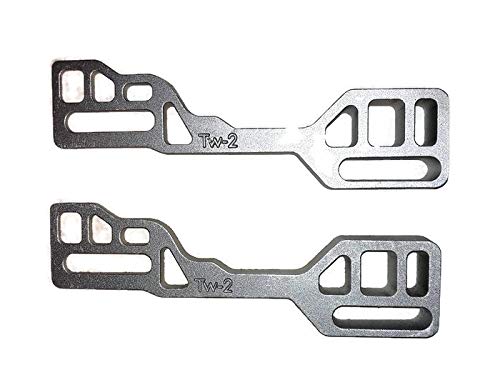
ProPart’s Transom Wedge targets a broad range of brands (Honda/Yamaha/Suzuki/Force/Tohatsu, etc.) with a 5-degree trim adjustment. It’s designed as a new aftermarket wedge that matches OEM spec TH-Marine wedges for easy replacement. Best for boaters who want a reliable, aftermarket-compatible option with standard bolt patterns. Caution: confirm that the wedge length and bolt spacing align with your specific transom setup to avoid misalignment.
Buying Guide
What should I consider when choosing a 5-degree transom wedge?
- Engine compatibility: Confirm your outboard’s bolt pattern (4-bolt vs non-standard) and whether the wedge matches or requires an adapter.
- Tilt direction: Decide between positive tuck (bow-up) and negative tuck (bow-down) to achieve the desired running attitude and planing behavior.
- Material and build: Cast aluminum is common for durability; assess corrosion resistance and fit against the transom bracket.
- Boat performance goals: For faster holeshot, planing efficiency, or stability at speed, match the wedge type to your hull dynamics and prop setup.
- Installation considerations: Check for flush contact between the engine bracket and transom to distribute loads safely.
How do I install a transom wedge safely?
- Ensure engine is off and powered down; support the engine to prevent sudden movement during insertion.
- Align the wedge with the transom and bolt pattern; tighten bolts to manufacturer torque recommendations.
- Test trim settings on calm water; adjust gradually to avoid sudden changes in attitude or hull lift.
What are common trade-offs with 5-degree wedges?
- Improved planing vs. potential bow rise; tuning is needed to avoid destabilizing trim or steering feel.
- Positive tuck can improve bow-up attitude but may require additional ballast adjustments; negative tuck reduces bow rise but can affect lift at slow speeds.
Frequently Asked Questions
- Q: Do all 5-degree wedges fit all engines? A: Most are designed for standard 4-bolt patterns, but some are marketed as universal; always verify bolt pattern compatibility first.
- Q: Will a wedge change my boat’s overall length or weight distribution? A: Subtle changes occur at the transom, mainly affecting engine angle and planing behavior.
- Q: Is professional installation necessary? A: For most standard setups, a careful DIY installation works, but consult a marine technician if unsure about torque specs or hull compatibility.
- Q: Can I use a wedge on any boat? A: Wedges are most effective on boats with planing hulls or heavy bow rise; verify that your transom and bracket support the wedge design.
- Q: How do I know which wedge is best for my boat? A: Consider compatibility with your motor’s bolt pattern, desired trim direction, and your hull’s planing behavior; refer to the product’s stated compatibility and installation notes.
- Q: Do wedges affect warranty? A: Some manufacturers require proper installation and torque settings; consult your engine and transom wedge supplier for warranty guidance.