Answering the need for stable 12V power from a 24V marine system, these DC-DC converters are designed for boats, yachts, and watercraft. They convert 24V DC to 12V DC with protections and marine-appropriate builds. Best for vessel electronics, navigation gear, lighting, and small appliances. This guide highlights five strong options, explains who each is best for, and compares key features to help you choose.
Summary of selected products
| Product | Output | Max Current | Protection/Notes | You Might Choose This If |
|---|---|---|---|---|
| Victron Energy Orion 24/12-Volt 70 amp | 12V | 70A | High efficiency, remote on-off, versatile charging option | You need high current for multiple devices on a larger boat. |
| Victron Energy Orion-Tr 24/12-Volt 20A | 12V | 20A | IP43 protection, compact, dual-battery compatibility | Moderate power with reliable marine-grade protection. |
| Klnuoxj DC 24V to 12V 30A 360W | 12V | 30A | Waterproof buck, multiple protections, fuse included | Medium load on a watercraft requiring robust protection. |
| Nilight 24V to 12V 20A 240W | 12V | 20A | Waterproof aluminum shell, good efficiency | Harsh environments with need for strong enclosure. |
| YRDZXG12V 5A 60W 24V to 12V | 12V | 5A | Fully waterproof and sealed, simple low-power option | Low-power devices like LED strips or sensors. |
Victron Energy Orion 24/12-Volt 70 amp DC-DC Converter Non-Isolated, High Power
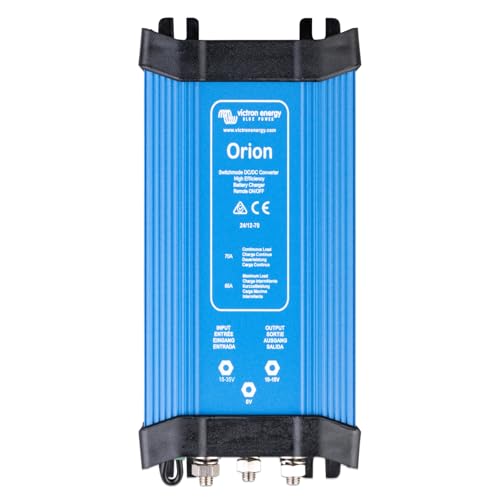
Best for high-demand marine power setups, this Orion model converts 24V to 12V with up to 70 amps of output. It emphasizes high efficiency and includes a remote on-off connector to avoid heavy input-side switching. Suitable for boats with multiple 12V devices and a need for reliable battery charging in a 24V system. Limitations: higher current requires careful wiring layout and adequate cooling in confined spaces.
Victron Energy Orion-Tr DC to DC Converter – 24/12-Volt 20 amp

Better for smaller installations or backup power, this Orion-Tr model provides 20 amps of stable 12V output with IP43 protection. It is well-suited for boats with a dual-battery setup or where a remote switch is preferred. A caveat is its lower continuous current compared to the 70A unit, so plan load carefully to avoid shortfalls in peak demand.
Klnuoxj DC 24V to 12V 30A 360W Buck Converter

This waterproof buck regulator provides 12V at up to 30A, with multiple protections including undervoltage, overload, overcurrent, overheating, and short-circuit protection. It’s a solid choice for boats that require a robust 12V rail from a 24V system and want built-in safety features. Best for mid-sized electrical loads and navigation or cabin lighting. Note: ensure proper heat management in tight engine bays to avoid overheating under heavy load.
Nilight 24V to 12V 20A Regulator

Nilight offers a compact, waterproof 12V converter with 20A output and a rugged aluminum shell. It’s a good fit for smaller vessels or zones with limited space, such as cockpit consoles or helm areas. Best for moderate loads and environments where shock and water exposure are concerns. Limitation: 20A max means higher-demand devices should be grouped to stay within rating.
THLY 24V to 12V DC Buck Converter with LED Display

THLY pairs an LED voltage display with smart MCU protection for real-time monitoring and safety. Suitable for boat electrical systems, RVs, and solar-powered marine setups that benefit from transparency in voltage status. Best for users who want quick status checks. Limitation: no explicit remote on-off in the base model, so use where accessible control is feasible.
Buying Guide: Key Considerations For Marine 24V To 12V Converters
- Load requirements: Estimate total continuous 12V current and peak surges. Choose a converter with a comfortable margin above your calculated draw to prevent overheating or voltage drop.
- Protection features: Look for undervoltage, overcurrent, short-circuit, and thermal protection. Watercraft environments demand robust protection against moisture and shocks.
- Durability and enclosure: An aluminum or sealed IP-rated case helps resist corrosion, salt spray, and vibration. Waterproofing is a practical benefit in marine settings.
- Efficiency and heat: Higher efficiency means less heat, longer component life, and better performance in tight engine spaces. Plan for adequate ventilation if mounting near confined spaces.
- Remote control and monitoring: Remote on-off and voltage display features simplify integration with existing switches and dashboards.
- Input voltage range: Ensure the unit supports your vessel’s typical 24V range and can tolerate transient surges without tripping.
- Mounting and wiring: Verify mounting options, cable gauges, and protection devices (fuses or circuit breakers). Poor wiring can negate the benefits of a high-quality converter.
- Compatibility with auxiliary systems: If used for GPS, radios, or critical navigation gear, prioritize converters with proven stability and low ripple.
Frequently Asked Questions
- Do I need a separate battery charger in addition to a DC-DC converter? A DC-DC converter can supply 12V loads and charge auxiliary batteries when designed for charging; otherwise, use a dedicated charger compatible with marine systems.
- Can these converters handle peak loads from devices like radars or compressors? Some models provide higher peak current; ensure the chosen unit’s max current exceeds your peak load by a safe margin.
- Is IP-rated protection necessary for all marine applications? For exposed locations with moisture or spray, IP-rated (IP43 or IP67) reduces risk; in dry compartments, standard housings may suffice.
- What is the impact of a 24V to 12V converter on battery life? Efficient converters reduce heat and parasitic loss, aiding battery longevity when loads are well-managed.
- Can these units charge a 12V starter battery in a 24V system? Some models support battery charging modes; verify the feature with the manufacturer specifications before use.
- How do I size the converter for marine electronics? List all 12V devices, sum continuous current draws, add a safety headroom (20–30%), and select a converter that meets or exceeds that rating.