Looking for a reliable 13-foot inflatable boat that balances portability with stability? This guide highlights five strong candidates well-suited for fishing, diving, rescues, and recreational sailing. Each option is explained for specific buyer needs—whether you need rugged construction, lightweight design, or space for gear. The top picks are evaluated for durability, setup, and practicality on lakes, rivers, and coastal waters. A quick comparison table and buying tips follow to help you choose confidently.
| Product | Best For | Key Strength |
|---|---|---|
| BRIS 14.1 ft Inflatable Boat | Heavy-duty workboats, outboard-powered trips | Triple-layer protection and robust seams |
| elelife 10FT Inflatable Boat | Portability with decent room | Ultra portable design and independent air tubes |
| HEYBOARD 10ft Dinghy | Fishing, diving, and light recreation | Hull ID and strong keel design |
| Newport NS130 Inflatable Skiff | Compact, lightweight fishing/hunting | Rigid air floor and easy transport |
| BRIS 12.5 ft Inflatable Boat | Water sports and robust outboard use | Heavy-duty PVC with protective features |
BRIS 14.1 Ft Inflatable Boat

The BRIS 14.1 ft inflatable boat is built with 2,000 Dtex 1.2mm PVC fabric and a polyester support system. This configuration emphasizes high tear and abrasion resistance, suitable for rocky shores and saltwater exposure. Seams are heat-welded and often feature quadruple overlap for enhanced durability. The design includes a marine plywood transom for outboard motors, a deep V-keel with rub-strake protection, and five individual chambers with a one-way drain valve. It is an ideal choice for buyers who prioritize ruggedness and long-term endurance in demanding environments. Best for buyers needing a heavy-duty, motor-ready raft that can handle rough water and frequent use. Limitation: heavier and may require more storage space and power to transport.
elelife 10FT Inflatable Boat

elelife offers a versatile 10-foot inflatable designed for multiple uses, including rough ocean conditions, emergency tendering, fishing, and calm water excursions. It features heat-welded seams for durability in both fresh and saltwater. The model prioritizes portability, with independent air tubes and a lightweight profile. Best for buyers seeking a compact, transportable raft that still handles various water conditions. Caution: smaller size means limited onboard gear capacity for larger groups.
Heyboard 10ft Inflatable Dinghy
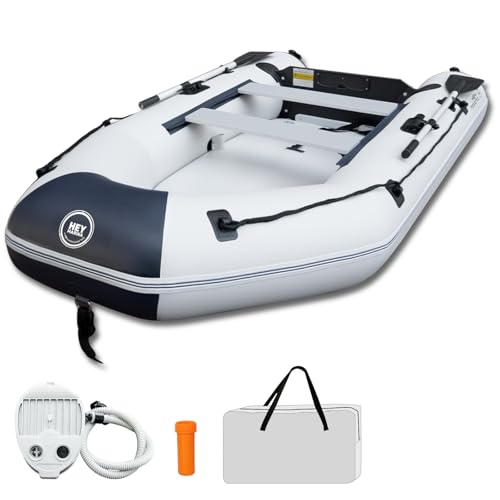
HEYBOARD’s 10-foot dinghy is built as a lightweight, motor-ready platform. It includes a valid hull identification number (HIN) and motor mount considerations, aligning with easy registration in many jurisdictions. The boat uses reinforced PVC with a V-keel design, offering stable tracking and better handling across lakes or coastal waters. Best for anglers or recreational users who want a compact, motor-ready craft. Limitation: ensure the motor compatibility and mounting hardware suit regional requirements.
Newport NS130 Inflatable Skiff

The Newport NS130 is a compact 13-foot skiff designed for portability and ease of transport. It features a rugged 1000D PVC construction, a drop-stitch floor for rigidity, and a lightweight frame that weighs around 66 lbs. The kit typically includes a roll bag and high-volume pump for quick setup. Best for buyers who need a ready-to-go craft that fits easily in a truck bed or on a rooftop rack. Better for those prioritizing quick deployment and minimal storage space. Limitation: 66 lbs is still heavy for solo handling without assistance.
BRIS 12.5 Ft Inflatable Boat

The BRIS 12.5 ft inflatable boat uses heavy-duty 1100 Denier PVC with polyester support, plus heat-welded seams and quadruple overlap for maximum durability. It includes a heavy-duty aluminum floor for a stable platform in water activities like diving and fishing, along with a marine plywood transom for outboard motors. Best for buyers who want a sturdy, motor-ready raft with reliable puncture protection. Caution: heavier build may require more storage and handling effort.
Buying Guide
- Purpose and water type: Match the boat to the typical water conditions (calm lakes vs. choppier coastal waters) and intended activities (fishing, diving, transport, or rescue).
- Material and seams: Look for thick PVC (1000D–2000D) with heat-welded seams and quadruple overlap for durability in resistant environments.
- Floor type: Drop-stitch floors offer rigidity with less weight, while aluminum floors provide a hard, durable platform but add weight.
- Transom and motor readiness: If you plan to use an outboard motor, ensure a marine plywood transom and appropriate mounting provisions are included.
- Portability vs. durability: Heavier, more rugged boats are less portable but more capable in demanding waters. Lighter boats excel for transport and quick deployment.
- Storage considerations: Evaluate the boat’s packed size, weight, and whether you have space to store the inflated or folded unit.
- Safety features: One-way drain valves, multiple air chambers, and self-bailing systems improve floatation safety and ease of use in variable conditions.
FAQ
- What defines a 13-foot inflatable boat?
A: The length helps determine stability, deck space, and load capacity, with 13 feet offering a balance between usable space and portability for many families and anglers. - Are these boats suitable for saltwater use?
A: Yes, many models advertise saltwater durability, but check for corrosion resistance and proper maintenance routines to extend life in brackish or ocean water. - Do these boats require registration?
A: Some models include hull IDs or motor mount provisions; local regulations may require registration depending on motor use and jurisdiction. - Is a drop-stitch floor better than an aluminum floor?
A: Drop-stitch floors provide high rigidity with lighter weight, while aluminum floors can offer extra durability at the cost of added weight. - What should I consider when choosing a motor-ready boat?
A: Ensure a compatible transom, motor weight limits, and the availability of mounting hardware when evaluating motor-ready models. - How important are air chambers for safety?
A: Multiple air chambers reduce the risk of total deflation; models with independent chambers enhance stability and flotation safety.