Choosing the right 12V boat lift motor can simplify raising and lowering your vessel, especially for small to mid-size boats. This guide highlights five top options, focusing on reliability, ease of installation, and suitability for common boat sizes and setups. Best for dockside users seeking quick installs, sealed electronics, and direct-drive efficiency. The selections below help you match motor power, mounting style, and voltage options to your lift system.
| Product | Best For | Key Benefit |
|---|---|---|
| Extreme Max 3012.4509 | Direct-drive lifts, 120V | Fast, easy key-turn operation |
| Extreme Max 3006.4803 | 12V battery-powered wheels | One-box system, simple install |
| Extreme Max 3012.4518 | Direct-drive, 12/24V | Versatile voltage with quick-mount |
| SMC YCN5654BX | Stainless, TEFC motor | Durable frame with easy wiring |
| EMZ 1 HP | Direct-drive waterfronts | Stainless steel, dual voltage |
Extreme Max 3012.4509 Generation 5 Boat Lift Boss Direct Drive

Best for: users who want a fast, straightforward lift with sealed electronics. This 120V key-turn model emphasizes quick operation and weatherproof electronics for all-season use. The direct-drive design minimizes mechanical complexity, helping reduce maintenance and noise during lifts.
- Pros: Fast lift cycles, easy installation, all-weather protection
- Limitations: Requires a 120V power supply and a compatible direct-drive hoist
Extreme Max 3006.4803 Boat Lift Buddy Universal Wheel Drive
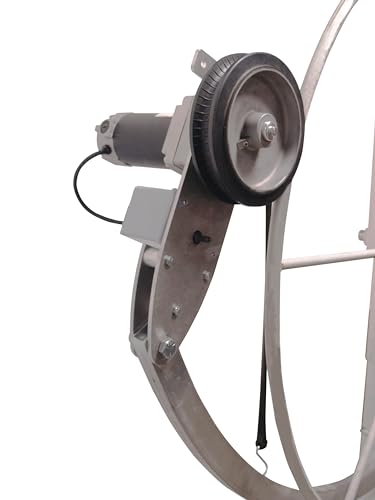
Best for: hands-on owners looking for a universal wheel-drive option that fits most hand wheels. The 12V system includes a long power cable with a quick-connect to your boat’s battery, making it a practical choice for portable or retrofit lifts.
- Pros: Complete one-box system, easy fit to many wheels
- Limitations: Dependent on a reliable battery connection; longer runs may require charging considerations
Extreme Max 3012.4518 Generation 5 Direct Drive

Best for: boaters needing 12V/24V versatility with a quick-mount installation. This model mirrors the 3012.4509’s direct-drive approach but adds dual voltage support, making it adaptable for different lift configurations and shore power scenarios.
- Pros: Flexible voltage options, fast operation
- Limitations: Dual-voltage setups require correct wiring; verify compatibility with your lift
SMC YCN5654BX 1 HP Stainless Boat Lift Motor

Best for: users needing reliable stainless steel construction with a 56C frame and TEFC mounting. The 1 HP motor provides robust lifting capability, with straightforward wiring access for direct-drive hoists in harsh marine environments.
- Pros: High power, durable stainless build
- Limitations: May be heavier and require secure mounting for larger lifts
EMZ 1 HP Boat Lift Motor, Stainless Steel
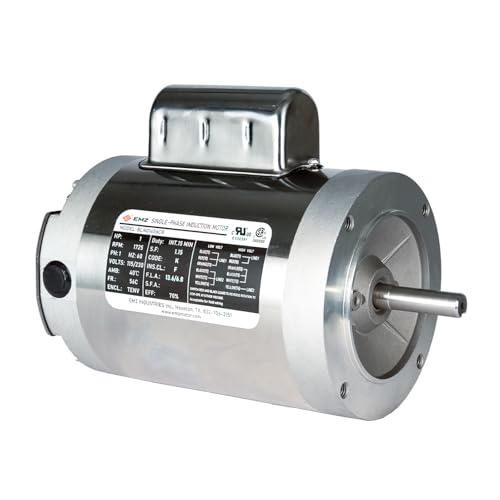
Best for: waterfront lift setups needing a stainless, dual-voltage single-phase motor. The 56C frame and C-Face mounting support stable, reliable operation, while 115/230V compatibility offers installation flexibility for different shore power standards.
- Pros: Stainless construction, dual voltage
- Limitations: Higher power requirement may need heavier-duty controllers
Newport NV-Series 36lb Thrust Trolling Motor

Best for: small craft seeking a lightweight, quiet 12V propulsion option. Although labeled as a trolling motor, its design makes it suitable for auxiliary lifting setups or as a compact drive in lightweight boats, especially where battery efficiency matters.
- Pros: Quiet operation, saltwater-capable
- Limitations: Lower thrust for heavier boats; not a dedicated lift motor
Newport NV-Series 46lb Thrust Trolling Motor
Best for: boats needing stronger perpendicular propulsion. The 46lb thrust version offers more control and power for small boats, while retaining saltwater durability and a robust, corrosion-resistant build. Use this when heavier loads demand more push.
- Pros: Stronger thrust, reliable in varied conditions
- Limitations: Still designed for propulsion; ensure lift compatibility with your system
Solarhome 12V Heavy Duty Hydraulic Winch Motor

Best for: retrofitting or replacing hydraulic winches and anchor lifts with 12V hydraulic-compatible motors. This option covers specialized winch applications beyond standard direct-drive lift systems, useful for heavier outdoor setups and lobster pot haulers.
- Pros: Designed for hydraulic winch systems, durable
- Limitations: Not a standard direct-drive lift motor; verify compatibility with your equipment
Buying Guide
Key considerations when selecting a 12V boat lift motor include compatibility with your lift system (direct-drive vs. wheel drive), voltage options (12V vs. 24V or dual), mounting compatibility (56C frame, C-Face, or other), and the environment (saltwater vs. freshwater). For direct-drive hoists, prioritize sealed electronics and weatherproof protection to minimize corrosion and downtime. If you rely on a boat’s battery for power, a 12V wheel-drive option with a long power lead can be convenient, but ensure battery capacity aligns with lift cycle needs. Stainless steel construction improves durability in marine settings. For larger or heavier boats, choose higher horsepower or thrust levels, and verify mounting compatibility with your current lift’s specifications.
FAQ
- What is the difference between 12V and 24V lift motors? – 12V motors draw less current and are common for small lifts, while 24V motors provide more power for heavier boats or longer lift cycles.
- Do direct-drive motors require special mounting? – Yes, they typically need a compatible direct-drive hoist and proper mounting to ensure stable operation.
- Are stainless steel motors better for saltwater? – Stainless steel offers superior corrosion resistance, making them preferable for saltwater use.
- Can I use a trolling motor for a boat lift? – Trolling motors are designed for propulsion; use them only if your application specifies lift compatibility or lightweight auxiliary needs.
- Is dual-voltage wiring risky? – Dual-voltage setups must be wired correctly to avoid damage; follow manufacturer instructions or consult a professional.
- How do I know which motor fits my lift? – Check your lift’s voltage requirements, mounting frame (56C, C-Face, etc.), and drive type; select a motor that matches those specs.