Looking for a reliable 12V lithium battery to power a trolling motor? This guide highlights five top 12V LiFePO4 options that fit trolling motors, boats, and other mobile power setups. Each pick is evaluated for longevity, safety features, and suitability for marine environments. Best for boaters needing durable, maintenance-free energy storage with strong cycle life and smart protections. A quick buyer’s table follows to compare core specs and ideal use cases.
| Product | Best For | Key Benefit |
|---|---|---|
| SUPER EMPOWER 12V 100Ah LiFePO4 (Group 24) | RV, Marine, Trolling Motors | Drop-in lead-acid replacement with long cycle life |
| Litime 12V 100Ah (Group 31) LiFePO4 | Remote boats, Yacht, RV | Bluetooth monitoring, strong cold-weather protection |
| DC HOUSE 12V 100Ah LiFePO4 (Group 24) | Marine, Trolling Motors | Low-temp cut-off, app Bluetooth monitoring |
| Litime 12V 100Ah (Group 31) 2-Pack | Large power needs, multiple trolling motors | Dual-pack convenience, robust protections |
| SUPER EMPOWER 12V 100Ah LiFePO4 (Group 31) | Extended marine setups, solar + trolling | Long cycle life, multiple protection features |
SUPER EMPOWER 12V 100Ah LiFePO4 Battery (Group 24)

Best for: boater who wants a reliable drop-in replacement for lead-acid systems. The battery uses premium LiFePO4 cells and an integrated BMS to guard against overcharge, over-discharge, overcurrent, short circuits, and temperature extremes. It is designed for energy storage in RVs, boats, and off-grid setups, not for engine starting. This model emphasizes long life and stable daily performance.
Why selected: It offers a generous cycle life with a stated 10-year lifespan and up to around 15,000 cycles at favorable DoD levels. The 100Ah capacity translates to substantial usable energy for trolling motors and auxiliary power. Its Group 24 sizing aligns with many standard marine boxes.
Limitations: Not intended for engine cranking; charging and discharging management relies on the built-in BMS. Ensure compatible chargers and solar controllers are used in lithium mode.
Litime 12V 100Ah LiFePO4 (Group 31) Battery

Best for: mariners who value smart battery status at a glance. This model features Bluetooth monitoring for the battery status, discharge control, and system checks, all accessible via a mobile app. It also includes low-temperature protection to prevent charging below freezing and discharge at very low temps.
Why selected: The built-in 100A BMS and IP65-rated exterior protect against dust and water exposure, making it suitable for harsh marine environments. The Bluetooth connectivity supports quick diagnostics on the go.
Limitations: Bluetooth range is limited; manual checks may still be needed for long trips. Ensure proper LiFePO4 charging practices to maximize cycle life.
DC HOUSE 12V 100Ah LiFePO4 (Group 24)

Best for: users needing robust cold-weather protection and convenient monitoring. The battery includes Low Temp Cut-Off to protect charging below 32°F and discharging below -4°F, and a Bluetooth app for SOC and voltage visibility.
Why selected: It emphasizes safety with a Class A LiFePO4 composition and a 10-year life; up to 15,000 cycles are claimed under certain DoD conditions. The combination of low-temp protection plus app-based diagnostics supports reliable seasonal use.
Limitations: Low-temperature cut-off can limit charging in winter; plan charging windows accordingly. Use lithium-appropriate chargers for optimal results.
Litime 12V 100Ah LiFePO4 (Group 31) 2-Pack

Best for: power-heavy trolling setups requiring multiple batteries for extended runtime. The dual-pack arrangement delivers more total energy for longer boating sessions or multi-motor setups.
Why selected: It shares the same core advantages as the single-pack LiFePO4 from Litime, including 100A BMS, low-temp protection, and multi-protection features, with the added benefit of immediate scalability.
Limitations: Parallel or series configurations should be wired correctly to avoid imbalance. Confirm controller compatibility when using two packs together.
SUPER EMPOWER 12V 100Ah LiFePO4 (Group 31)
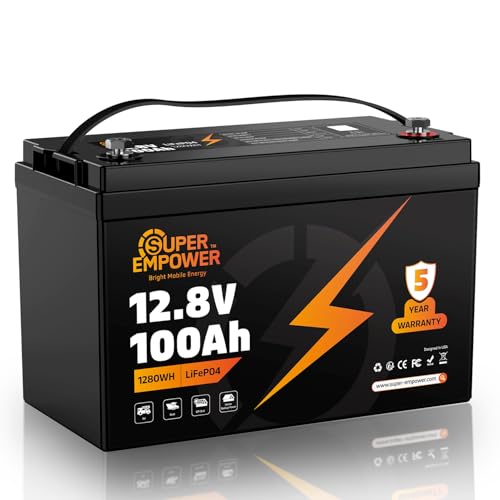
Best for: longer, more complex marine power systems where Group 31 sizing fits your battery box and load profile. This model emphasizes high cycle life across multiple DoD scenarios.
Why selected: It provides a strong long-cycle performance claim, with 5,000 cycles at 100% DoD and up to 15,000 cycles at 60% DoD, making it a solid option for heavy daily use on boats or off-grid setups. Aimed at users needing robust energy storage alongside trolling motor use.
Limitations: Ensure your charger and solar setup are compatible with lithium mode to maximize cycle life and performance.
Buying Guide: Key Considerations For 12V LiFePO4 Batteries For Trolling Motors
- Voltage and capacity: Most trolling motor setups use 12V LiFePO4 batteries. Aim for 100Ah or higher for longer runtimes; check your motor’s current draw to estimate runtime.
- Cell chemistry and cycle life: LiFePO4 cells provide stable performance, long life, and safety advantages over lead-acid. Look for batteries with high cycle counts and a protective BMS.
- Protection features: A good BMS should guard against overcharge, over-discharge, overcurrent, short circuits, and temperature extremes. Low-temp protection helps in cold climates.
- Temperature considerations: Cold weather can affect charging efficiency. Models with low-temp cut-off help prevent damage and extend life.
- Monitoring and diagnostics: Bluetooth or app-based monitoring can simplify maintenance. Ensure the interface is user-friendly and compatible with your device.
- Physical fit: Check dimensions and weight to ensure compatibility with marine battery boxes and mounting spaces. Group 24 and Group 31 sizes fit common configurations.
- Charge strategy: Use a lithium-optimized charger or a lithium mode setting on solar controllers. Avoid using non-lithium chargers that may harm the battery or reduce life.
- Water and dust exposure: For marine use, look for IP ratings or rugged housings, especially if wiring and terminals are exposed to spray.
- Maintenance and warranty: Although LiFePO4 requires less maintenance than lead-acid, verify any warranty terms and what constitutes proper use in marine environments.
Frequently Asked Questions
- Q: Can I replace a lead-acid trolling motor battery with a LiFePO4 battery?
- A: Yes, LiFePO4 can be a drop-in replacement in many setups, but confirm compatible BMS, charger settings, and box size before switching.
- Q: What is the typical cycle life for a 12V LiFePO4 trolling motor battery?
- A: Many 12V LiFePO4 batteries claim thousands of cycles; life varies with depth of discharge and usage, commonly up to 5,000–15,000 cycles depending on DoD.
- Q: Do these batteries require special chargers?
- A: Yes. Use chargers designed for LiFePO4 chemistry or lithium mode on multi-chemistry chargers to ensure proper charging voltages and safety protections.
- Q: How cold is too cold for charging a LiFePO4 battery?
- A: Charging is generally disabled below 0°C (32°F) by BMS in these models; some offer cut-off temperatures to protect cells.
- Q: Is Bluetooth monitoring essential for a trolling motor battery?
- A: It’s beneficial for quick status checks on longer trips, but not strictly essential if you prefer manual monitoring.