The right 12 volt boat horn helps you signal clearly on the water, meet safety requirements, and communicate with other vessels. This guide identifies five dependable options, explains who they’re best for, and highlights practical trade-offs. Ideal buyers include recreational boaters needing compact, easy-install solutions; skippers prioritizing corrosion resistance; and yachts or larger boats seeking higher-decibel signals.
Summary of chosen products:
| Product | Best For | Key Benefit |
|---|---|---|
| Marinco 10035 12V Mini Compact Electric Horn | Small boats, tight spaces | Sealed unit with stainless steel cover; 106 dB at 1 m |
| FUYEAR 5190512 Boat Horns | All-around reliability and stainless fit | 316 stainless steel construction; 125 dB; durable mounting |
| Marinco 10099 12V MiniBlast Compact Single Horn | Compact, single-horn setups | ASA cover; 106 dB; 440 Hz frequency |
| Marinco 10098 12V MiniBlast Black Cover | Low-profile aesthetic; standard duty | 107 dB; compact dimensions |
| FARBIN Stainless Steel Boat Horn | All-weather durability | Waterproof, 125 dB at 4 inches; 304 stainless steel |
Marinco 10035 12V Mini Compact Electric Horn

Best for compact installations where space is at a premium. This horn features a totally sealed sound unit with a type 304 stainless steel cover, diaphragm, and mounting bracket. It draws a maximum of 3 amps and delivers 106 dB at one meter, providing a loud, clear signal without excessive power use. Suitable for smaller boats, dinghies, or sailboats with limited helm space. Caution: larger vessels may require higher-dB options for signaling at greater distances.
FUYEAR 5190512 Boat Horns 316 Stainless Steel 12V

Best for seawater-rich environments where corrosion resistance matters. This universal-fit horn comes with two high-quality 316 stainless steel mounting screw types and a seawater resistance test standard. It’s designed to blend with modern, clean boat lines and offers robust sound in challenging conditions. Caution: heavier or larger boats may benefit from higher-dB models for longer signaling ranges.
Marinco 10099 12V MiniBlast Compact Single Horn

Choose this if you want a compact, single-horn setup with a long-lasting ASA plastic cover and a sealed stainless-steel diaphragm. It delivers 106 dB at one meter and has a fundamental frequency around 440 Hz. Best for boats needing a simple, reliable horn without extra bulk. Limitation: the single-horn design may require precise mounting to ensure optimal sound projection in rough seas.
Marinco 10098 12V MiniBlast Black Cover
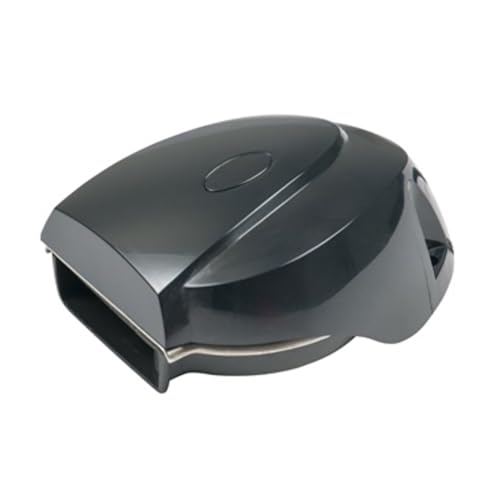
Best for boats where a subtle, low-profile appearance matters. This model offers a 107 dB signal with compact dimensions (approximately 4.375″ L x 3.375″ W x 2″ H) and a 3-amp draw. It’s a strong middle-ground option for users who want a tough, non-flashy look without sacrificing audible signaling. Caution: consider masthead or spray conditions that may affect horn orientation and projection.
FARBIN Stainless Steel Boat Horn

Best for all-weather durability and high-signal needs. The horn uses 304 stainless steel construction and a sealed design for waterproofing and rust resistance. It emits up to 125 dB at 4 inches, meeting or exceeding common maritime sound standards. Caution: at longer ranges, 4 inches is a short distance; you may want to pair with a second horn for extended signaling in open waters.
Buying Guide: Key Considerations For 12V Boat Horns
- Signal strength and range: Compare decibel output (dB) and fundamental frequency. Higher dB often provides better audible distance in noisy conditions but may draw more current.
- Material and corrosion resistance: 316 stainless steel or 304 stainless steel housings offer superior saltwater durability. Consider whether a sealed unit is necessary for your boating environment.
- Mounting and space: Check dimensions and mounting brackets. Small boats benefit from compact designs; larger vessels may need longer units or dual-horn configurations.
- Power draw and electrical system: Typical 12V horns draw up to about 3 amps. Ensure your battery and wiring can safely support the load, especially for extended signaling.
- Aesthetics and fit: Some hulls benefit from low-profile black or white covers for visual integration with the deck or rails.
- Warranty and maintenance: Look for sealed units and corrosion-resistant diaphragms to minimize maintenance in marine environments.
Frequently Asked Questions
- What is a good decibel level for a boat horn? A typical functional level is around 106–125 dB at close range (about 4 inches to 1 meter), sufficient for signaling in busy marinas and open water.
- Do I need stainless steel for a boat horn? Stainless steel housings improve corrosion resistance in saltwater and high-humidity environments, extending lifespan with less maintenance.
- Can I install a boat horn myself? Yes, most 12V horns are designed for simple mounting on bulwarks or cabin tops. Ensure proper wiring and secure mounting to avoid vibration or movement in waves.
- Is a bigger horn always better? Not always. Higher dB can be beneficial at long distances or noisy marinas but may require more power and proper mounting. Consider your boat size and signaling needs.
- Should I choose a single horn or dual horns? Single horns are compact and easy to install. Dual horns offer broader coverage and potentially louder combined signals, useful on larger vessels.
- How do I maintain a marine horn? Regularly inspect mounting screws, seals, and the diaphragm for wear. Clean off salt buildup and test operation periodically to ensure reliability.