Looking for compact, portable fuel tanks to top off your outboard on a small boat or deck craft? This guide highlights five compact, 3-gallon (12L) portable marine tanks that fit under seats and offer easy transfer to outboards. Each option is chosen for reach, compatibility, and practical design. Ideal buyers include anglers, weekend sailors, and skiffs needing reliable auxiliary fuel without bulk.
Summary table of selected products:
- VEVOR Boat Fuel Tank, 3.17 Gallon (12L) – Best overall durability and compatibility for Yamaha connectors.
- Attwood 3-Gallon Portable Marine Fuel Tank – Best for automotive-grade multi-layer construction and steady flow.
- LIZHOUMIL Portable Boat Fuel Tank, 3 Gallon – Best for clear gauge and built-in filter.
- PeakPursuit Marine Tank, 3 Gallon – Best ergonomic handle and level indicator.
- BouPower 3 Gallon Portable Storage Tank – Best for dual-mode cap and compatibility.
VEVOR Boat Fuel Tank, 3.17 Gal

The VEVOR 3.17 gal (12 L) fuel tank is designed for outboard motors on small to mid-size boats. It includes a 9.8 ft / 3 m hose with a 0.24 inch (6 mm) inner diameter, making it compatible with Yamaha connectors for smooth transfer. The tank is made from high-density polyethylene to withstand aging, impact, and corrosion. A molded top handle aids transport, and the compact footprint fits under seats for space-conscious setups. Caution: avoid prolonged direct sun exposure to prevent aging and expansion.
Best for: boaters needing a robust, compact transfer tank with decent hose length and Yamaha compatibility. It’s a solid choice for deck boats, fishing boats, and casual cruisers who value long service life and straightforward handling.
Attwood 8803LP2 EPA/ CARB 3-Gallon Tank

Attwood’s 3-gallon portable tank uses automotive-grade, multi-layer construction designed to withstand closed fuel-system pressures and harsh marine environments. It includes an automatic vacuum valve intended to maintain steady fuel flow without manual venting. This model emphasizes durability and consistent performance, making it a dependable option for frequent refueling during long days on the water.
Best for: boatowners who prioritize long-term reliability and a steady fuel flow with minimal venting adjustments. Suitable for varied sea conditions and frequent use in salt or freshwater environments.
Caution: ensure compatibility with your specific engine fittings and observe any mounting considerations in small payload setups.
LIZHOUMIL Portable Boat Fuel Tank, 3 Gal
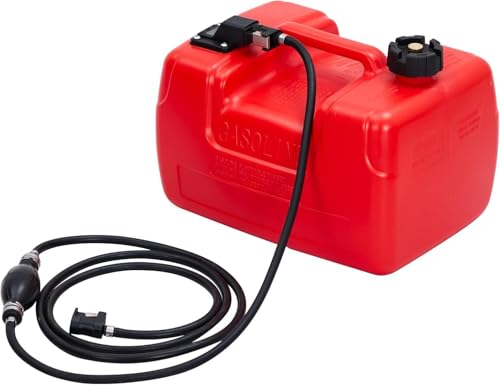
The LIZHOUMIL 3-gallon tank highlights an ergonomic I-shaped handle for comfortable carrying and a clear fuel gauge alongside a built-in filter. This design helps monitor fuel levels at a glance and maintain fuel cleanliness for smoother engine performance. The tank is built to resist aging and impact, with a visible gauge to help plan refueling stops on long trips.
Best for: boaters who want easy visibility of fuel levels and built-in filtration to help maintain engine efficiency. Great for anglers or day-trippers who refuel frequently away from docks.
Limitation: the built-in filter helps maintain fuel quality, but fuel cleanliness should still be verified when refueling from less-regulated sources.
PeakPursuit Marine Tank, 3 Gal

The PeakPursuit 3-gallon tank offers a robust construction with an ergonomic I-shaped handle for easy transport. It features a fuel level indicator and an integrated filter to help ensure clean fuel for optimal engine performance. The tank is designed for easy carrying and refueling on boats where space is at a premium.
Best for: boaters needing clear fuel monitoring and simple portability for on-deck refueling. Suitable for inflight refuels during extended day trips or fishing expeditions.
Limitation: while durable, the tank’s 3-gallon capacity may require more frequent refueling on longer trips compared to higher-capacity options.
BouPower 3 Gal Portable Storage Marine Tank

BouPower’s tank supplies a 9.8 ft hose with a vented dual-mode cap for balanced pressure and secure sealing during transfers. It touts compatibility with most marine tank interfaces and uses high-density polyethylene for resistance to aging and impact. A cautionary note: prolonged sun exposure should be avoided to prevent aging and expansion.
Best for: boaters who need a versatile, leak-resistant option with a long hose for flexible fueling positions and wide compatibility with different interfaces.
Limitation: lengthy exposure to sunlight may degrade plastic over time; store in shade when not in use.
Buying Guide
What to consider when choosing a portable outboard fuel tank
- Capacity: Most small boats benefit from 3 gallons (12 L). Choose a size that minimizes refueling trips without overloading deck space.
- Hose length and diameter: A longer hose (around 9.8 ft / 3 m) improves reach. Look for a hose with a compatible inner diameter (commonly 0.24–0.3 inches) for your engine fittings.
- Compatibility: Check connector compatibility with your outboard brand (e.g., Yamaha) and ensure secure fittings.
- Construction: HDPE tanks resist aging and impact. Consider multi-layer automotive-grade or marine-grade materials for durability in harsh environments.
- Ventilation and caps: Dual-venting or automatic vacuum valves help maintain steady fuel flow and reduce spills during transfer.
- Gauge and filtration: Clear fuel gauges help monitor levels; built-in filters assist in keeping fuel clean for engine performance.
- Portability and storage: Ergonomic handles and compact shapes aid transport and storage under seats or benches.
- Sun exposure: Prolonged sun exposure can age plastics; store in shade when not in use.
FAQ
- What tank capacity is best for a small fishing boat? – A 3-gallon (12 L) tank offers a good balance between range and portability for most small boats and day trips.
- Can I use any 3-gallon tank with my outboard? – Compatibility depends on hose length, inner diameter, and connector type. Check your engine fittings and ensure the tank hose matches your connectors.
- Is a built-in gauge important? – A gauge helps monitor remaining fuel, reducing the risk of fuel shortages during trips. It’s especially useful for anglers and day cruisers.
- Do these tanks leak when transferring fuel? – Reputable tanks often feature sealed or vented caps and robust materials to minimize leaks; always ensure the cap is secure before transport.
- Should I store tanks in sun or shade? – Shade is preferred to slow aging and prevent expansion; long-term storage in heat can degrade plastics.
- Is a built-in filter necessary? – A filter helps keep fuel clean before it reaches the engine, aiding performance, though it’s not a substitute for proper fuel quality.