If you’re outfitting an inflatable boat, the right outboard motor can boost speed, efficiency, and maneuverability. This guide focuses on compact, gasoline and electric options that pair well with inflatables. It highlights buyers: hobby anglers needing easy starts, boaters seeking portable power, and those prioritizing durability in saltwater or freshwater use. Below is a quick summary of five well-suited choices and who they’re best for.
| Product | Power | Best For | Notes |
|---|---|---|---|
| HinLIaDa 2-Stroke 2.3HP | 2.3 HP | Light, budget-friendly inflatables | High efficiency; easy steering |
| CUKUSIN 4 Stroke 4 HP | 4 HP | Balanced power and durability | Four-stroke reliability; easy maintenance |
| YaggeBike 4-Stroke 4 HP | 4 HP | Stable performance, saltwater or freshwater | Air cooling; lightweight |
| YIYIBYUS 2.3HP 52cc | 2.3 HP | Entry-level inflatables | Non-contact ignition; aluminum/PP build |
| COFECO 6.5 HP 123cc | 6.5 HP | Aggressive propulsion for larger inflatables | Water cooling; CDI ignition |
HinLIaDa 2-Stroke 2.3HP Outboard Motor
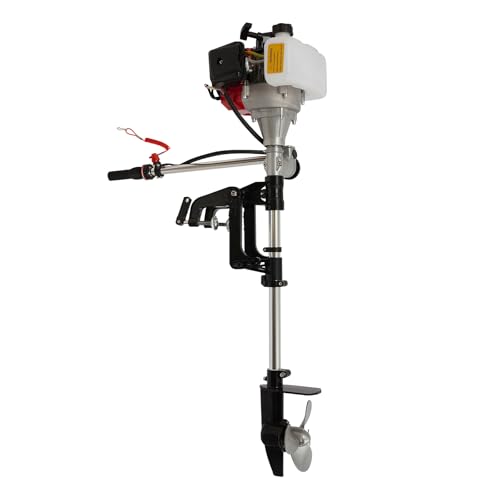
Best for lightweight inflatables and anglers on a tight budget. This motor offers 2.3 HP with a 52cc displacement, built from durable aluminum and PP components for corrosion resistance and longevity. It features a high operating speed (4500-8500 rpm) for solid propulsion and a steering angle greater than 120° for easy control on small boats.
Who it’s best for: buyers needing a simple, cost-effective option for compact inflatables, especially when portability matters. Caution: as a two-stroke, fuel mixing is required and maintenance should follow manufacturer guidelines.
CUKUSIN 4 Stroke Outboard Motor 4 HP

Best for users who want a balance of power, reliability, and ease of maintenance. This four-stroke, 4 HP motor emphasizes a smooth throttle, durable lubrication, and a weight around 15 kg for manageable handling. It’s designed for use with inflatables, kayaks, and small boats, with round-the-clock support noted by product descriptions.
Who it’s best for: buyers prioritizing user-friendly operation and consistent performance. Caution: ensure compatibility with your specific inflatable transom and shaft length.
YaggeBike 4-Stroke 4HP Outboard Motor

Best for inflatables that require a robust propulsion system with low noise and better fuel efficiency. The 4-stroke, 4 HP design uses air cooling to improve durability and reduce overheating, while CDI ignition ensures easier starting. It’s suitable for both freshwater and saltwater use.
Who it’s best for: boaters seeking a stable, reliable small motor with quieter operation. Caution: confirm shaft length and mounting fit for your inflatable model.
YIYIBYUS 2.3HP 52CC Outboard

Best for beginners and budget-minded buyers seeking a compact, efficient motor. It features a 52cc, 2-stroke engine with non-contact electronic ignition and aluminum-PP construction for durability. Operating speed matches other 2.3 HP units, offering solid acceleration for small inflatables.
Who it’s best for: first-time buyers or those who want a lightweight, easy-to-transport motor. Caution: two-stroke engines require fuel mixing and regular maintenance intervals.
COFECO Outboard Motor, 6.5 HP
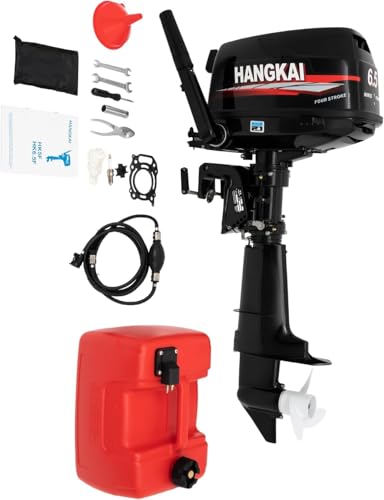
Best for larger inflatables or quick planing performance. This 4-stroke, 6.5 HP motor delivers higher power with a 123cc displacement and water-cooling. CDI ignition provides straightforward starting, and the design emphasizes durability and reliability in varying water conditions.
Who it’s best for: buyers needing stronger propulsion for larger boats or faster speeds. Caution: heavier than lower-horsepower models; confirm mount compatibility and fuel needs before purchase.
Buying Guide
What should you consider when choosing an outboard motor for an inflatable boat?
- Power needs: Match horsepower to boat size, weight, and typical load. Inflatable boats usually perform well with 2–6 HP for recreational use.
- Engine type: Four-stroke motors are typically easier to maintain and run cleaner, while two-stroke engines can be lighter and simpler but need fuel-oil mixes.
- Shaft length: Ensure the shaft matches your transom height to keep the propeller fully submerged during operation.
- Fuel considerations: Gasoline engines require fuel and oil mixing (for two-stroke) or dedicated oil for four-stroke; check consumption and tank capacity to plan trips.
- Cooling system: Water cooling improves engine longevity, especially in longer sessions or warmer environments.
- Starting method: CDI or electronic ignition offers quick starts; manual pull starts require more effort, particularly in cold conditions.
- Maintenance and support: Look for motors with readily available spare parts, tutorials, and accessible customer service.
- Intended environment: Saltwater vs. freshwater use affects corrosion resistance and maintenance frequency.
Frequently Asked Questions
- What horsepower is ideal for an inflatable boat? For most recreational inflatables, 2–4 HP is suitable for calm waters; larger inflatables may benefit from 6.5 HP or more for planing performance.
- Are four-stroke motors better than two-stroke? Generally yes for ease of use, emissions, and maintenance, though two-stroke motors tend to be lighter and simpler.
- Do inflatable boats require a compatible shaft length? Yes. The shaft should match your boat’s transom height to keep the propeller submerged properly.
- Is electric trolling motor a good option for inflatables? Electric options work well for light use, quiet operation, and precise trolling; they may lack raw thrust for larger inflatables.
- What maintenance is common for small outboards? Regular spark plug checks, fuel mixing (for two-stroke), oil changes (where applicable), and flushes after saltwater use help extend life.
- Should I buy a used or new outboard for an inflatable? New motors offer predictable performance and warranty; used units can save money but require thorough inspection for wear and corrosion.