Answering the question most boat owners ask: which marine battery smart charger should you choose for dependable, maintenance-friendly charging? This guide highlights five top options, each with distinct strengths. Ideal for boaters, anglers, and cruise enthusiasts who want automatic charging, temperature compensation, and compatibility with lead-acid and lithium batteries. The featured chargers cover single-bank to multi-bank configurations and include models designed for harsh marine environments.
| Product | Banks / Amps | Battery Types | Best For | Notes |
|---|---|---|---|---|
| NOCO Genius GEN5X3 | 3 banks, 15A total (5A Bank) | Lead-Acid, Lithium | Powerful multi-bank charging for larger boats | Compact for its capacity; robust in marine conditions |
| NOCO Genius GEN5X2 | 2 banks, 10A total (5A Bank) | Lead-Acid, Lithium | Two-battery systems with independent modes | Most compact 2-bank option with temperature compensation |
| NOCO Genius GEN5X1 | 1 bank, 5A | Lead-Acid, Lithium | Simple, reliable single-battery maintenance | Very compact and easy to install |
| NOCO Genius GENIUS10 | 1 bank, 10A | Lead-Acid, Lithium | Higher-power single-bank option | Higher current with temperature compensation |
| NEXPEAK NC201 | 1 or 2 banks? (10A total, 12V/24V quick charger) | Lead-Acid, AGM, Gel, Flooded, Lithium | Flexible 12V/24V on boats and trailers | Includes 12V/24V versatility and safety protections |
NOCO Genius Gen5X3: 3-Bank, 15A Onboard Charger
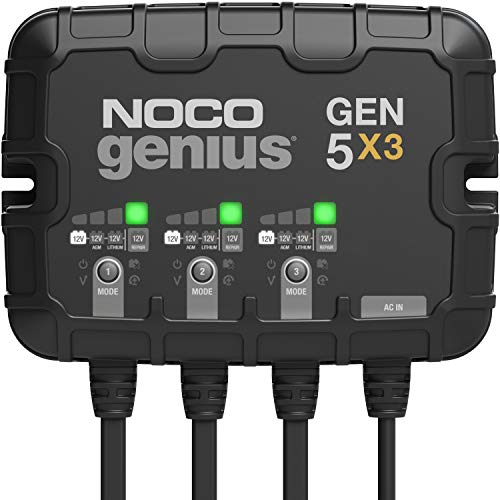
The Gen5X3 provides three independently controlled charging banks at a total of 15A (5A per bank). It supports 12V lead-acid and lithium batteries and includes modes for 12V, 12V AGM, 12V Lithium, and a Repair Mode. Best for larger boats with multiple battery banks requiring separate charging profiles. The device is engineered for harsh marine environments and offers temperature compensation to prevent over- or undercharging. A limitation is the higher installation footprint compared to single-bank options, which may affect installation space on compact vessels.
NOCO Genius GEN5X2: 2-Bank, 10A Onboard Charger

Two independent 5A banks make this GEN5X2 ideal for boats with two critical battery runs, such as a starting battery and a deep-cycle house battery. It supports 12V, 12V AGM, 12V Lithium, and a Repair Mode, with temperature compensation for consistent performance. Best for mid-sized boats or sailboats with dual-battery setups. A caution: ensure adequate space for two banks and proper heat dissipation in enclosed compartments.
NOCO Genius GEN5X1: 1-Bank, 5A Onboard Charger
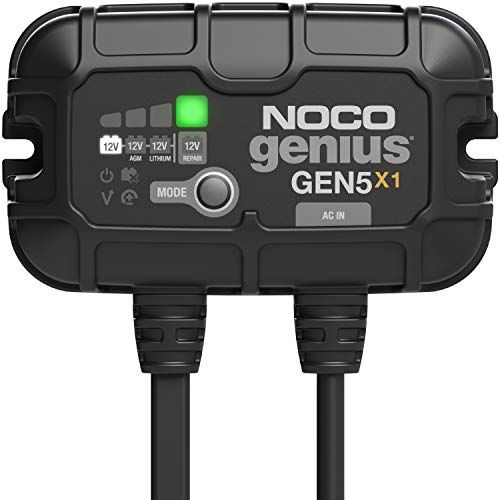
A single-bank 5A charger designed for boats with a single essential battery or a simple setup. Features include charging modes for 12V, 12V AGM, 12V Lithium, and a Repair Mode. Best for small boats or as a dedicated maintainer on equipment with one primary battery. Limitation: lack of multi-bank capability if you need to manage more than one battery in parallel.
NOCO Genius GENIUS10: 10A 6V/12V Smart Charger
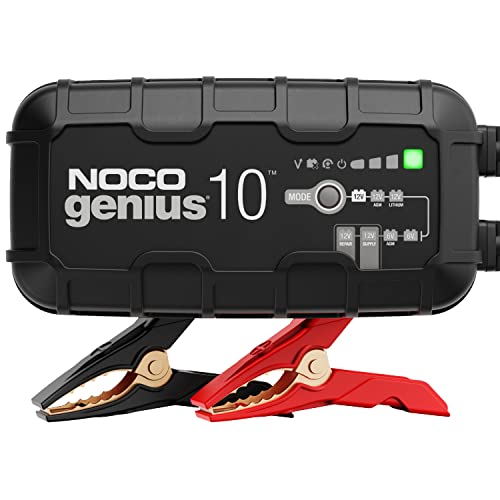
GENIUS10 offers a higher-current, single-bank option suitable for boats with quick charging needs or larger starting batteries. It supports 6V and 12V lead-acid and lithium batteries, with digital temperature compensation to tailor charging. Best for vessels requiring faster top-offs without adding another bank. Caution: higher current may generate more heat; ensure proper mounting and ventilation.
NOCO Genius GENIUS5: 5A 6V/12V Smart Charger
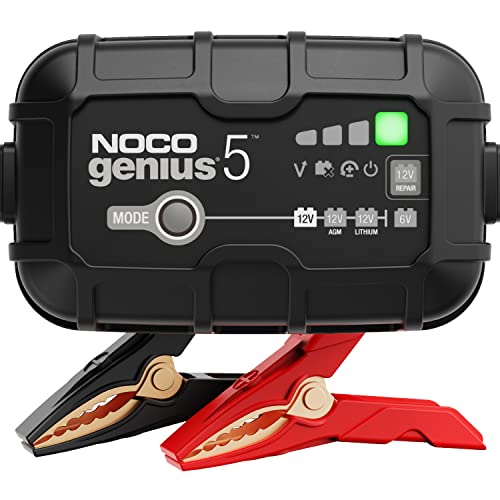
The GENIUS5 provides 5A of charging power in a compact design, suitable for maintenance and trickle charging of a single battery. It supports 6V and 12V lead-acid and lithium batteries with a temperature sensor for precision. Best for small boats or as a portable inline charger. Limitation: not ideal for heavy charging needs or multiple batteries without a second unit.
Buying Guide
What to consider when choosing a marine battery charger
- Battery bank needs: Determine how many batteries you manage onboard. If you have a large system, a multi-bank charger (2-bank or 3-bank) can simplify scheduling and maintenance.
- Voltage compatibility: Most marine chargers handle 12V systems; some models support 6V as well or 24V in dual-voltage configurations. Confirm your boat’s battery voltage before buying.
- Battery chemistry support: Look for chargers that support lead-acid (including AGM, Gel) and lithium (LiFePO4) chemistries to future-proof your setup.
- Temperature compensation: This feature adjusts charging based on ambient temperature, preventing overcharging in heat and undercharging in cold conditions.
- Waterproof and rugged design: Marine environments demand sealed, corrosion-resistant enclosures and IP-rated protection for reliability on deck or in bilge areas.
- Repair and maintenance modes: Some models offer repair modes to recover deeply discharged or sulfated batteries, which can extend battery life.
- Installation space and heat dissipation: Larger multi-bank units require more mounting space and ventilation. Plan the location to avoid overheating.
FAQ
- What is the advantage of a multi-bank charger? – It allows independent charging profiles for multiple batteries, reducing cross-interference and improving overall battery health.
- Do marine chargers work with lithium batteries? – Yes, many models support LiFePO4 lithium chemistries in addition to lead-acid types.
- Is temperature compensation important? – Yes, it helps prevent overcharging in heat and undercharging in cold, preserving battery capacity and lifespan.
- Can I install a charger in a small boat? – Yes, but choose a compact model with appropriate waterproofing and heat management for your space.
- Should I choose a single-bank or multi-bank charger? – Choose single-bank for simple needs or where space is limited; multi-bank is better for boats with more than one essential battery.
- Can a charger revive a dead battery? – Some models offer a repair mode that can help recover a sulfated or deeply discharged battery, but effectiveness varies by battery condition.