Answer: A trolling motor kill switch is a safety device that instantly disconnects power to your trolling motor if the operator falls overboard or needs to stop the motor quickly. This guide highlights five reliable options, clarifying who each is best for and why. Ideal buyers include recreational anglers needing quick access, boaters seeking rugged waterproof builds, and DIY installers wanting straightforward mounting. A quick summary table follows to help you compare at a glance.
| Product | Brand | Best For | Notable Benefit |
|---|---|---|---|
| Seachoice Universal Boat Kill Switch Kit | SEACHOICE | All-around safety kit for small to mid-sized boats | Universal fit with coiled lanyard |
| ZOOKOTO Universal Boat Kill Switch & Lanyard | ZOOKOTO | Durable, high-quality tether for frequent use | Includes safety tether and quick install |
| Nilight 90015A Battery Switch | Nilight | Battery protection and power isolation | Heavy-duty DC switch with waterproof housing |
| Haoguo Trolling Motor Foot Control Switch | Haoguo | Hands-free operation for active anglers | Foot-operated, 12-24V, up to 50A |
| Five Oceans Foot Switch with On Lever | Five Oceans | High-amperage, continual control | IP65 waterproof, 12-24V |
Seachoice Universal Boat Kill Switch Kit, Red

The Seachoice kit provides a complete kill-switch solution with a 50-inch coiled lanyard and a disconnect clip. Best for boaters who want a ready-to-install, universal option, the kit’s black nylon casing adds durability and weather resistance. Suitable for smaller or mid-size boats where a straightforward safety tether is preferred. A potential limitation is the universal fit; confirm compatibility with your boat’s wiring before installation.
ZOOKOTO Universal Boat Kill Switch & Safety Lanyard
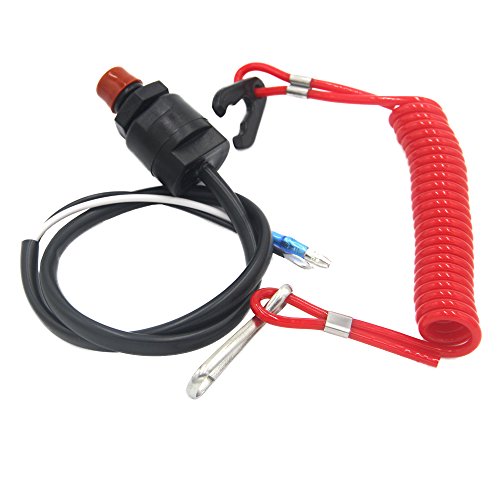
The ZOOKOTO safety lanyard is designed for Yamaha, Tohatsu, Honda and similar outboards. It emphasizes safety and easy installation, making it a strong choice for boaters who want a reliable tether with a dedicated kill-switch mechanism. Best for frequent use on recreational boats. A limitation to note is that compatibility depends on your particular motor model; verify fitment before purchase.
Nilight 90015A Battery Switch 12-48V

Nilight’s heavy-duty battery switch is designed to isolate and protect the electrical system. With a rugged ABS housing and multiple current ratings, it works as a safe disconnect for marine DC systems. It’s best for boaters seeking a robust master disconnect that can stand alone or be paired with other switches. A potential drawback is that it functions as a general battery switch rather than a dedicated kill-switch tether, so it’s more about power isolation than immediate in-harness emergency stopping.
Haoguo Trolling Motor Foot Control Switch

Haoguo offers hands-free trolling motor control with a foot-operated switch. Compatible with 12V–24V systems and rated up to 50A, it supports quick starts and stops without bending over. Best for anglers who need continuous control without tying up their hands. The internal design aims to prevent sticking and ensure a smooth rebound. A limitation is that it relies on foot operation, which may not suit all boat layouts or operators.
Five Oceans Trolling Motor Foot Switch

The Five Oceans foot switch features a rugged 50-amp DC rating and an on-lever continuous control system for hands-free operation. It supports 12–24V systems and provides reliable water resistance (IP65). Best for boaters who want constant, hands-free trolling motor control with straightforward installation. A caveat is that higher-current use requires precise wiring and secure mounting to ensure reliability on rough water.
Buying Guide: Key Purchase Considerations
What type of safety device do you need?
- Kill switch with lanyard: Quick power cut when the operator falls overboard. Ideal for most recreational boats.
- Battery/isolation switch: Focused on power management and preventing battery drain; good when you want to protect the electrical system.
- Foot-controlled switch: Hands-free operation; best for anglers who need continuous control while casting or reeling.
Compatibility and installation
- Check voltage (12V–24V) and current rating (amps) to ensure the switch matches your trolling motor and boat’s electrical system.
- Verify motor model compatibility for tether-based switches. Some brands target specific engine families.
- Consider mounting space and whether a coiled vs. straight lanyard fits your deck layout.
Durability and water resistance
- Look for IP ratings or weatherproof housings to withstand saltwater, splashes, and rain exposure.
- Choose materials like ABS or durable nylon with corrosion-resistant connectors for longevity.
Installation and maintenance
- Prefer units with straightforward wiring diagrams and clear mounting hardware.
- Consider whether you want a single-device solution or a modular kit that pairs with other safety components.
Frequently Asked Questions
- What is a trolling motor kill switch?
- Are kill switches required by law?
- Can I replace a kill switch with a battery switch?
- Which is best for hands-free fishing?
- What maintenance is needed for kill switches?
- How do I verify compatibility?
A trolling motor kill switch is a safety device that immediately cuts power to the trolling motor if the operator falls overboard or needs an instant stop. It typically uses a lanyard or tether that attaches to the boat operator.
Requirements vary by state and vessel type. Many recreational and rental boats promote or require kill-switch usage as a safety best practice.
A battery switch isolates the electrical system but does not provide immediate in-water stopping access like a kill switch with a lanyard. For water safety, use a kill switch in addition to a battery switch where appropriate.
A foot-controlled switch is ideal for hands-free fishing because it allows starting and stopping the motor without using your hands.
Regularly inspect the lanyard for fraying, check connectors for corrosion, and ensure mounting hardware remains secure and weatherproof.
Match the voltage (12–24V), current rating (amps), and motor compatibility with the product’s specifications before purchasing.