Looking for bow fenders that protect your boat during mooring and berthing? This guide highlights five top options, explaining who they’re best for and why. Each choice is suitable for common needs like bow protection, stern or dock fending, and easy installation. If you’re docking near shallow docks or busy marinas, these selections help minimize hull damage and make docking more forgiving for different boat sizes and styles. The buyer-friendly table below provides quick comparisons to help you decide faster.
Product Comparison Quick Reference
| Product | Best For | Key Benefit | Notes |
|---|---|---|---|
| Ocean Universal Bow Fender PVM1 | Bow berthing, universal fit | Shock-absorbing PU skin foam; fixed installation | One size fits most; through-hole mounting |
| Taylor Made 56090 Transom Fender | Stern or swim platforms | Contoured to grip locations; soft vinyl | Long tube for securing line |
| Ehaho Boat Fenders (2 or 3 PCS) | Docking protection with easy setup | Integrated locking rope; EVA material | Non-inflatable; UV and seawater resistant |
| HULL HUGR Marina Bumper | Commercial or heavy-duty docks | High-density foam with vinyl cover | Corrosion-proof mounting grommets |
| JYINCPED Low Freeboard Fender | Low freeboard boats; side protection | Curved design minimizes rolling | 5″ x 16″ size; marine vinyl |
Ocean Universal Bow Fender PVM1

This universal bow fender is designed for bow berthing and dock fending, with a focus on protecting the swimming platform and bow from swinging anchors. Best for small to mid-sized boats that need a standard-fit bow protector. The PU skin foam technology provides effective shock absorption and long-lasting performance, reducing hull impact during docking. Two through holes and nylon fiber reinforced bushes support straightforward, secure installation. Use this option when you want a single, dedicated bow protector that works in varied berthing scenarios. Caution: installation accuracy matters for optimal protection, especially on curved or angled docks.
Taylor Made 56090 Transom Fender

This transom-style fender is uniquely shaped to fit the stern of a sailboat or the edge of swim platforms up to 4 inches thick. An integral 3/4 inch diameter tube allows for a securing line to pass through, while the contoured shape helps the fender stay in place. Made from soft, flexible vinyl, it is ideal for keeping delicate stern areas safe during docking. Best for sailboats or boats with exposed transom edges. Choose this if you need a secure grip around fixed stern areas. Limitation: it may be less suitable for narrow bow dock edges where a bow fender is preferred.
Ehaho Boat Fenders (2 PCS)

Ehaho fenders feature an X-shaped design with a sturdy back grid to distribute impact forces evenly, protecting against scratches during docking. Made from premium EVA material, they are non-inflatable and resistant to UV rays and seawater, offering durable protection. The four-hole and double-handle design supports both vertical and horizontal hanging, with an integrated locking rope for quick setup. Best for boaters who want ready-to-hang protection that’s easy to deploy. Limitation: non-inflatable design means less on-the-fly adjustability compared to inflatable options.
Ehaho 22 Inch Boat Fenders (3 PCS)

These extended-length fenders reach 22 inches, offering superior coverage for rough docking or against larger structures. The same X-shaped design with a robust back grid distributes impact evenly, and the four-hole, double-handle mounting supports versatile installation. Made from premium EVA, they resist UV exposure and seawater, providing long-term durability. Best for boats that require higher protection against larger docks or weathered pilings. Limitation: larger size may not fit all docking cleats or narrow boat slips; plan spacing accordingly.
HULL HUGR Marina Bumper

This heavy-duty marina bumper uses UV and tear-resistant vinyl and polyester tri-laminate with high-density closed-cell foam inside. Corrosion-proof stainless steel grommets run along the bumper for durable mounting to dock edges. Best for commercial marinas or residential docks where lasting protection and rugged installation matter. Caution: installation hardware must be appropriate for the dock surface to avoid loosening over time.
JYINCPED Low Freeboard Boat Fender

Designed for low freeboard boats, this fender features curvature that keeps it in place, protecting the sides, rub rail, and gunwale. Made from marine-grade vinyl for UV and seawater resistance, it absorbs impact while staying relatively compact at 5″ x 16″. Best for bass boats, ski boats, bay boats, and other low-profile hulls. Choose this if your boat sits low in the water and you want reliable side protection. Limitation: smaller footprint means you may need multiple fenders for broad coverage.
Attwood Softside Oval Boat Fender

This lightweight, UV-resistant oval fender uses seamless one-piece construction for hull-friendly contact. Double molded eye ends offer flexible tying options, making it easy to secure on various boat shapes. Best for lightweight, small-to-mid-size boats where ease of use and hull-safety are priorities. Caution: may require more fenders for larger vessel protection.
KEMIMOTO Boat Fenders Bumpers
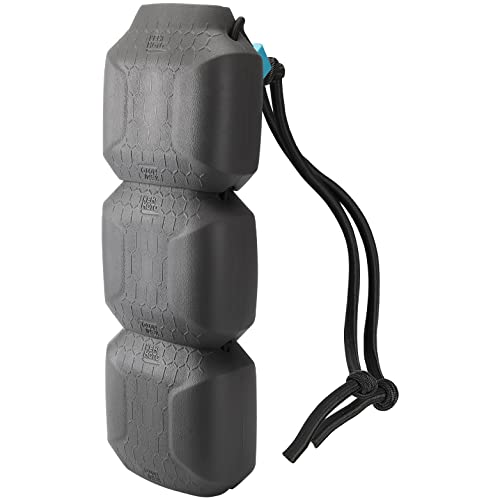
These upgraded modular fenders let you attach up to four bumpers with the included rope and add optional blocks for customization. Broad compatibility covers bass boats, jon boats, pontoon boats, ski boats, fishing boats, and docks. Best for boaters who want adjustable protection and easy customization. Avoid this if you prefer fixed, single-fender setups with no assembly required.
Buying Guide: Bow Fender Essentials
What size and shape should I choose?
Size and shape matter for docking environments. Bow fenders sized to fit your keel line and bow contour offer the most protection. Consider low-freeboard designs for boats that sit close to the waterline. For sterns or swim platforms, transom-style fenders or longer models provide better edge protection.
Inflatable or non-inflatable?
Inflatable fenders allow adjustable buoyancy and can be deflated for storage. Non-inflatable EVA or vinyl fenders are maintenance-free and quick to deploy but may require more positioning to achieve the same cushion. Choose based on how often you dock and how much storage space you have.
Durability and environmental considerations
Materials like EVA and marine-grade vinyl resist UV and seawater, extending life in saltwater environments. For commercial docks or frequent docking against rough pilings, heavier-duty vinyl with steel mounting hardware offers enhanced protection.
Installation and ease of use
Fenders with through-holes and easy mounting hardware save time during docking. Integrated locking ropes or four-hole designs simplify setup and adjustment. If you dock alone often, look for features that reduce the need for extra hands.
Number of fenders you need
Rule of thumb: place one fender every 8–10 feet of boat length. Use additional fenders on corners or exposed docking sites. For larger boats or rough conditions, increase the count to maintain continuous hull protection.
FAQ
-
What is the best bow fender for a low freeboard bass boat?
Look for low freeboard fenders like the JYINCPED model, which has a curved design to stay in place and cover the gunwale and rub rail effectively.
-
Are inflatable fenders better than non-inflatable ones?
Inflatable fenders offer adjustable cushioning and compact storage, while non-inflatable options require less maintenance and are always ready for use. Choose based on docking frequency and storage space.
-
How many fenders should I use on a mid-size boat?
For mid-size boats, 2–4 fenders typically provide adequate coverage, with extra fenders along bow and stern edges for extended protection in busy or windy conditions.
-
Do fenders affect boat movement while docking?
Yes. Properly placed fenders act as cushions, reducing hull contact with pilings or docks. Incorrect placement can lead to ineffective protection or scuffed hulls.
-
Can I mix different brands of fenders?
Yes, mixing can provide layered protection. Ensure consistent mounting points and reasonable spacing to maintain tight hull contact during docking.