Answering the main question for boat owners: stainless steel mooring springs protect lines, cleats, and hulls by absorbing shock from waves and wind. They’re ideal for marinas, docks, and open-water moorings. The top picks below are best for different needs—heavy-duty protection, corrosion resistance, easy installation, and quiet operation. This guide highlights five strong options and explains who each product suits best, plus practical buying tips.
| Product | |||
|---|---|---|---|
| Funlifego Heavy Duty Marine Mooring Spring | 304 stainless steel; rubber pad | Rough seas, frequent mooring | Noise reduction and line protection |
| Keenso 11x405mm Stainless Steel Shock Absorbing Spring | 304 stainless steel; two-stage design | Flexible, long-term use | Improved absorption and reduced rope wear |
| Aramox Boat Mooring Spring | 304 stainless steel | Heavy-use mooring with durability | Strong shock absorption |
Additional considerations: always match spring size to your mooring line diameter and dock setup. Consider corrosion resistance, ease of installation, and how much shock you need to dampen during storms or high winds.
Funlifego Heavy Duty Marine Mooring Spring
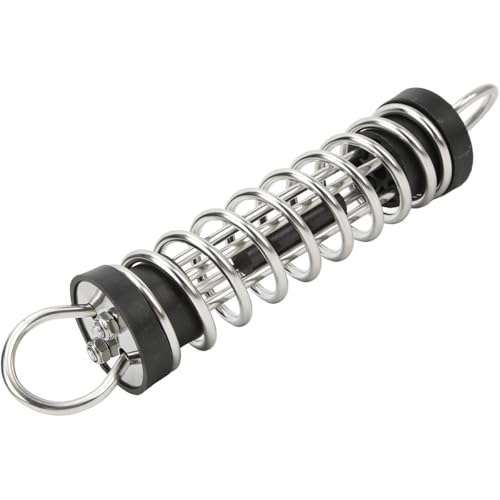
Best For: Boat owners who face frequent wave impact and need quiet operation. This mooring spring reduces line breakage and protects cleats under harsh saltwater conditions. The design integrates a marine-grade 304 stainless steel body with a rubber pad for durability and noise dampening.
Why selected: It provides robust protection against costlier hardware damage while minimizing audible disruptions at the dock. The rubber pad helps cushion shocks, and the stainless steel construction resists corrosion in salty environments.
Limitation: The product description emphasizes noise reduction, but users should ensure compatibility with their rope diameter and dock hardware before purchase.
Keenso 11x405mm Stainless Steel Shock Absorbing Spring

Best For: Dock setups that require a two-stage design for greater flexibility and longer service life. The 304 stainless steel offers seawater corrosion resistance, reducing the frequency of replacements in demanding marine environments.
Why selected: Its two-stage design provides smoother operation and better absorption than a single-wind spring, which helps keep lines taut and reduce rope wear during severe weather.
Limitation: As with similar gear, ensure the spring length matches your mooring rope and cleat spacing to avoid interference or crowding on the dock.
Aramox Boat Mooring Spring Stainless Steel
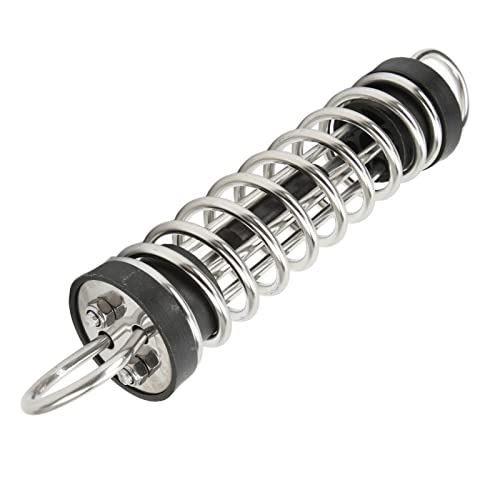
Best For: Mariners needing a heavy-duty, corrosion-resistant mooring buffer between anchor chain and boat. The 304 stainless steel construction plus a dedicated shock-absorption design helps dampen wave and wind forces during docking and storms.
Why selected: This option emphasizes a secure anchoring solution, reducing peak tensions on cleats and hulls, helping to minimize potential docking damage.
Limitation: Data notes rust resistance in marine environments, but frequent inspection is recommended to verify rubber pad integrity over time.
AOWINHIT 5 Pack 300mm Stainless Steel Mooring Spring

Best For: Dock crews seeking multiple springs for different moorings or seasonal setups. The 316 stainless steel version offers enhanced corrosion resistance, helpful in harsh marine climates.
Why selected: The 5-pack provides value and flexibility, with easy installation and reliable shock absorption to safeguard lines and dock hardware.
Limitation: Some users may require longer or shorter springs depending on their specific boat size and mooring configuration. Plan for variations in your dock layout.
ISURE Marine Stainless Steel Mooring Spring

Best For: Dock setups that emphasize a balance of strength and corrosion resistance in a compact format. The 6mm x 320mm spring is designed to act as a reliable shock absorber for mooring warps.
Why selected: It offers a straightforward option for maintaining line integrity and smooth mooring operations, reducing shock loads on both boat and pontoon.
Limitation: Smaller-diameter springs may not be suitable for all line sizes; verify compatibility with your mooring rope and hardware.
Buying Guide: Mooring Springs, What to Consider
Size and fit: Match spring length and diameter to your rope, cleats, and dock spacing. Measure the mooring line before purchasing to avoid crowding on the cleat or dock lip.
Material and corrosion resistance: Stainless steel grades (304 vs 316) differ in saltwater resistance. For harsh marine environments, 316 stainless steel offers better protection against corrosion.
Shock absorption design: Some springs use a two-stage or multi-part design for smoother operation. If you dock in variable conditions, a design with enhanced absorption may reduce line wear and hull stress.
Ease of installation: Look for springs with simple attachment methods and compatible hardware. Easy-to-install options save time during busy docking seasons.
Noise and vibration: Some models emphasize noise reduction to minimize onboard disturbances at night or during tie-ups. Consider households or night-shift crews when choosing.
Lifetime and maintenance: While most springs are designed for long use, periodic inspection of the rubber pad and fasteners helps prevent failures under load.
Frequently Asked Questions
- What size mooring spring do I need? Check your mooring line diameter, length, and the distance between dock cleats. Choose a spring that fits comfortably without crowding the lineup.
- Why choose stainless steel mooring springs? Stainless steel resists seawater corrosion and provides longer service life in marine environments compared with non-stainless options.
- Are there differences between 304 and 316 stainless steel? Yes. 316 offers better corrosion resistance in saltwater and hazardous atmospheres, while 304 is adequate for many inland or milder marine settings.
- Can a mooring spring prevent hull damage? Yes. By absorbing shock from waves and wind, springs reduce peak loads on cleats and the hull, lowering the risk of structural damage.
- Do springs affect mooring line wear? They reduce shock and peak tension, which can slow line wear and fraying over time when combined with proper rope selection.
- How many springs should I use? Depending on boat size and dock layout, one or multiple springs may be appropriate. Follow manufacturer guidance and consider professional installation for complex setups.