Finding the right boat engine block heater can prevent freezing and make winter starts smoother. This guide highlights five solid options for different needs, from compact bilge heaters to larger engine preheaters. Best for winterizing on a budget, best for rapid warm-up, and best for durable marine use are explained with practical considerations for boaters, RV owners, and small workshop setups.
Summary table of selected products:
| Product | Best For | Key Benefit |
|---|---|---|
| Boat Engine Compartment Heater Built-in Thermostat (THERELMAX) – 500W | Boats needing robust bilge heating and adjustable temperature | Fast heating with adjustable thermostat |
| Boat Engine Compartment Heater (Xtreme Heaters) – 400W | Smaller spaces, budget-friendly, versatile mounting | Self-regulating PTC with durable waterproof fan |
| Mhrxusd TPS151GT10-000 Engine Block Heater – 1500W | High-power preheating for diesel/gas engines | Strong coolant preheating capability |
| JEENDA Engine Block Heater TPS151GT10-000 – 1500W | Versatile engine compatibility with high power | Multiple part-number compatibility |
| Haoguo Boat Engine Compartment Heater – 400W | Compact, open-bath or closed-compartment boats | Self-adjusting temperature control and 40CFM fan |
Therelmax 500W Boat Engine Heater with Thermostat
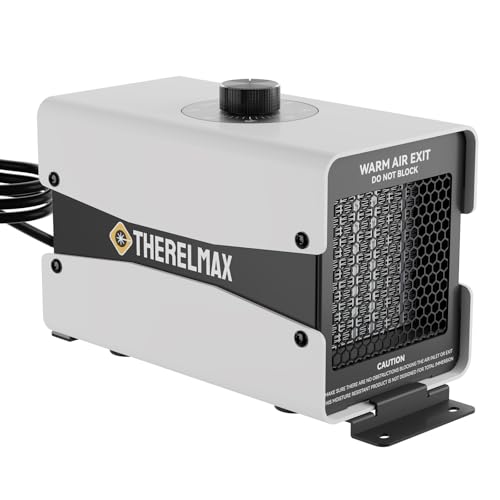
This 500W unit is designed to keep your boat’s bilges warm and dry, reducing winterizing costs and protecting critical components. The built-in adjustable thermostat ranges from 41°F to 86°F, with a recommended setting around 46°F for boat engine compartments. Best for boaters who want a compact, plug-in heater with easy temperature control for marine bilges and related spaces. A potential limitation is the need to verify compatibility with your specific engine compartment layout and mounting options.
Best for: boat owners who want a simple, adjustable-temperature heater to prevent freezing in the bilge and engine spaces. Choose this if you value a built-in thermostat and a compact design that fits tighter compartments.
Xtreme Heaters 400W Boat Engine Compartment Heater

This 400W marine heater is designed for compact spaces such as smaller bilges, cabins, and under-deck areas. It uses a self-regulating PTC element to maintain steady temperatures, turning on around 40°F and off around 55°F. The anodized case with a sealed electronics module and a waterproof fan provides durability in marine environments. Best for: owners seeking a compact, reliable heater with simple on/off cycling for consistent engine-bay temperatures. Limitation: the 400W rating may be less effective in very large open compartments.
Best for: smaller boats or tight bilges where space is limited and a self-regulating heater is preferred. Consider this if you want a durable, compact option with straightforward operation.
Mhrxusd TPS151GT10-000 Engine Block Heater – 1500W

The Mhrxusd TPS151GT10-000 provides 1500W of power for rapid coolant warming at 120V, suitable for both diesel and gas engines, as well as generators, trucks, boats, and other equipment. It’s designed to quickly raise coolant temperature to enable smoother starting in cold weather, potentially reducing wear during cold starts. Best for: boaters and operators needing high-power preheating to handle larger engine blocks or harsher winter conditions. Limitation: compatibility notes and part-number matching should be checked with your engine model.
Best for: larger or more demanding engines that require faster preheating. Choose this if you need higher heat output to support quick start-ups in cold conditions.
JEENDA TPS151GT10-000 1500W Engine Block Heater

JEENDA’s 1500W engine block heater options are designed for compatibility with a range of engines, including generators, trucks, and boats. The part-number family TPS151GT10-000 and related variants suggest broad applicability, with 120V operation and multiple inlet/outlet considerations. Best for: users who need a widely compatible high-wattage heater for diverse marine and vehicle applications. Limitation: ensure exact part-number compatibility with your engine model to avoid mismatches.
Best for: those who operate multiple engine types or want a readily available high-wattage option with broad compatibility. Choose this if you value cross-application usability.
KAT’S 1155X 1155 200W Magnetic Heater

While smaller in wattage (200W), this magnetic heater targets a variety of small engines and components, including oil pans, battery holders, and intake manifolds. It can also warm hydraulic systems or thaw pipes in some setups. Best for: hobbyists or small OEM projects needing localized heating where higher-watt heaters won’t fit. Limitation: limited heating power may not be adequate for larger engine compartments or very cold starts.
Best for: smaller engines or targeted heating needs where flexible mounting and localized warmth are required. Avoid this if you need full-engine preheating for a large marine block.
Haoguo 400W Boat Engine Compartment Heater

This 400W heater is designed for boats with closed engine compartments, aiming to prevent freezing of the cabin pump and essential components. It uses a self-adjusting PTC element, turning on at around 40°F and closing at 50°F to maintain a stable operating range. A 40CFM waterproof fan helps circulate warm air for uniform heating in spaces up to about 350 cubic feet. Best for: owners who want a reliable, mid-sized heater with predictable cycling and quiet operation. Limitation: 400W may be insufficient in very large or uninsulated compartments.
Best for: medium-sized boats where stable, quiet heating is preferred and where a self-regulated PTC element provides easy operation. Avoid this if you routinely heat very large engine bays.
Buying Guide
- Heat output vs. space: Match wattage to your engine compartment size. Larger spaces benefit from higher wattage (1000–1500W) while smaller bilges may be adequately heated with 400–500W units.
- Temperature control: Heaters with adjustable thermostats or self-regulating PTC elements offer safer, more stable performance and lower risk of overheating.
- Durability in marine environments: Look for waterproof fans, sealed electronics, anodized housings, and corrosion-resistant components to withstand saltwater exposure.
- Mounting and installation: Confirm mounting options and directionality (some units can be mounted upside down or in tight spaces). Consider additional mounting brackets if needed for your boat model.
- Compatibility: Check part numbers and engine type compatibility, especially for high-wattage heaters marketed to multiple vehicle and marine applications.
- Safety features: Overcurrent protection, automatic shutoff at safe temperatures, and easy access power cords help prevent hazards in confined spaces.
Frequently Asked Questions
- What is the typical wattage needed for boat bilge heating? Most boats in moderate climates benefit from 400–500W in smaller spaces, while larger or colder conditions may require 1000–1500W for faster warm-up.
- Can I install a boat engine heater inside the engine compartment? Yes, many models are designed for engine compartments or bilge spaces, but confirm mounting points and ensure proper clearance for airflow and wiring.
- Do I need professional installation? It depends on the boat and heater type. Simple plug-in units may be user-installable, while integrated systems might require electrical mounting by a marine electrician.
- Are self-regulating PTC heaters safer for marine use? Self-regulating PTC elements reduce the risk of overheating and provide consistent temperatures, which is beneficial in confined spaces like boat bilges.
- Will a heater prevent engine damage from freezing? Proper heating lowers the risk of freezing damage by maintaining coolant and bilge temperatures, but it should be part of a comprehensive winterizing plan.
- How do I choose between a 400W and a 1500W heater? Choose 400W for smaller compartments or tight spaces; 1500W is better for larger engines or faster preheating in very cold climates.