Answering the question of reliable, long-lasting mooring, these stainless steel anchors are ideal for American boaters seeking durability, corrosion resistance, and strong holding power. This guide highlights five top picks that cover pontoon, deck, sailing, and small-to-mid sized boats. Each option is best suited for different bottom conditions and vessel sizes.
| Product | Boat Type | Best For | Bottom Conditions |
|---|---|---|---|
| CORDUN Delta Anchor | Pontoon/Yacht/Sailboat | Largest boats up to 35 ft | Mud, sand, rock, mixed bottoms |
| SEAPROOF Fluke Anchor | Up to 30 ft boats | Balanced performance | Mud, sand, rock, coral |
| FUCNEN Delta Anchor Kit (13 Lb) | Small to mid boats | All-in-one setup | Various bottoms |
| ISURE MARINE Delta/Wing Anchor | General use | High holding power | Mud, sand, rock, coral |
| Lewmar DTX Anchor | 18-27 ft boats | Highest per-pound hold | Deep penetration bottoms |
CORDUN Delta Anchor 316 Stainless Steel
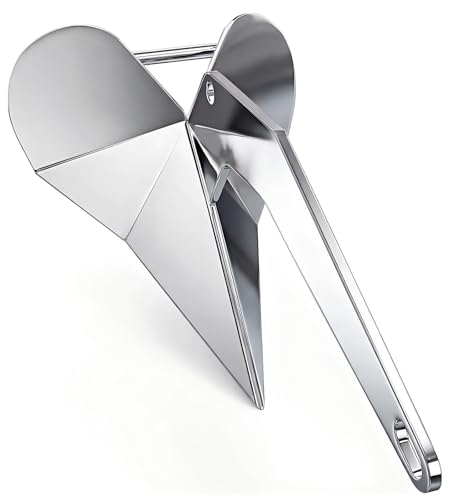
Features include marine-grade 316 stainless steel for corrosion resistance and a mirror-polished finish that resists rust and pitting. The delta-style, one-piece design delivers strong holding power across mud, sand, rock, and mixed bottoms. The fast-setting, self-launching geometry works well without a bow roller, suitable for pontoon, deck, center-console, sailboats, and yachts. Best for larger boats up to 35 feet where reliable, quick-setting anchoring is critical.
Who it’s best for: boaters needing durable, heavy-duty holding with easy deployment. Why selected: the combination of 316 stainless steel and a delta design provides robust bite across common seabed types. Limitation: heavier weights may be less maneuverable in very light winds or tight spots.
SEAPROOF 11 lb Fluke Style Anchor
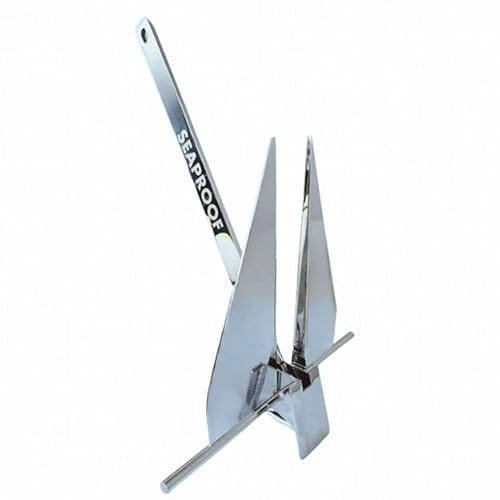
This 316 stainless steel anchor balances strength and maneuverability. The fluke design with reinforced welds and a robust 3/8″ shank yields strong holding power and reliable digging in varied bottoms. It’s polished for durability and corrosion resistance, suitable for boats up to 30 feet. Best for: mid-sized boats needing rapid setting and easy retrieval in mixed seabed conditions. Why selected: it combines extreme holding with practical size and construction. Limitation: lightweight compared to larger vessels, so consider size relative to your boat.
FUCNEN Delta Anchor 11 lb Kit

This all-in-one kit includes a 316 stainless steel delta anchor (11 lb), 150 ft of nylon rope, a 1/4″ galvanized chain, and a stainless swivel. Its one-piece delta design offers strong holding power across various bottoms. Best for small to mid-sized boats seeking a complete mooring system in a single purchase. Why selected: comprehensive kit reduces additional purchases. Limitation: long rope length requires ample storage space and proper handling.
ISURE MARINE Delta Anchor 11 lbs

Made of 316 stainless steel, this delta-style anchor emphasizes corrosion resistance and a one-piece design for superior holding power. It’s suitable for a wide range of bottoms including mud, sand, rock, and coral. Best for boats around 20-30 feet looking for reliable, durable performance. Why selected: straightforward design with strong corrosion resistance. Limitation: not the lightest option; balance weight with boat size for optimal performance.
Lewmar Stainless Steel DTX Anchor

Lewmar’s DTX anchor uses a one-piece, high-holding-power design with a narrow shank for deep penetration and reliable set from the bow roller. Built from 316 stainless steel for corrosion resistance and superior durability, it’s self-launching and certified for strong performance. Best for: boats in the 18-27 ft range requiring dependable hold with efficient set. Why selected: Lloyd’s-certified holding power per pound and proven deep-penetration design. Limitation: may be overkill for very small craft or shallow-water mooring.
Buying Guide
What should you consider when choosing a stainless steel anchor?
- Boat size and weight: Match anchor heft with vessel length and typical wind/wave conditions.
- Bottom type: Delta/wing designs excel in sand and mud; fluke types dig quickly in varied bottoms.
- Stainless steel grade: 316 stainless resists corrosion in saltwater; ensure a mirror-polished finish for longevity.
- One-piece vs multi-piece: One-piece designs offer stronger hold and easier deployment; multi-piece kits provide complete mooring setups.
- Weight distribution: Heavier anchors set faster but require more storage and handling.
- Deployment features: Self-launching and bow-roller compatibility can simplify anchoring in tight spaces.
How to choose by scenario
- Coastal, saltwater moorings with mixed seabeds: Consider delta/wing anchors for reliable bite and quick setting.
- Smaller boats in calm harbors: Lighter fluke-style anchors offer easy handling with solid holding power.
- Open-water sailing or yachts: Heavier, high-holding anchors with corrosion resistance ensure safety over longer trips.
Care and maintenance tips
- Rinse with fresh water after saltwater use to minimize corrosion.
- Inspect welds and shank for signs of wear; store in a dry area to prevent rust.
- Periodically check the rope and chain for fraying or kinks; replace as needed.
FAQ
- What material is best for boat anchors?
316 stainless steel is highly resistant to corrosion and suitable for saltwater environments. - What is the difference between delta and fluke anchors?
Delta/wing designs bite deeply and set quickly in many bottom types, while fluke anchors excel at powdery mud and soft sand. - How big should an anchor be for a 20-foot boat?
Choose a weight appropriate to typical conditions and bottom type; many 11-16 lb anchors work well for boats around 20 feet, with larger boats using heavier anchors. - Is a complete anchor kit worth it?
All-in-one kits simplify setup by including rope, chain, and swivels, reducing additional purchases and ensuring compatibility. - How do I prevent corrosion on stainless anchors?
Rinse after use, dry completely, and store away from moisture-rich environments when possible. - What is the advantage of a self-launching anchor?
It reduces manual effort during deployment and improves anchoring efficiency in rough conditions.