When it comes to boating safety, having a reliable GPS locator for boats is essential for emergency situations and quick rescues. These devices offer global coverage, precise GPS positioning, and SOS signaling to alert search and rescue teams anywhere. Below is a comparison table of the top-rated GPS locator devices, followed by detailed reviews of each product.
| Product | Brand | Key Features |
|---|---|---|
| ACR ResQLink 400 – SOS Personal Locator Beacon | ACR | No subscription, 406 MHz distress and homing signals, LED & infrared strobe |
| ACR ResQLink View – Buoyant Personal Locator Beacon | ACR | GPS position SOS, buoyant, multiple attachment options, no subscription |
| ACR ResQLink 400 GPS Survival Kit | ACR | GPS tracking, waterproof strobe light, survival whistle, compact design |
| ACR ResQLink View RLS – Digital Display and Return Link Service | ACR | RLS confirmation, digital display, infrared strobe, 5-year battery life |
| ACR ResQLink 410 RLS with GPS, Galileo, MEOSAR | ACR | RLS service, multi-constellation GNSS, 5-year battery, no subscription |
ACR ResQLink 400 – SOS Personal Locator Beacon

The ACR ResQLink 400 is a powerful personal locator beacon (PLB) designed specifically for boating, hiking, and outdoor use without requiring any subscription fees. It operates on a 406 MHz frequency for distress alerts and includes a homing signal to pinpoint your location quickly. The beacon also incorporates both LED and infrared strobe lights for enhanced visibility during low light and nighttime rescues.
This model provides global coverage, allowing for reliable communication with search and rescue teams worldwide. Its subscription-free operation assures you’re always prepared in emergencies, making it a practical and life-saving choice for boaters.
ACR ResQLink View – Buoyant Personal Locator Beacon
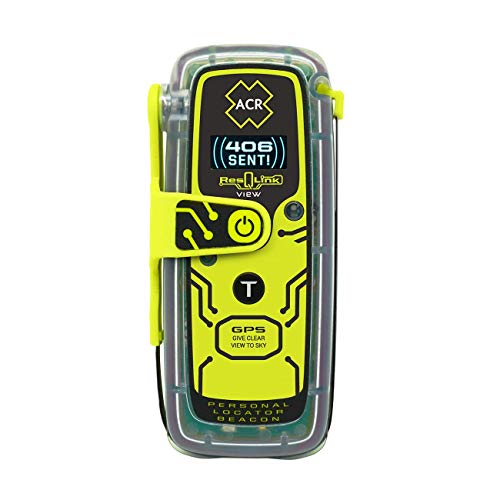
The ACR ResQLink View offers buoyancy and ruggedness valuable for maritime environments. Small and lightweight, this PLB features a bright digital display and sends an SOS distress signal with GPS coordinates to global rescue authorities via the 406 MHz emergency frequency and a 121.5 MHz homing signal.
Equipped with multiple attachment options such as a belt clip and lanyards, it ensures easy portability. Additionally, users can send non-emergency GPS test messages to multiple contacts with an optional 406Link subscription, enhancing safety by keeping loved ones informed.
ACR ResQLink 400 GPS Personal Locator Beacon Survival Kit

This survival kit bundles the compact ResQLink 400 GPS beacon with essential emergency accessories. Its bright strobe light is waterproof and highly visible both day and night, providing reliable rescue signaling. The included whistle is loud and compact, helping attract attention in survival scenarios.
The beacon itself provides fast GPS tracking with precise location data to search and rescue operators. Designed for quick deployment and durability, this kit is an excellent option for boaters who want comprehensive emergency preparedness.
ACR ResQLink View RLS – Digital Display Personal Locator Beacon

The ACR ResQLink View RLS includes Return Link Service which confirms when the distress signal has been received by rescue teams, providing critical peace of mind. The device features a digital display for status updates and an infrared strobe light to boost visibility in emergency situations.
It offers a solid 5-year battery life and 28+ hours of operation, ensuring reliability over time. No subscription is necessary, making it a straightforward and dependable choice for boaters requiring verified SOS signaling.
ACR ResQLink 410 RLS – Multi-Constellation GPS Locator

The ACR ResQLink 410 RLS improves on GPS technology by adding compatibility with Galileo GNSS and MEOSAR satellite systems, providing broader and more accurate global coverage. The Return Link Service also allows users to confirm their signal has reached search and rescue.
With a 5-year battery lifespan and 24+ hours of active operation, it’s designed for reliable SOS signaling in any outdoor emergency. This device requires no subscription, making it an advanced yet user-friendly option for boating safety.
Buying Guide for GPS Locators for Boats
Choosing the right GPS locator for your boat involves several important considerations to ensure reliability and effectiveness in emergencies.
1. Satellite Coverage and Signal Reliability
A quality GPS locator should operate on the internationally recognized 406 MHz distress frequency for optimal rescue response. Devices compatible with multiple satellite constellations like GPS, Galileo, and MEOSAR offer enhanced position accuracy and global coverage, crucial for ocean and remote areas.
2. Subscription Requirements
Many GPS locators offer subscription-free operation, meaning no ongoing fees are needed to send distress signals. Subscription-free devices simplify use and reduce costs, while some offer optional services like pre-set messaging that require subscriptions.
3. Visibility Features
Beeper signals alone are not enough. Look for locators equipped with LED or infrared strobe lights and reflective surfaces. These features dramatically improve visibility during night or poor weather conditions, increasing chances of a timely rescue.
4. Size, Weight, and Portability
Since boating often involves harsh environments, a compact, lightweight, and buoyant device is ideal for easy carrying and attachment. Features like belt clips, lanyards, or waterproof cases increase usability during rough conditions.
5. Battery Life and Maintenance
Long battery life (typically 5 years) and several hours of continuous operation ensure the beacon is ready when needed. Replace batteries according to manufacturer recommendations for reliable performance.
6. Additional Features
Some devices include digital displays that provide signal status, Return Link Service confirmation, and non-emergency test messaging. Survival kits with accessories like whistles and signal mirrors add further safety benefits.
7. Ease of Use and Activation
Quick and simple activation is critical during emergencies. Devices designed with one-touch activation reduce user error and ensure faster alert transmission.
By comparing features such as satellite compatibility, subscription status, visibility tools, and portability, boaters can select the GPS locator best suited for their safety and peace of mind on the water.