Polyester resin is a staple for boat builders, restorers, and DIY fiberglass projects. This guide highlights five top polyester resins that deliver reliable tackiness, easy wet-out, and durable finishes. It’s ideal for boat owners, hobbyists, and small repair shops seeking straightforward laminate and finish coats. Each product is evaluated for who it’s best for and why, with practical cautions to consider before purchase.
Summary of selected products:
| Product | Best For | Key Benefit |
|---|---|---|
| TotalBoat Polyester Laminating Resin (Gallon) | Boat hulls, repairs, spray-ups | Fast wet-out and tacky surface for strong layer adhesion |
| TotalBoat Polyester Finishing Resin (Gallon) | Final coat over laminating resin | Waxed finish, tack-free, easy sanding |
| Polymer World Premium Resin Kit (1 Gallon) | General-purpose repairs and builds | Convenient applicator and lasting tackiness |
TotalBoat Polyester Laminating Resin – Gallon

Best for: Boat builders and repair professionals who need a reliable general-purpose laminating resin for hulls, surfboards, and composite parts. This resin wets out quickly, holds fiberglass cloth in place, and is suitable for spray-ups or hand layups on fiberglass, wood, or metal. It is particularly strong as a base coat for laminating applications and cures with a tacky surface to promote adhesion for subsequent layers.
Why selected: A versatile marine-grade laminating resin that facilitates fast wet-out and easy handling. It’s a strong choice for projects requiring quick tackiness to lock reinforcement fabrics in place before additional layers.
Caution: Do not rely on it as a finishing coat; it remains tacky and must be paired with a finishing layer for a smooth, sandable surface.
TotalBoat Polyester Finishing Resin – Gallon

Best for: Finishing coats over sticky laminating resin, or as a standalone finishing layer in boat-building and repair projects. This resin contains wax to dry to a tack-free surface ready for sanding, paint, or gel coat application. It spreads evenly, resists sag on vertical surfaces, and helps prevent pattern print-through on gelcoat.
Why selected: It complements a laminating resin by delivering a durable, smooth top layer with a sandable finish, making it a preferred choice for professionals and serious hobbyists seeking a high-quality final coat.
Caution: The wax additive means it should not be used where a completely non-waxy, ultra-hard topcoat is required; plan for standard sanding and finishing steps after cure.
Polymer World Premium Resin Kit (1 Gallon)

Best for: General-purpose marine fiberglass repairs and builds across boats, surfboards, and even automotive projects. The kit includes MEKP catalyst for easy mixing and application by brush or spray-up. It’s well-suited for users who want a single-kit solution with reliable tackiness for layer adhesion.
Why selected: It offers an all-in-one approach with convenient application and strong bonding characteristics, making it a practical option for diverse DIY projects.
Caution: As with all resin kits, ensure proper ventilation during mixing and curing in a well-ventilated area.
TotalBoat Polyester Laminating Resin – Quart

Best for: Small projects, repairs, or practice layups where a gallon-size supply is not needed. It shares the same traits as the gallon version—fast wet-out, tacky surface, and suitability for spray-ups and hand layups on multiple substrates.
Why selected: It provides a compact option for smaller jobs or test-layups before committing to larger quantities, maintaining consistency with the laminate approach.
Caution: A smaller batch may require more frequent catalyst mixing to ensure consistent cure throughout the surface.
TotalBoat Finishing Resin – Quart with Wax
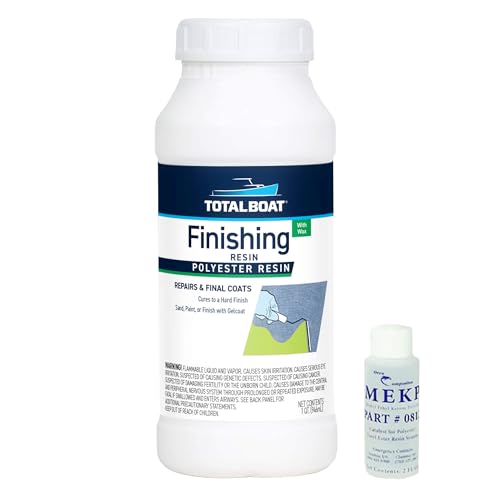
Best for: Final coat over sticky laminating resin for boat-building, repairs, and surfboard work. This wax-containing finishing resin dries tack-free and is easy to sand, offering a reliable top surface before painting or gel coat.
Why selected: It pairs well with laminate resins to deliver a durable, smooth finish suitable for aesthetic and functional marine applications.
Caution: Wax can affect adhesion of subsequent coatings; plan primer or gel coat compatibility accordingly.
Fiberglass Warehouse Polyester Laminating Resin – Gallon

Best for: General purpose laminating projects requiring durability and easy layering. It stays tacky between layers, enabling multiple coats without sanding between coats. Works with finishing resin or wax for a tack-free final layer.
Why selected: This resin emphasizes versatility for marine, aerospace, auto body, and DIY projects, offering fast wet-out and reliable bonding across materials.
Caution: For vertical surfaces, ensure clamping or supports during cure to prevent sag in early stages.
FGCI Boatyard Polyester Laminating Resin – Gallon Kit

Best for: Professional-grade laminating resin for hulls, decks, transoms, and surfboards. The kit includes MEKP catalyst hardener, delivering a complete day-one mixing and laminating solution for builders and repair crews.
Why selected: It provides a complete, ready-to-use package with fast wet-out and a thin, resin-rich formulation that reduces dry spots and yields a strong laminate.
Caution: As with any catalyst-based resin, follow safety guidelines and store properly to maintain catalyst integrity.
Buying Guide
What resin type should I choose for a boat repair?
Use a polyester laminating resin for bonding fiberglass cloth and fabrics in a repair or new layup. Pair with a finishing resin for the final coat to achieve a tack-free, smooth surface.
What is the role of wax in finishing resins?
Wax in finishing resins dries to a tack-free surface, making sanding and painting easier. It helps prevent gel coat print-through but may affect subsequent adhesion if not paired with compatible coatings.
How important is tackiness between layers?
Tackiness helps hold reinforcement fabrics in place and promotes strong interlayer adhesion. Resins designed to stay tacky longer can improve lamination quality but extend cure time slightly.
Which kit is best for beginners?
Look for a kit that includes MEKP catalyst and clear instructions. A gallon or quart kit with easy mixing and a straightforward application method reduces setup confusion for new users.
What safety considerations exist?
Resins and catalysts emit fumes; use in a well-ventilated area. Wear gloves and eye protection, and follow manufacturer warnings for mixing ratios and cure times.
FAQ
- Q: Can I use finishing resin directly on a boat hull without laminating resin?
- A: Finishing resin is typically used over a laminating layer to provide a smooth finish; using it alone may not build sufficient strength for structural laminates.
- Q: How long does curing take for these resins?
- A: Curing times vary by product and ambient conditions; follow the manufacturer’s instructions for catalyst amounts and cure times.
- Q: Can these resins be used on wood or metal surfaces?
- A: Yes, many are suitable for wood and metal prep when properly primed and prepared, but check each product’s compatibility notes.
- Q: Is sanding required after curing?
- A: For finishing resins with wax, a tack-free surface is ready for sanding; laminating resins may require subsequent finishing coats for smoothness.
- Q: Are these products UV-stable?
- A: Polyester resins themselves are not always UV-stable; gels or topcoats with UV protection are often used to enhance weather resistance.