Answer: For boatowners seeking reliable onboard hot water, compact marine water heaters provide steady supply, easy installation, and energy efficiency. This guide highlights five suitable options and explains who each is best for, based on tank size, heating method, and mounting style. The top picks cover small- to mid-size boats, day cruisers, and compact liveaboard setups. Use the table below to compare capacities, power, and suitability at a glance.
| Product | Capacity | Power | |
|---|---|---|---|
| Kuuma 6 Gallon (Marines & Boats) | 6 gal | 1500W | Compact boats needing quick hot water |
| Camco 11 Gallon Kuuma | 11 gal | 1500W | Larger boats with higher hot water demand |
| Whale F600 6-Gallon | 6 gal | 120V | Rugged, durable option |
| Whale S600 6-Gallon | 6 gal | 120V | Rear heat exchanger design for space flexibility |
| ThermoMate 8 Gallon | 8 gal | 1500W | Point-of-use for sinks, boats, RVs |
Kuuma 6 Gallon Water Heater for Boats

Overview: This marine water heater offers a 6-gallon capacity with 1500W at 120V, designed for front-mount installation and rear heat exchange. It provides hot water on demand for everyday use aboard smaller boats or sailboats with limited space.
- Best for: Small to mid-sized boats needing dependable supply without excessive footprint.
- Why selected: Compact tank size paired with standard 120V power makes it versatile for marina hookups and shore power.
- Limitation: May require space planning for mounting and access to electrical panel connections.
Camco 11841 Kuuma Water Heater (11 Gallons)

Overview: A larger 11-gallon Kuuma water heater suitable for boats with higher hot water usage, featuring 120V front heat exchange and back mount compatibility. It increases hot water reserve for longer trips or entertaining onboard.
- Best for: Boats that require more hot water without frequent refills.
- Why selected: Higher capacity helps avoid running out during showers or dishwashing.
- Limitation: Longer heating time if full capacity is used; ensure adequate electrical supply.
Kuuma 11810 6-Gallon Water Heater
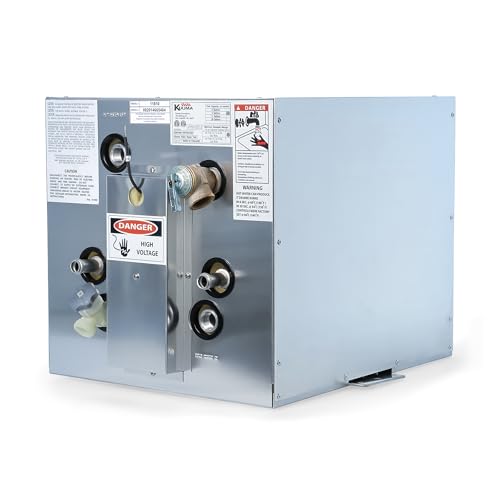
Overview: A 6-gallon marine water heater with a consistent hot water supply and a durable aluminum tank plus efficient heat exchanger. Compatible with 120V power and standard marine electrical layouts.
- Best for: Small to mid-size boats needing consistent performance with a corrosion-resistant tank.
- Why selected: Aluminum tank contributes to lighter weight and good heat transfer for quick recovery.
- Limitation: Aluminum construction may be less forgiving in saltwater environments without proper anti-corrosion care.
Whale F600 Water Heater

Overview: The Whale F600 offers a 6-gallon capacity with a front heat exchanger and rugged galvanized steel construction. It is designed to withstand marine conditions and provide reliable hot water on demanding passages.
- Best for: Boats needing a rugged, long-lasting heating unit in harsh sailing environments.
- Why selected: Robust build quality and straightforward installation with front heat exchange.
- Limitation: Front-mount access may constrain placement depending on boat layout.
Whale S600 Water Heater
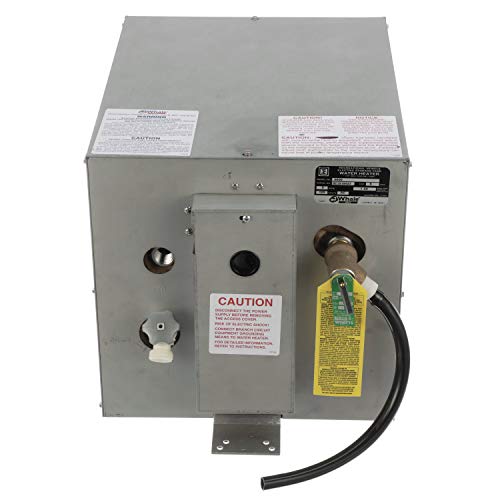
Overview: This 6-gallon Whale model features a rear heat exchanger and a compact footprint designed for tight engine rooms or cabinetry aboard boats. It supports dependable hot water with a space-conscious setup.
- Best for: Boats with restricted access or rear-facing installation areas.
- Why selected: Rear heat exchanger can simplify plumbing routing in some layouts.
- Limitation: Similar capacity to other 6-gallon units; value comes from installation flexibility for specific builds.
VEVOR 10 Gallon Electric Water Heater

Overview: A larger 10-gallon capacity with 1600W heating, LED display, and IPX4 waterproofing. The unit uses an immersion heating element for continuous hot water, suitable for boats needing more bath and kitchen hot water.
- Best for: Boats with higher hot water demand or for use as a booster in multi-angled plumbing layouts.
- Why selected: Higher capacity reduces refill frequency and supports multiple simultaneous uses.
- Limitation: Higher power draw requires a sufficient electrical supply and panel capacity.
Buying Guide: Key Considerations for Boat Water Heaters
- Capacity vs. consumption: Match tank size to typical daily hot water use on your boat. Larger gatherings or longer trips benefit from bigger tanks.
- Power source and compatibility: Check 120V compatibility and available shore power; consider models with low energy draw or efficient heat exchangers for smaller systems.
- Installation space and mounting: Measure available space and note front vs rear heat exchanger options. Some boats need compact footprints or specific mounting orientations.
- Durability: Marine-grade materials (aluminum, galvanized steel) resist corrosion. Consider anti-corrosion features and ease of maintenance.
- Cold weather/resilience: If your boating season involves colder climates, prioritize units with robust sealing and splash resistance (IP ratings) and reliable recovery times.
- Maintenance and accessibility: Look for units with easy access panels and clear service procedures to minimize downtime.
FAQ
- What size water heater should I choose for a small boat? – A 6-gallon model is typically sufficient for showers and dishes on compact vessels, with 11 gallons offering more headroom for larger days at sea.
- Do marine water heaters run on shore power only? – Most marine heaters run on 120V AC when connected to shore power; some can be plumbed to alternative heat sources, but check the specific model.
- Is a heat exchanger important on a boat water heater? – Yes, heat exchangers can improve efficiency and allow integration with engine cooling loops or other heat sources, depending on installation.
- Can I install a standard household water heater on a boat? – It is generally not recommended due to weight, space, and safety concerns; marine-specific models are designed for tight spaces and vibration.
- What maintenance does a boat water heater require? – Regular inspection for leaks, checking electrical connections, draining sediment, and ensuring anti-corrosion measures are in place.
- Which heater is best for a high-usage liveaboard boat? – A larger-capacity unit (8–20 gallons) with robust construction and adequate electrical supply is better for steady hot water needs.