Looking for a compact trolling motor that fits a canoe without overpowering it? This guide highlights reliable small motors and accessories ideal for canoes and kayaks. It covers best-for scenarios, durability notes, and practical buying tips to help you pick the right setup for calm lakes, rivers, or coastal inlets. The featured products include lightweight transom motors and mounts that balance efficiency with portability, plus a mounting solution for quick swings from storage to water.
Summary table of selected products:
| Product | Brand | Thrust / Shaft | Best For |
|---|---|---|---|
| Endura C2 Transom Motor | Minn Kota | 30 Lb / 30 in | Lightweight anglers and casual cruisers |
| NV-Series 36lb Thrust | Newport Vessels | 36 Lb / 30 in | Balanced power for small boats |
| NV-Series 55lb Thrust | Newport Vessels | 55 Lb / 30 in | Long days on the water with stronger current |
| Newport Kayak Series 36lb | Newport Vessels | 36 Lb / 24 in | Kayak-friendly, compact shaft |
| MorningRo Canoe Trolling Mount | MorningRo | N/A | Secure, durable mounting for canoes |
Minn Kota Endura C2 Transom-Mount Motor — 30 Lb

This small, transom-mounted trolling motor is designed for lightweight canoes and small boats. With 30 pounds of thrust and a 30-inch shaft, it aims for stable, predictable control on calm to moderate waters. The 6-inch telescoping tiller improves comfort during long outings, while the power-prop feature helps push through light vegetation. Best for anglers or casual paddlers who want a simple, durable solution without extra weight.
Who it’s best for: casual anglers and small-boat paddlers who need reliable, easy-to-use propulsion and adjustable mounting. Why selected: a proven Minnesota-based brand with a compact footprint and simple maintenance. Cautions: heavier vegetation can require the power-prop option and flat mounting surfaces for optimal performance.
Newport NV-Series 36lb Trolling Motor

This 12V transom-mount motor balances power and portability for lightweight craft like canoes and kayaks. With 36 pounds of thrust, a 30-inch shaft, LED battery indicator, and a telescoping tiller, it offers intuitive control and visibility during long days on the water. It’s suitable for saltwater and freshwater use thanks to corrosion-resistant components. Best for: smaller vessels needing dependable, quiet propulsion with straightforward battery management.
Why selected: compact yet capable for daily use; better for boats where battery life matters. Cautions: performance can vary with boat size and wind; avoid high-speed trolling in strong currents if you’re on a very light craft.
Newport Kayak Series 36lb Transom Motor
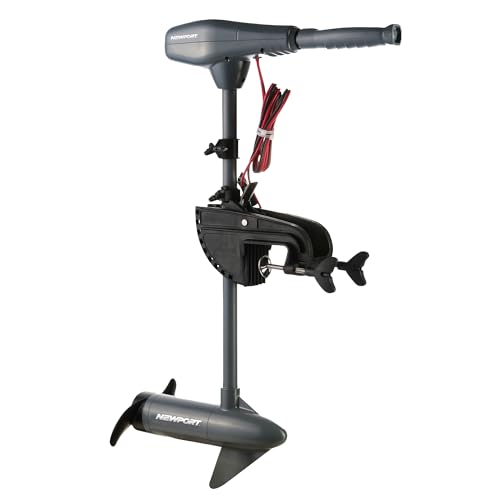
Designed for kayaks and small craft, this 36-pound thrust model uses a 24-inch shaft to align with typical kayak gunwales. Features include five forward and three reverse speeds, with a sturdy aluminum head suitable for saltwater environments. Best for: paddle-boarders or canoeists seeking a compact motor with precise speed control. Limitation: shorter shaft may require closer alignment on deeper hulls to avoid cavitation or binding in rough water.
FEIMIRE Canoe Trolling Motor Mount Bracket

This mounting bracket is designed to support most standard canoes and 2–5 HP trolling motors. Made from marine-grade aluminum and nylon, it emphasizes durability and wide compatibility. Best for: canoe owners needing a robust crossbar system with adjustable clamps for different widths. Limitation: not a motor itself—requires a compatible outboard or trolling motor to mount and operate.
Buying Guide: Key Purchase Considerations
What size motor do you need for a canoe? Consider the boat’s weight, typical load, and target speed. Smaller canoes usually perform best with 30–36 lb thrust motors, while rougher water or heavier loads benefit from the 55 lb class. Shaft length matters: longer shafts help prevent prop strikes in deeper hulls or choppier water, but can complicate mounting on very small craft.
What about mounting and control? Transom mounts are common for canoes, offering straightforward installation. A telescoping tiller improves comfort on longer trips. Look for corrosion-resistant materials if you expect saltwater use. Battery indicators help you plan charging cycles and avoid sudden loss of propulsion on the water.
Durability and maintenance: opt for reinforced composite or all-aluminum builds to resist UV exposure and flexing. Propeller design should support vegetation clearance if you frequently fish through weed beds. Ensure compatibility with your canoe’s transom width and mounting brackets included in a package or sold separately.
Frequently Asked Questions
- What size trolling motor is best for a small canoe? A motor in the 30–36 lb thrust range with a 30–36 inch shaft is typically well-suited for lightweight canoes and casual paddling.
- Is a longer shaft better for canoes? Longer shafts reduce the risk of prop strike and cavitation on larger, deeper hulls, but may be heavier and harder to mount on very compact canoes.
- Can I use a kayak motor on a canoe? Yes, but check mounting compatibility and canoe transom dimensions to ensure a secure fit and stable propulsion.
- Do I need a maintenance plan for saltwater use? Yes. Choose motors with corrosion-resistant hardware and rinse after exposure to saltwater to extend life.
- What should I consider when choosing a mounting system? Look for adjustable clamps and crossbars that fit your canoe width, plus a mounting bracket that can handle your motor’s weight and thrust.
- Is a higher thrust always better for canoes? Not necessarily. For light, calm-water use, excess thrust wastes battery energy and may cause unstable handling. Match thrust to boat weight and typical conditions.