Answering the common buyer question: which tri-color navigation light setup offers reliable visibility, easy installation, and durable construction for your vessel? This guide highlights top-rated, all-in-one or multi-unit lights ideal for sailboats, motorboats, and dinghies. It explains who each product is best for, why it was selected, and practical considerations to help you choose. A quick summary table follows to compare core specs at a glance.
| Product | Voltage | Mount Type | Best For |
|---|---|---|---|
| CLGMarine LED Mast Light, 3-Color Combo | 10-24V DC | Mast mount | Sailboats needing all-in-one tri-color and anchor light |
| CLGMarine LED Tri-Color with Foldable Pole Base | 10-24V DC | Foldable pole base | Compact storage, portable setups, smaller boats |
| NAVISAFE Navilight Tricolor 2NM with Navibolt Base | 12-24V DC | Navibolt base | Standard compliance and easy mounting |
| Hella NaviLED Trio | 8-28V DC | Flush mount housing | High-visibility, robust marine lighting |
| Five Oceans LED Tri-Color All-Around/Anchor Light | 12V DC | Mast mount | USCG-compliant, durable polycarbonate housing |
CLGMarine LED Mast Light, 3-Color Combo

Best for sailboats needing a single mast-mounted unit with red, green, and white signals plus an anchor light. This tri-color design integrates navigation and anchor lighting in one compact package, reducing clutter on deck. The unit operates on a 10-24V DC system and uses 2.5W LED beads for bright, energy-efficient illumination. It is ideal for vessels that require straightforward, reliable masthead lighting with minimal maintenance. A potential limitation is the fixed mounting configuration, which may require professional adjustment for unusual mast geometries.
CLGMarine LED Tri-Color with Foldable Pole Base

Best for boats needing a flexible, space-saving solution. This 3-in-1 design merges left/right navigation lights with a white taillight and an anchor light, mounted on a stainless steel post with a foldable base. The base saves storage space when not in use and the stainless steel construction offers durability in harsh marine environments. A caution: folding mechanisms can wear with heavy vibration, so periodic checks are advised to ensure stability and alignment.
NAVISAFE Navilight Tricolor 2NM with Navibolt Base

NAVISAFE offers a trusted Tricolor 2NM light with a dedicated base for quick, stable mounting. Although the product name emphasizes the 2NM range, the essentials are a reliable, compliant tri-color setup suitable for many recreational and small commercial vessels. Best for buyers who prioritize straightforward installation and consistent visibility. A potential limitation is that some users may prefer more adjustable mounting options for non-standard mast configurations.
Hella NaviLED Trio
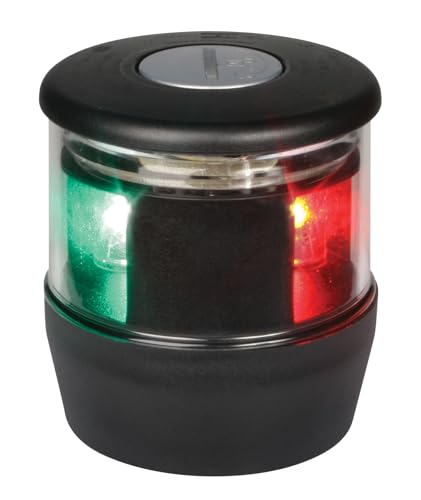
Best for boats needing precise optics and high visibility. Hella’s tri-color LED navigation/anchor light uses robust lens and housing materials with LED technology proven to withstand vibration and saltwater exposure. It is designed to provide clear horizontal and vertical cut-off angles to indicate vessel movement and heading. A limitation could be a higher upfront cost or a need for a compatible mounting setup on certain mast profiles.
Five Oceans LED Tri-Color Navigation Light

Best for budget-conscious buyers seeking USCG 2 NM compliance and a durable mast-mount design. This Five Oceans option uses a high-efficiency BAY15D LED in a polycarbonate housing that is IP65 rated for water ingress resistance. It offers easy installation with a two-piece design and pre-drilled mounting holes. A caveat is that some boats may require additional waterproof sealing around wiring connections to maintain IP65 integrity over time.
Buying Guide: Key Considerations for Tri-Color Navigation Lights
- Voltage compatibility: Most boat lights run on 10-24V or 12V DC. Verify your vessel’s electrical system and choose a unit that matches to avoid dim lighting or wiring issues.
- Mounting method: Mast mount, foldable pole base, or suction/navibolt bases offer different installation styles. Consider vessel size, mast architecture, and storage constraints when selecting.
- Light type and efficiency: LED lights provide bright, energy-efficient illumination and longer life. Check lumen output and beam pattern to ensure clear visibility at the angles required by maritime rules.
- Durability and materials: Look for corrosion-resistant metals (stainless steel) and UV-stable plastics. Polycarbonate housings resist impact and seawater exposure.
- Compliance and coverage: Ensure the light meets USCG or local regulations for navigation lighting, including tri-color and all-around/anchor light functionality and the specified visibility radius (e.g., 2 NM).
- Ease of maintenance: Units with simple twist-and-release mechanisms or foldable bases can reduce maintenance time and downtime for replacement lamps or seals.
- Installation considerations: Some units require professional mounting for masthead configurations. Factor in wiring, seals, and potential need for additional adapters or mounting hardware.
FAQ
- What is a tri-color navigation light?
A tri-color navigation light combines red and green side lights with a white stern (or taillight) in one unit, sometimes with an integrated anchor light, to indicate vessel direction and status. - Do I need a separate anchor light?
Some models include an integrated anchor light; if not, you’ll need a separate light to comply with navigation rules in certain conditions. - Which mounting style is best for small boats?
Foldable pole bases or compact mast-mount units are often ideal for small boats with limited deck space. - Are LEDs suitable for harsh saltwater environments?
Yes. LEDs with sealed housings, corrosion-resistant materials, and IP ratings are designed for marine use and offer long service life. - What should I check before purchasing?
Verify voltage compatibility, mounting options, beam angles, IP rating, and whether the unit meets regulatory requirements for your vessel type and operating area. - How do I maintain a tri-color light?
Regularly inspect seals and mounting hardware, clean lenses to maintain clear visibility, and replace worn gaskets or seals as needed to maintain IP ratings.