Answering the what-to-buy question for a 15 horsepower outboard motor: these five models offer compact power, water cooling, and CDI ignition systems ideal for small fishing boats, inflatable dinghies, and kayaks that need dependable thrust without heavy fuel use. Each option targets a different user profile—tournament anglers, weekend explorers, or budget-conscious beginners—so you can choose based on fuel efficiency, maneuverability, and maintenance needs.
Below is a quick, at-a-glance overview of the five selected motors, highlighting who each is best for and why it stands out. This summary helps you compare key factors like engine type, fuel capacity, and cooling systems at a glance.
| Product | Power/Displacement | Fuel Capacity | Cooling System | Best For |
|---|---|---|---|---|
| Hangkai 18HP Outboard Motor | 18 HP, 246cc | External 6.34 gal | Water cooling | Small fishing boats needing solid torque |
| Outboard Boat Motors 18HP Short Shaft | 18 HP, 246cc | 24L standard tank | Water cooling | Inflatable boats and dinghies |
| 169cc 12HP Outboard Motor | 12 HP, 169cc | External 6.34 gal | Water cooling | Smaller rubber boats and lakeside use |
| 2 Stroke 18HP Outboard Motor Kit | 18 HP, 246cc | External 6.34 gal | Water cooling | Kayaks and small crafts seeking speed |
| Outboard Motor Cover | Not a motor | — | Weather protection | Motor protection when stored |
Hangkai 18HP Outboard Motor — 2-Stroke, Short Shaft

Best for anglers needing solid mid-range power with a compact footprint. This 18 HP, 246cc engine delivers up to 5500 RPM, with an 8-inch three-bladed propeller designed to cut through water resistance for better thrust. It uses a CDI ignition system for quick starts and a water cooling system to maintain optimal operating temperatures, plus overheating protection. A 6.34-gallon external fuel tank supports longer trips between fills, while the high-efficiency carburetor helps keep fuel use reasonable.
Who it’s best for: small boats and dinghies where steady, reliable power is needed without the weight of larger outboards. This motor suits weekend fishermen and drift explorers who value dependable cold-starts and smooth operation.
Limitations: As a 2-stroke design, maintenance tends to be more frequent than modern 4-stroke options, and fuel efficiency, while good for its class, is still higher than comparable 4-stroke models.
Outboard Boat Motors — 18HP Short Shaft
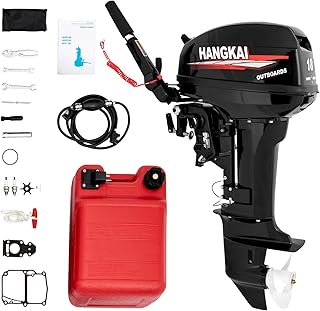
Best for inflatable boats and small yachts needing flexible steering at a modest size. This model provides 18 HP with a 246cc displacement and comes with a 40 cm short shaft. It features a CDI ignition system and water cooling, along with a 24L standard fuel tank. The design supports 360-degree steering rotation and reverse without gear shifts, offering simple handling in tight spaces.
Who it’s best for: boaters who navigate shallow waters or require easy-to-maneuver propulsion on compact craft. The wide steering range and simple tiller controls appeal to casual day trips.
Caution: The included fuel capacity is good for shorter trips, but longer outings may require refueling planning to avoid interruptions.
169CC Outboard Motor — 12HP, Short Shaft

Best for compact, budget-conscious boating on small rubber boats. This 12 HP, 169cc engine uses a water-cooled, two-stroke design with a CDI ignition system. It offers a dual-stage propeller setup and defensible fuel efficiency with a 6.34-gallon external tank. The ergonomic grip and throttle design reduce operator fatigue during longer sessions.
Who it’s for: beginners or occasional boaters who want a simple, lightweight motor capable of basic propulsion without extra features. It’s a practical entry option for calm waterways.
Limitation: Lower horsepower means slower acceleration and top speed; consider your load and water conditions when choosing.
2 Stroke 18HP Outboard Motor Kit

Best for fast, lightweight craft aiming for quick setup and strong performance. This kit centers on an 18 HP, 246cc engine with an 8-inch three-blade propeller and water cooling. The CDI ignition system enables quick starts, while the engine’s compact form helps with easy mounting on inflatables and small boats. A 24-liter fuel capacity enables longer trips between refueling.
Who it’s for: paddlers and boaters needing a nimble, high-thrust option for performance-focused trips. It’s a solid pick if speed and maneuverability on small craft are priorities.
Limit: The kit’s 18 HP output comes from a two-stroke design, which may require more maintenance than latest four-stroke counterparts.
Outboard Motor Cover — Heavy Duty

Best for storage and protection when the motor is not in use. This heavy-duty, waterproof cover shields engines up to 15 HP from wind, dust, and sun exposure. A quick-release elastic hem ensures a secure fit, preventing cover loss in windy conditions.
Who it’s for: boat owners seeking durable, weather-ready protection for shorter to seasonal storage periods. It does not add propulsion capability but helps extend engine life through protection.
Limitation: Not a motor component—ensuring a proper fit to your specific model is essential to avoid gaps that allow elements inside.
Buying Guide: 15 HP Outboard Motors — Key Considerations
Engine type matters. Two-stroke motors are lighter and can deliver brisk acceleration, but they typically require more fuel and maintenance than four-stroke equivalents. If fuel efficiency and longer service intervals are priorities, weigh four-stroke options against these 15 HP class candidates.
Power needs and boat type. Small fishing boats, inflatables, and kayaks benefit from compact power with reliable thrust. Short shaft models are ideal for tight transom configurations, while longer shafts can help with deeper boats or higher mounting positions.
Cooling and ignition. All listed options use CDI ignition for quick starts and water cooling for temperature control. Overheating protection is a bonus for extended use in hot climates or long trolling sessions.
Fuel capacity and range. A larger external tank reduces refueling stops during long trips. Consider how often you plan to be away from fuel sources when selecting capacity.
Maintenance considerations. Portability, ease of service, and availability of parts influence long-term ownership. Two-stroke engines often require more frequent maintenance than four-stroke engines, but lightweight designs can be easier to handle for beginners.
Mounting compatibility. Confirm shaft length (short vs. long) and mounting pattern with your boat. A mismatched shaft length can lead to propeller immersion issues or clearance problems with the hull.
Protection and longevity. Accessories such as motor covers help extend the life of the engine by protecting it from the elements when parked or stored between uses.
Frequently Asked Questions
- What is the typical fuel consumption for a 15 HP two-stroke outboard? Fuel consumption varies by load and RPM, but many 18 HP two-stroke models approach 1.0–1.5 gallons per hour at moderate cruising speeds, depending on tuning and fuel mix.
- Are 15 HP outboards suitable for inflatable boats? Yes, especially light, compact models. Ensure the shaft length and mounting fit your inflatable’s transom height and securing needs.
- How often should a CDI ignition system be serviced? CDI systems typically require inspection during routine maintenance intervals, including spark plug checks and wiring inspections.
- Can I use a 15 HP motor with a fin keel or shallow-water boat? Short shaft versions are often ideal for shallow water and dinghies; verify shaft length and mounting compatibility with your hull.
- Is a motor cover worth buying for a small outboard? Yes, covers protect against sun, dust, and moisture, helping extend engine life when the boat is stored or not in use.
- Which motor is best for fuel efficiency? In this group, the models with efficient carburetion and lighter weight typically offer better fuel economy, though actual results depend on usage and maintenance.