Answering the need for reliable, portable water removal on boats, these hand bilge pumps are ideal for small crafts, kayaks, canoes, and dinghies. Each pick emphasizes quick drainage, simple manual operation, and practical hose lengths. Best for: compact boats and emergency kits, where lightweight, self-contained pumps are essential. Below are five standout options with practical use cases and clear trade-offs for different water-removal tasks.
| Product | Best For | Key Benefit |
|---|---|---|
| Better Boat Manual Bilge Pump with 39″ Hose | Medium to large small boats | Long hose reach for directing water away |
| SeaSense Hand Bilge Pump (Self-Priming) | Quick, simple use in tight spaces | Ergonomic grip and durable construction |
| Better Boat Manual Bilge Pump with 5ft Hose | Deeper bilge areas | Extra-long hose for maximum reach |
| NautiPro Manual Bilge Pump | Ultra-lightweight kits | Compact design for kayaks and inflatables |
| HASSEN Manual Bilge Pump | Emergency readiness | Sturdy, easy-to-store option |
Better Boat Manual Bilge Pump With 39-Inch Hose
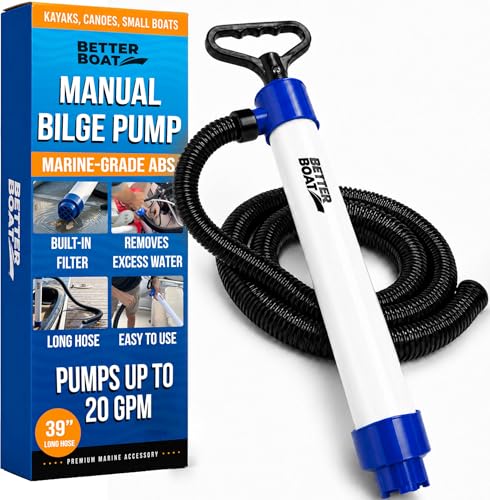
Best for: boats and small craft that require reach over gunwales or out a window. The 39-inch hose directs water away, reducing splashback. It pumps about 20 gallons per minute with a 115 cubic inch stroke, so two to three pumps move a full gallon. Built-in suction spacers keep the intake off the bottom to preserve prime in dirty water. Use it for bilges, flooded areas, or outdoor ponds around the dock. Caution: hose length may be less convenient in very tight bilges; plan for some space to maneuver.
SeaSense Hand Bilge Pump — Self-Priming
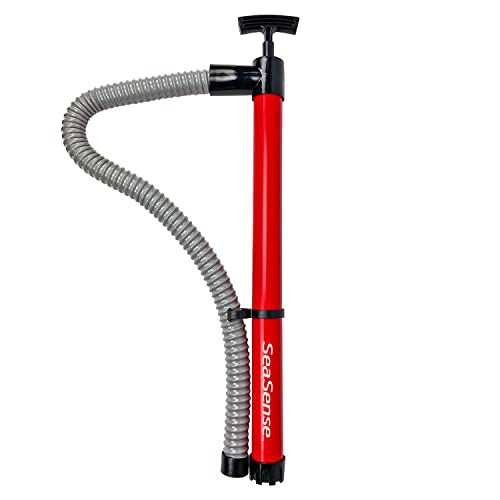
Best for: quick pickups in small boats, kayaks, or canoes where simplicity and reliability matter. This self-priming design emphasizes high-quality construction and an ergonomic grip for easy pumping. A one-way pump with a removable hose supports easy storage, while the plastic components resist corrosion. It is suitable for rapid water removal and basic bilge maintenance. Caution: it requires proper priming to start drawing water efficiently, especially after long storage.
SeaSense Hand Bilge Pump — Red/Black
Best for: budgets and simple setups needing a dependable, compact bilge pump. Similar to the self-priming model, this version emphasizes ease of use with a comfortable grip and compatibility with various small boats. It shares durable construction and a built-in filter to reduce debris intake. Caution: ensure the hose is securely attached to prevent leaks during operation.
Better Boat Manual Bilge Pump Large With 5ft Hose

Best for: bigger boats or situations requiring extra reach. This pump moves about 25 gallons per minute with a 175 cubic inch stroke. The 5-foot hose reaches deep bilges or over gunwales to direct water away precisely. It also includes a built-in filter and suction spacers to keep prime even in dirty water. Caution: larger size may be bulkier to store in very small compartments.
Better Boat Manual Bilge Pump — 15.75-Inch

Best for: compact kayak and canoe bilge pumps. At 15.75 inches, it fits easily in hatch compartments. Pumps about 5 gallons per minute with a 24-inch hose. The dual-end hose supports flexible operation—sucking from the cockpit or directing water outward. Raised intake tip helps avoid bottom debris. Caution: slower pump rate means longer operations for larger floods.
Better Boat Manual Bilge Pump — Teal 24-Inch Hose

Best for: kayaks, canoes, and small dinghies needing compact storage with a longer hose option. The 24-inch dual-end hose allows both intake and discharge connections for flexible water removal. Raised intake tip reduces bottom clogging, enabling operation in shallow, silty, or weedy water. Caution: check hose attachments during transport to prevent leaks.
Buying Guide: How To Choose The Right Hand Bilge Pump
- What is the water source and bilge depth? Choose hose length and suction strength to match reach and volume.
- Is portability a priority? Ultra-light designs weigh under a pound and fit small compartments, while larger pumps offer higher flow.
- How easy is maintenance? Pumps with built-in filters reduce debris intake but may require occasional cleaning.
- Will you store on a boat or in a car kit? Consider corrosion resistance, compact storage, and hose flexibility for your space.
- What is your typical environment? Dirty water with leaves or sediment benefits from suction spacers and elevated intake tips.
FAQ
- Q: How much water can a typical hand bilge pump move per minute? A: Most models aim for 5–25 gallons per minute depending on stroke volume and hose length.
- Q: Do these pumps require batteries or power? A: No. They are manual pumps powered by hand strokes.
- Q: What is the purpose of suction spacers? A: They keep the intake tip off the bottom to preserve prime when water contains debris.
- Q: Can these pumps be used for backyard water removal? A: Yes, they can drain small basements, pools, or flooded areas when power is unavailable.
- Q: Are there safety considerations for saltwater use? A: Choose corrosion-resistant materials and rinse with fresh water after use to minimize corrosion.