When updating or stocking a vintage outboard, choosing the right gas tank matters for reliable fuel flow, safety, and compatibility with classic engines. This guide highlights five robust options that suit retro or traditional boats, with clear pros and caveats to help you pick the best fit for your vessel and cruising needs. Each product is evaluated for capacity, durability, compatibility, and portability, so you can compare at a glance.
| Product | Capacity | Best For | Key Benefit |
|---|---|---|---|
| VEVOR Boat Fuel Tank | 3.17 gal / 12 L | Fishing boats and deck boats with Yamaha-style connectors | Long hose for flexible routing and durable HDPE construction |
| Scepter 9 Gallon Portable Marine Gas Can | 9 gal / 34 L | Longer trips; space to spare under seats | Built-in gauge and 2-way vented cap for safety |
| PeakPursuit Portable Boat Tank | 3 gal | Compact needs; light, easy carry | 9.8 ft hose and universal compatibility |
| AloneGoer 3 Gallon Portable Tank | 3 gal / 12 L | Yamaha outboards and similar motors | Multi-layer co-extrusion for lower evaporation |
| LAUCO Portable Marine Fuel Tank | 6.34 gal / 24 L | Moderate capacity with strong UV and corrosion resistance | Sealed or vented cap for leakage control |
Note: All options below emphasize compatibility with common outboard connectors and portable use on decks, boats, or docks. Consider engine horsepower, recommended fuel type, and whether you need built-in gauges, venting, or long transfer hoses when choosing the right unit for your vintage setup.
VEVOR Boat Fuel Tank, 3.17-Gallon/12-L Tank

Capacity and durability make this tank a practical choice for smaller to mid-sized vintage setups. It features a 9.8 ft/3 m fuel hose and a 0.24″/6 mm inner diameter, compatible with Yamaha-style connectors. The heavy-duty HDPE construction resists aging and corrosion, and its molded top handle enhances portability for on-dock refueling. A potential limitation is exposure to direct sunlight, which can accelerate aging and cause expansion over time.
- Best for: Boats needing a compact, reliable transfer tank with a lengthy hose for flexible routing.
- Why selected: Good balance of capacity, build quality, and compatibility with common outboard hoses.
Scepter 9 Gallon Portable Marine Gas Can

This larger-capacity unit is ideal for sailors needing extended running time between refuels. It includes a built-in fuel gauge and a 2-way vented cap that prevents vapor buildup, making it safer for storage and refueling. It accepts diesel and ethanol-blended fuels, broadening compatibility with vintage engines. A caveat is that the larger footprint may be harder to store in smaller cockpits or under-seat spaces.
- Best for: Boaters who want longer trips without frequent refueling.
- Why selected: Combines high capacity with practical safety features and gauge visibility.
Portable Boat Tank 3 Gal, Outboard Marine Tank

Designed for compact spaces, this 3-gallon tank includes a 9.8 ft hose with a 0.3-inch inner diameter. It offers dual venting and a robust HDPE body, ensuring durability in salt spray and humid environments. The main consideration is that its smaller capacity may require more frequent refueling on longer trips or heavy usage.
- Best for: Vintage boats with limited storage or fuel capacity needs.
- Why selected: Clear balance of portability, venting options, and compatibility with long hoses.
AloneGoer 3 Gallon Portable Tank
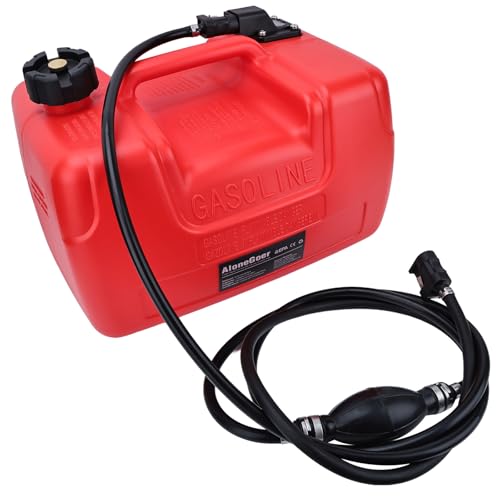
This 12L tank uses a multi-layer barrier technology to minimize evaporation, a feature beneficial for vintage engines sensitive to fuel quality. The design includes an HDPE-EVOH-HDPE structure and UV stabilization, improving durability in salt spray conditions. The unit is suited for Yamaha and similar connectors, with a focus on spill reduction. A limitation is that the data does not specify a built-in gauge, so you may need to monitor fuel level manually.
- Best for: Vintage setups where fuel evaporation control matters and long-term storage is common.
- Why selected: Strong evaporative barrier and corrosion resistance support durability at sea.
LAUCO Portable Marine Fuel Tank

With a 6.34-gallon capacity, this tank suits mid-range needs on deck or small boats. It features a dual-capability design—sealed or vented—to reduce leaks while allowing controlled airflow. The HDPE construction resists aging and corrosion, and a note mentions avoiding prolonged direct sunlight exposure to minimize expansion. Its size offers a practical middle ground between compact tanks and larger cans.
- Best for: Boaters who want a balance of capacity, portability, and vapor control.
- Why selected: Solid middle-ground capacity with flexible venting options for varied conditions.
Buying Guide: Key Decisions for Vintage Outboard Fuel Tanks
What capacity do you need?
Smaller engines and short trips benefit from 3- to 6-gallon tanks. For longer runs or larger vintage boats, 9 gallons or more can reduce refueling stops, but storage space and weight must be considered.
Should you choose vented or sealed caps?
Vented caps aid fuel flow and refueling speed but can increase evaporation risk. Sealed caps minimize leaks, ideal for transport or under-seat storage. In rough seas, a vented cap reduces pressure buildup during refueling.
Is a built-in gauge important?
Built-in gauges simplify monitoring, reducing guesswork during trips. If a gauge is not present, you’ll need external checks or fuel management plans to avoid running out mid-ride.
How important is compatibility?
Match the tank’s hose diameter and fittings with your outboard or connector standard (Yamaha-style, marine fittings, etc.). This ensures a tight connection and minimizes leaks or fuel spillage.
What about durability in saltwater environments?
Look for high-density polyethylene with UV stabilization and corrosion resistance. Multi-layer barriers can significantly reduce fuel evaporation, an important factor for fresh or saltwater use on older engines.
Which factors affect portability?
Handle design, weight, and hose length influence transport and refueling on docks or boat decks. A molded top handle and a longer hose provide flexibility for rear or side-mounted refueling setups.
Frequently Asked Questions
- What size vintage outboard tank is typical for mid-century boats?
Most classic and mid-century setups use 3–6 gallon tanks, with 9 gallons for longer trips. - Can I use a diesel tank for gasoline-powered vintage engines?
Fuel compatibility varies; most portable marine cans are designed for gasoline. Check compatibility before use. - Do portable tanks require special maintenance?
Routinely inspect hoses for cracks, ensure caps seal properly, and avoid prolonged sun exposure to prevent aging. - Is a built-in gauge worth it for a vintage setup?
Yes for easier fuel management, especially on longer trips or if you regularly operate without a dedicated fuel dock. - What safety features should I prioritize?
Vented caps that release pressure safely, leak-proof seals, and durable, fuel-resistant materials are key.