Answering the search for reliable onboard charger inlets, this guide highlights five well-suited options for marine and RV applications. The top picks are chosen for durability, ease of installation, and compatibility with common hull materials. Best for boaters, RV travelers, and maintenance-focused owners, these inlets cover standard 15–20 amp configurations and a ready-to-run approach for quick plug-in charging. See the quick-reference table below for a snapshot of the highlighted products.
| Product | Brand | Inlet Type / Amp | Color | Notes |
|---|---|---|---|---|
| Marinco 150BBI Marine On-Board Charger Inlet | Marinco | 15A 125V, Straight Blade | Black | Low-profile cap; fiberglass/aluminum mounting |
| Marinco 150BBIW Marine On-Board Charger Inlet | Marinco | 15A 125V, Straight Blade | White | Low-profile cap; fiberglass/aluminum mounting |
| Marinco ON-Board Charger Inlet | Marinco | 15A 125V straight blade | — | Low-profile cap; fiberglass/aluminum mounting |
| SupplyMount 150BBIW Replacement Inlet | SupplyMount | 15A 125V | White | Aftermarket replacement; marine-friendly |
| ACEANEA 15A RV Shore Inlet | ACEANEA | 15A 125V | — | Outdoor-ready with integrated 20″ extension and cover |
Marinco 150BBI Marine On-Board Charger Inlet

Best for boats with fiberglass or aluminum hulls requiring a low-profile, rugged inlet. The 15A, 125V straight blade design is paired with a black finish and a low-profile cap to resist snagging on lines. This Marinco model mounts easily to common hull materials, making it a practical upgrade for established systems. Choose this if you need a compact, marine-grade inlet with straightforward installation.
Best for: boat owners seeking a durable, simple replacement or upgrade for a standard 15A charging inlet. Limitation: color is black, which may not match all hull aesthetics; ensure compatibility with existing mounting hardware.
Marinco 150BBIW Marine On-Board Charger Inlet

Better for: users who prefer a white finish that blends with lighter hulls or hardware. It shares the 15A/125V straight blade design and a low-profile cap, aiding in clean installations on fiberglass or aluminum surfaces. This inlet maintains the same mounting practicality as the black variant while offering a color alternative for aesthetics. Caution: verify that white components won’t clash with existing deck fittings or paint schemes.
Marinco ON-Board Charger Inlet

Best for: users seeking a straightforward 15A inlet with a low-profile cap to prevent line snagging. This model emphasizes easy mounting on both fiberglass and aluminum hulls. It’s a solid choice when compatibility with existing wiring and hull fittings is essential. Caution: confirm the exact cap design to ensure it fits your mounting cutout and gasket requirements.
SupplyMount 150BBIW Replacement Inlet

Best for: boaters who already have Marinco setups and want a compatible aftermarket alternative. This white inlet is designed as a direct compatibility-focused replacement that meets typical marine standards while offering cost-conscious options. Limitation: verify part number match with current gear to avoid fitment issues on older installations.
WELLUCK 20 Amp RV Shore Power Inlet

Best for: RV and marine users needing a versatile inlet with a 5-in-1 AC power inlet design. It includes two 18-inch extension cords and supports a wide voltage range when using the 6-15P/6-20P adapters. Caution: this unit emphasizes versatility, which can complicate installation if you only need a single, dedicated 15A inlet.
WELLUCK RV Shore Power Inlet Charger Plug (Variant)
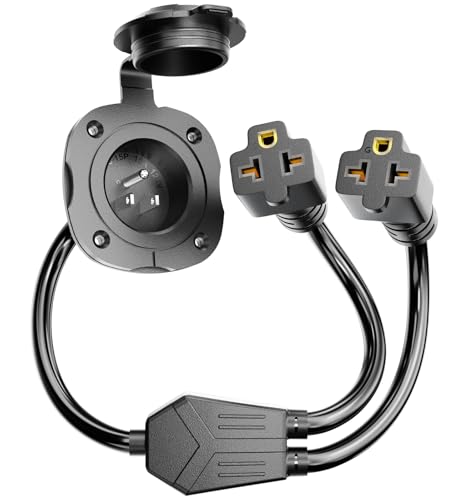
The 20A version mirrors the 20-inch extension approach with a 15A-capable inlet and similar weatherproofing features. Best for: users who require broader compatibility with both 110V–250V systems in rugged outdoor environments. Caution: ensure your charger and devices can handle 20-amp input without overloading smaller wiring harnesses.
Buying Guide
- Inlet amperage and voltage: Most marine and RV inlets use 15A at 125V as a standard. If your shore power setup demands higher duty, consider 20A models but verify wiring and circuit capacity.
- Mounting surface and materials: Choose a model rated for fiberglass or aluminum hulls and confirm mounting boss compatibility with your existing cutout.
- Cap design and snag risk: Low-profile caps reduce line snags; ensure gasket integrity for weather exposure.
- Color and aesthetics: White or black options help match hull color schemes, but ensure color does not affect visibility of the inlet in low-light conditions.
- Aftermarket vs OEM: Aftermarket options can offer cost savings but verify compatibility with your current system to avoid fitment issues.
- Weatherproofing and durability: Look for UV-resistant materials and robust housings to withstand marine environments and outdoor use.
- Installation considerations: Check required hole size, mounting screws, and whether the inlet includes a gasket or needs separate sealing components.
Frequently Asked Questions
- What is an on-board charger inlet used for? It provides a dedicated connection point for shore power to charge a battery system on boats or RVs.
- Do I need a 15A or 20A inlet? Choose based on your shore power needs and wiring capacity; 20A allows higher current, while 15A suits standard charging setups.
- Can I mix brands for inlets and chargers? Compatibility depends on connector type and electrical specs; verify part numbers and mounting compatibility before mixing parts.
- Is weatherproofing essential for marine inlets? Yes. Inlets exposed to rain, spray, and salt air should have weatherproof housings and gaskets.
- What installation considerations matter most? Correct hole size, secure mounting, and proper sealing prevent leaks and ensure reliable operation.
- Are aftermarket inlets a good value? They can be cost-effective but confirm compatibility with your equipment to avoid installation issues.