Answering the search for a capable 2HP-class electric boat motor, this guide highlights practical, electric options that balance power, efficiency, and ease of use for American boaters. These motors are suitable for small to mid-size boats, kayaks, and inflatables, especially when quiet operation and fish-friendly trolling are priorities. Below is a compact buying table of five selected models, followed by in-depth sections for each product and a practical buying guide.
| Product | Thrust | Power Source | Shaft Length | Best For |
|---|---|---|---|---|
| Newport NV-Series 36lb | 36 lb | 12V Electric | 30″ | Budget-friendly trolling for small craft |
| Watersnake T18 ASP | 18 lb | 12V Electric | 24″ | Lightweight, portable setups |
| SJXHRFXY 12V 80lb Thrust | 80 lb | 12V Electric | Long shaft (unspecified) | Robust traction for larger kayaks and inflatables |
| Newport NV-Series 55lb | 55 lb | 12V Electric | 30″ | Stronger trolling on medium boats |
| HCYHSLH 55LBS Transom | 55 lb | 12V Electric | 22″ | Quiet, efficient trolling with deep torque |
Newport NV-Series 36lb Thrust Electric Trolling Motor

Best for compact boats or kayaks that need reliable, all-day trolling without noise. This model has a 30-inch shaft, a 6-inch telescoping tiller, a 5-LED battery meter, and an adjustable mount height and angle. With 8 speeds (5 forward, 3 reverse) and a 2-blade propeller, it performs well in weedier water conditions while keeping fish spooking to a minimum. Caution: top speed is around 3 mph and varies with boat type and water conditions.
Watersnake T18 ASP – 18lb Saltwater Trolling Motor
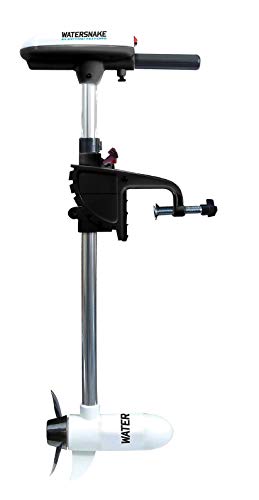
Best for ultra-light setups on kayaks, canoes, or small inflatables. Weighing about 4.85 pounds, this motor is highly portable with a 24-inch shaft and adjustable mount. A hand tiller with an extendable handle and a two-blade weedless propeller makes it practical for tight spaces. Caution: battery not included; performance depends on battery capacity and boat weight.
SJXHRFXY 12V 80lb Thrust Electric Outboard

Best for larger kayaks or inflatable boats needing more traction. This model emphasizes strong thrust—up to 80 lb—with a pure copper motor to achieve higher traction and efficient, quiet operation. It includes 5 forward and 3 reverse speeds, aligning with boats that require reliable maneuverability in varying conditions. Caution: shaft length is a factor in mounting compatibility; verify your transom height before purchase.
Newport NV-Series 55lb Saltwater Transom Motor
Best for boats needing stronger trolling without moving to gas-powered units. This 55 lb thrust model shares a 30-inch shaft, a 5-LED battery meter, a 6-inch tiller, and an adjustable mount system. It offers 8 speeds (5 forward, 3 reverse) and a 3-blade propeller for better low-end torque. Caution: top speed around 4 mph is a rough estimate and depends on boat setup and water conditions.
HCYHSLH 55LBS Transom Electric Trolling Motor
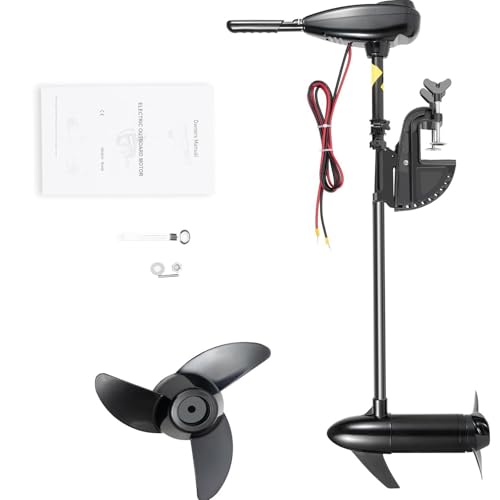
Best for boats that require strong torque and low-noise operation. This 55 lb thrust motor features 5 forward and 3 reverse gears, an anti-windup three-blade propeller, and robust copper motor construction for efficient traction up to 4,078 pounds. It is suitable for boats up to about 7.5 feet and 198 pounds with quiet performance. Caution: verify mounting compatibility and shaft length with your transom before ordering.
Buying Guide
Key factors to consider when choosing a 2HP-class electric trolling motor (or comparable electric setup):
- Boat size and weight: Heavier boats need higher thrust to achieve planing or moving at low speeds. Match thrust to your boat’s displacement and typical load.
- Shaft length: A longer shaft improves depth control on higher transoms or deeper water, but must fit your mounting area. Common options include 22″, 24″, and 30″.
- Power and efficiency: A higher load-bearing motor with a longer battery life is preferable for all-day fishing or cruising. Consider the motor’s efficiency rating and battery compatibility.
- Propeller design: Three-blade vs two-blade props affect low-end torque and weed performance. Weedless two-blade designs can be advantageous in grassy water.
- Mount and adjustability: Look for adjustable tilt, height, and angle so you can tailor performance to conditions and maintain trailer-friendly storage.
- Noise and water impact: Electric motors offer quiet operation and reduced disturbance to wildlife, a benefit for fishing and calm waters.
- Maintenance and corrosion resistance: Saltwater use requires corrosion-resistant materials; freshwater setups may be more forgiving but still benefit from protection.
- Battery and runtime: Ensure you have a suitable 12V battery with sufficient amp-hour rating to meet your cruising or trolling needs. Some units include battery indicators for easier monitoring.
Frequently Asked Questions
- What is the typical top speed for these electric trolling motors?
Most trolling motors top out around 3–4 mph, depending on boat weight, water conditions, and propeller design.
- Can I use these motors on a kayak or inflatable boat?
Yes. Several models are designed for light boats, kayaks, canoes, and inflatables, offering portable, quiet propulsion.
- Do these motors require a specific battery type?
They typically use 12V lead-acid or lithium batteries. Check the product specifications for compatible battery types and capacity requirements.
- Is a longer shaft always better?
Not always. A longer shaft helps in deeper water and choppy conditions but may complicate storage and mounting on shallow transoms. Choose based on your boat’s height and water conditions.
- Are 2HP electric motors sufficient for larger inflatable boats?
Sufficient thrust depends on the boat’s size and weight. For larger inflatables, higher-thrust models (like 55 lb or more) are typically preferable.
- Do these motors create a lot of noise?
No. Electric trolling motors are generally quiet, which is advantageous for fishing and wildlife interactions.