Yes, a purpose-built dolly can dramatically simplify moving a boat trailer in a driveway, storage lot, or dockside. This guide highlights five top picks suited for boat trailers, small utility trailers, and light RV setups. It explains who each dolly is best for, why it stands out, and any limitations to consider. Use the quick-reference table to compare core aspects at a glance.
| Product | Capacity | Tire Type | |
|---|---|---|---|
| MaxxHaul 70225 | 600 lb tongue weight | 12″ pneumatic | Budget-friendly, versatile for light trailers |
| YOLANDO Trailer Dolly | 600 lb | 12″ solid tires | Low-maintenance, no inflating tires |
| Dapzeosnry Heavy Duty | 1200 lb | 15.2″ pneumatic | Heavy trailers, RVs, and larger boats |
| VEVOR Electric Trailer Dolly | Max 3600 lb trailer weight; 600 lb tongue | 13″ pneumatic | Motorized, demanding loads, long moves |
| Trailer Tug | Up to 20,000 lb trailer weight; 3,500 lb tongue | Flat-free tires | Heavy-duty, commercial-like maneuvering |
MaxxHaul 70225 Trailer Dolly

The MaxxHaul 70225 provides effortless trailer maneuvering with a 600-pound tongue weight capacity. Its 12-inch pneumatic tires help it glide over uneven driveways and grass, reducing the effort required to position a boat trailer. Built from heavy-duty steel, it emphasizes durability and maintenance-free performance for routine moves around storage yards and marinas.
Best for: Small to medium boat trailers and utility trailers where a lightweight, budget-friendly dolly is preferred. Choose this if you want a straightforward manual option with decent versatility on varying surfaces.
Caution: Pneumatic tires require occasional air checks; underinflation can reduce comfort and control on rough surfaces.
YOLANDO Trailer Dolly

The YOLANDO dolly offers a heavy-duty 600-pound capacity in a powder-coated steel frame with 12-inch solid tires. Solid tires eliminate the need to monitor air pressure, delivering consistent performance on driveways and concrete pads. Its long handle design provides leverage for one-person operation, reducing strain during single-handed moves of small trailers.
Best for: Users who want a durable, low-maintenance option for light-to-medium trailers where flat tires are a concern. It’s a straightforward choice for suburban boat storage and driveway use.
Caution: Solid tires can be heavier to push on soft ground; on loose soil, traction may be reduced compared to pneumatic tires.
JY PERFORMANCE Trailer Dolly
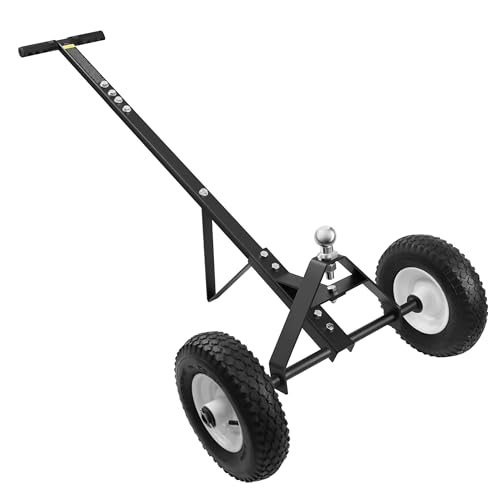
The JY PERFORMANCE model brings 600 pounds of capacity with 12-inch solid tires and a black powder-coated steel frame for resilience against rust and wear. Its long handle design helps with leverage during pushing or pulling, making single-person moves more practical in tighter spaces such as garage corners or trailer ramps.
Best for: Budget-conscious buyers who want a robust steel dolly with solid tires and easy handling for compact trailers or small boats. It’s a solid mid-range option where flat-free tires are prioritized.
Caution: Solid tires, while maintenance-free, can be harder to roll over loose surfaces compared to pneumatic tires.
VEVOR Electric Trailer Dolly

The VEVOR Electric Trailer Dolly combines power with versatility. It supports up to 3,600 pounds of trailer weight and up to 600 pounds tongue weight, powered by an 800W motor. Its 13 x 4.5-inch pneumatic tires offer traction across grass, concrete, and packed dirt, while an 8-inch swivel caster improves maneuverability in tight spaces. An anti-tip design helps stabilize straight paths and turns during tow or push operations.
Best for: Operators needing motorized assistance for heavier boat trailers, RVs, or utility trailers. Choose this if you want to reduce manual effort on longer moves or more challenging surfaces.
Caution: Electric movers require power considerations and can be heavier to store; ensure compatible hitch ball height for stable connection.
Buying Guide
What capacity do you actually need?
Match the trailer’s tongue weight and typical load. If you routinely maneuver 600 pounds or more, consider models that handle 1200 pounds or a motorized option with higher gross capacity.
Do you prefer manual or electric?
Manual dollies are simple, affordable, and reliable for short moves. Electric dollies reduce effort on larger trailers but require power sources and more storage space.
What tire type fits your surfaces?
Pneumatic tires glide smoothly over uneven surfaces but need maintenance. Solid tires require less upkeep but may struggle on soft ground. Flat-free tires provide predictable performance on hard surfaces.
Is durability a priority?
For frequent use in marina lots or gravel driveways, a steel frame with rust protection lasts longer. Powder-coated steel resists corrosion and extends life in outdoor environments.
How important is maneuverability?
Swivel wheels and long handles improve control in tight spaces. If space is limited, prioritize dollies with 360-degree turning or adjustable height features for better alignment with trailer tongues.
FAQ
- Q: Can these dollies handle aluminum boat trailers? A: Yes, most are designed for trailers with standard tongue weights and frames, including aluminum options, but verify tongue weight compatibility before use.
- Q: Do these require any special maintenance? A: Manual dollies typically require occasional tire checks (for pneumatic tires) and cleaning. Electric dollies may require charging and basic electrical checks per manufacturer guidelines.
- Q: Are flat-free tires suitable for all terrains? A: Flat-free tires perform well on hard surfaces but may offer less shock absorption on rough terrain compared with pneumatic tires.
- Q: What is tongue weight vs trailer weight? A: Tongue weight is the downward force the trailer tongue places on the hitch; trailer weight is the total weight of the trailer and load. Dollies are rated by tongue weight and overall trailer weight for safe maneuvering.
- Q: How do I choose the right height for the hitch ball? A: Check your trailer’s frame height and ensure the dolly’s adjustable height range matches, to maintain a level connection during moves.