Answering the needs of boat owners and maintenance enthusiasts, this guide highlights epoxy-based coatings and primers ideal for fiberglass hulls, decks, and bilges. Best for: DIYers restoring or upgrading fiberglass boats, professionals coating above or below waterline, and anyone seeking durable, water-resistant finishes. The table below compares five top products to help you pick the right solution for bilges, topsides, fairing, primer, and non-skid surfaces.
| Product | Best Use | Key Benefit |
|---|---|---|
| TotalBoat TotalBilge Epoxy Based Bilge Paint | Bilges, engine rooms, lockers | Waterproof, chemical-resistant epoxy |
| TotalBoat Wet Edge Topside Marine Paint | Above-waterline hulls, trim, exterior surfaces | High-gloss, durable finish |
| TotalBoat TotalFair Marine Epoxy Fairing | Fairing dents and holes on fiberglass and metal | High-strength, smooth, waterproof repair |
| TotalBoat Marine Topside Boat Paint Primer | Primer for fiberglass and wood above waterline | One-part, easy-to-apply undercoat |
| TotalBoat TotalTread Non-Skid Deck Paint (Quart) | Decks, cabins, steps, docks | Non-skid, long-lasting polyurethane finish |
TotalBoat TotalBilge Epoxy Based Bilge Paint

Best for: Bilges, engine rooms, and other tight spaces that require a tough, waterproof epoxy coating. This paint resists oils, acids, solvents, and other chemicals common in bilges, forming a durable seal on fiberglass, wood, and metal when prepared properly. It brightens bilge areas in white or light gray for easier leak detection and item retrieval. Suitable for: boat owners performing routine bilge maintenance or new installations where a robust bilge coating is needed. Limitation: Proper surface preparation is crucial; apply 1-2 coats for full coverage. Prime metal with TotalProtect for best adhesion.
TotalBoat Wet Edge Topside Marine Paint

Best for: Above-waterline applications on hulls, trim, and exterior fiberglass or wood surfaces. The paint delivers a high-gloss, scratch- and chemical-resistant finish with easy 1-part application. Choose this for long color retention and a showroom-like finish. Caution: Best results come from a clean, dry surface and proper ventilation during application; if you need a higher build, apply a second coat after the first cures.
TotalBoat TotalFair Marine Epoxy Fairing Compound

Best for: Filling voids, dents, and gouges on fiberglass, wood, aluminum, or steel. This two-part epoxy filler creates a smooth, waterproof repair that bonds strongly and resists pinholes. Choose this when repairing surface irregularities before finishing with primer or paint. Limitation: Requires careful mixing (1:1) and adequate curing time before sanding or applying another coating.
TotalBoat Marine Topside Boat Paint Primer

Best for: Priming fiberglass and wood above the waterline before applying topside paints. This one-part marine primer seals the surface in a single thin coat and creates a flexible undercoat for 1-part or 2-part polyurethane and enamel finishes. Choose this if you want solid coverage with minimal coats. Caution: Follow VOC and ventilation guidelines; primer is chromate-free and lead-free.
TotalBoat Marine Topside Primer (White, Quart)
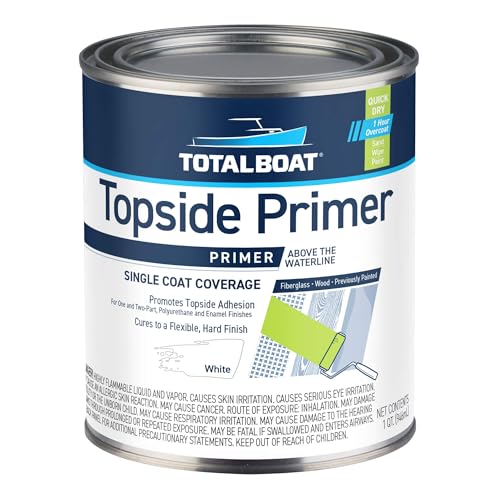
Best for: A go-to undercoat for fiberglass and wood surfaces above water. This durable primer fits well under single- or two-part topcoats and helps achieve an even finish. Better for: projects needing an efficient, single-coat primer before topcoat. Limitation: May require second coat if a higher build is desired; ensure compatibility with chosen topcoat.
TotalBoat TotalTread Non-Skid Deck Paint (Quart)

Best for: Decks, cabins, stairs, and any area where secure footing is essential. This polyurethane finish provides a durable, textured surface with low glare and good resistance to wear. Choose this if you need enhanced traction with a manageable cleaning routine. Caution: The textured finish may be more difficult to apply evenly on curved or intricate surfaces; ensure proper stir and application technique.
Buying Guide: Key Considerations for Epoxy and Marine-Fiberglass Finishes
- Surface preparation: Fiberglass needs cleaning, sanding, and drying before coatings. Epoxy primers improve adhesion on glass fiber and resin-rich surfaces.
- Below vs above waterline: Epoxy bilge paints are designed for wet, oily environments, while top-side paints and primers suit above-water surfaces with exposure to sun and salt.
- Chemical resistance: Bilge areas face solvents and fuels; choose epoxy-based, chemical-resistant coatings for durability.
- Gloss, texture, and traction: For decks, non-skid finishes like TotalTread offer safety with controlled texture; topsides benefit from glossy, UV-resistant finishes.
- Application method and cure: Many TotalBoat products offer 1-part or 2-part systems. Follow manufacturer directions for mixing, pot life, and curing times.
- Compatibility: Ensure primers, fairing compounds, and topcoats are compatible. Use TotalBoat TotalProtect for priming metal and the TotalFair epoxy filler for fairing before coating.
- Color and visibility: Lighter colors like white improve visibility in bilges and engine rooms; lighter topsides colors reflect heat and reduce onboard glare.
FAQ
- Q: Do I need a separate primer if I use epoxy bilge paint?
A: Primers are recommended for metals or porous substrates to ensure adhesion and durability; the TotalBoat primer options provide compatible undercoats for topsides and fiberglass. - Q: Can I apply these products over previous coatings?
- A: Most Topside Primers and Wet Edge Topside Paint are designed for surfaces in good condition. For damaged or improperly adhered coatings, surface prep and possibly sanding are required.
- Q: Are these products safe for below-waterline use?
- A: The Bilge Paint and epoxy fairing compounds are formulated for wet environments; avoid using non-waterline products below water without proper surface sealing.
- Q: How many coats are typical?
- A: Bilge paints often require 1-2 coats; topside paints may require 1-2 coats depending on color and surface porosity; primers typically 1 coat, with a second if needed for coverage.
- Q: How should I clean up after painting?
- A: Use appropriate solvents as directed by each product’s label; ensure proper ventilation and dispose of waste per local regulations.