Direct answer: A motor toter transom saver is essential for safely trailering outboard boats by supporting the engine and protecting the transom. This guide highlights five reliable options and explains who each is best for, based on adjustments, mounting style, and durability. Ideal buyers include casual weekend boaters, frequent trailerers, and those towing heavier engines up to 100 HP. Below you’ll find a quick product comparison and detailed sections to help you choose the right saver for your setup.
| Product | Best For | Key Feature |
|---|---|---|
| JY PERFORMANCE Adjustable Boat Transom Saver | Moderate-HP outboards, versatile mounting | Adjusts 23″–35″; aluminum construction |
| Attwood SP-400-RB Adjustable Transom Saver | Trailer-focused protection, multiple mounts | Roller and trailer mounts; 23″–35″ |
| SMOQIO Transom Saver | Heavy-duty protection, up to 100 HP | 5 adjustable points; 800 lb testing |
| VEVOR Transom Saver | Budget-conscious, up to 100 HP | 24″–36″ adjustable; corrosion-resistant |
| Mangrove Products TS-Block Transom Saver | Single-ram tilt systems on a budget | Universal wedge block design |
JY PERFORMANCE Adjustable Boat Transom Saver

Best for enthusiasts who need a flexible fit for varying motor sizes. The JY PERFORMANCE transom saver adjusts from 23″ to 35″ to accommodate motors up to 100 HP, providing optimal weight distribution when ground clearance is limited. Made of high-quality aluminum for strength and durability, it supports the outboard weight and helps minimize transom stress during trailering. A potential limitation is that it’s designed for up to 100 HP, so owners with larger engines should choose a higher-capacity option.
Attwood SP-400-RB Adjustable Transom Saver
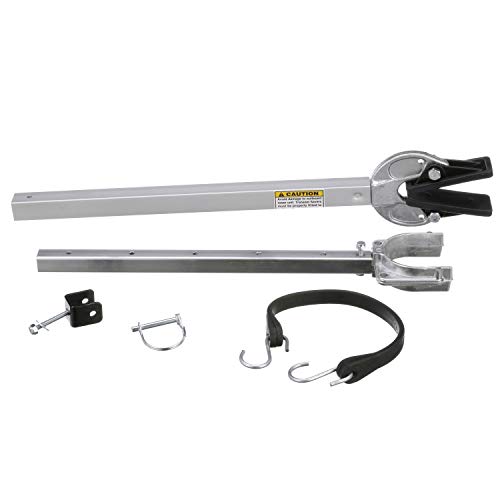
Better for trailers needing versatile mounting options. Attwood’s SP-400-RB reduces transom stress during transport and includes a choice of end mounts for rollers or trailer brackets. The 23″–35″ adjustment fits a broad range of boat sizes, making it a solid choice for frequent trailer use and where mounting flexibility matters. A caution: compatibility with non-standard trailer setups may require additional hardware or validation.
SMOQIO Transom Saver

Best for heavy-duty protection and balance. The SMOQIO Transom Saver uses precision recast aluminum and 2 mm tubing, tested to handle vertical loads up to 800 lbs. It features non-slip rubber pads to prevent hull scratches and offers five adjustable positions from 23″ to 35″, compatible with most outboards up to 100 HP. Use this when you need robust stability and protection during rough transport. Limitation: ensure your motor stays within the 100 HP range for best results.
VEVOR Transom Saver

Best value with broad adjustability. The VEVOR Transom Saver supports motors up to 100 HP and adjusts from 24″ to 36″, with a durable, corrosion-resistant galvanized surface. It’s suitable for both roller and trailer mounts. A note: measure the distance between engine and trailer before use to ensure correct length. This model is a practical pick for boaters seeking a budget-conscious yet sturdy option.
Mangrove Products TS-Block Transom Saver

Ideal for single-ram tilt systems on a budget. The TS-Block uses a universal wedge approach to hold the engine in place during trailering, reducing stress when the boat is moving. It fits a variety of brands and is designed to be quick to position without drilling or complex installation. Consider this option if you want a simple, low-profile saver and your setup uses tilt ram systems.
Buying Guide: How to Choose the Right Transom Saver
- Engine HP and weight: Most savers in this list handle up to 100 HP. If your motor exceeds that, look for higher-capacity options or a custom fit.
- Mounting style: Determine whether you need roller, trailer, or universal mounting. Roller and trailer mounts offer more flexibility for different trailers, while some users prefer fixed mounting for simple setups.
- Adjustability: Length adjustment from about 23″ to 36″ covers a wide range of boats. Choose models with clear, robust locking mechanisms to prevent slippage during travel.
- Material and durability: Aluminum and stainless steel components resist corrosion. Look for rubber pads or composite heads to protect hulls from scratches.
- Protection level: A good transom saver should stabilize the motor, reduce crossbeam stress, and cushion against road shocks. Wedge or block designs help isolate the tilt/trim system from impact.
- Ease of installation: Simpler setups save time during pre-trip checks. Non-drill installations or wedge-based designs are appealing for casual users.
Frequently Asked Questions
- What is a transom saver used for? It supports the outboard motor during trailering, reducing stress on the transom and protecting the engine mount and trim system.
- Can I use any transom saver on my boat? Most savers are designed for standard outboard motors up to about 100 HP. Confirm mounting compatibility with your trailer and tilt/trim system.
- Are aluminum transom savers durable? Yes, aluminum models offer strong support while remaining relatively lightweight and corrosion-resistant when used properly.
- What should I measure before buying? Measure the distance between the engine and the trailer to ensure the saver length matches your setup.
- Do transom savers require maintenance? Periodic inspection for corrosion, loose bolts, and pad wear is recommended to maintain performance.
- Is a wedge-style transom saver safer than a roller? Wedge and block designs provide solid support and can be simpler to install, while rollers offer easier mounting/disassembly in some setups.