For boat trailers, choosing the right 12 inch wheel and tire combo is essential for stability and load handling. This guide highlights five dependable options suited for utility, boat, and camper trailers. Best for right-sized loads, durability, and easy installation, these assemblies balance strength and value. The top picks vary from standard 4-lug to 5-lug patterns, so match your hub to avoid fitment issues. The buyer profiles below help you pick based on your trailer type, typical loads, and comfort with maintenance.
| Product | Best For | Key Specs |
|---|---|---|
| GarveeTech 4.80-12 480-12 Set | Utility and small trailers that need solid cost efficiency | Load Range C, 6PR, 990 lb max, 12″ white rims, 5-lug |
| GarveeTech 5.30-12 530-12 Set | Higher load utility and boat trailers craving extra braking margin | Load Range C, 6PR, 1050 lb max, 12″ white rims, 5-lug |
| eCustomrim 2-Pack 4.80-12 On Rim | DOT-approved ready-to-use assemblies with roadside support | Bias ply, 990 lb, 60 PSI, 12×4 rim, 5-lug |
| eCustomrim 2 Pack 4.80-12 On Black Aluminum Rims | Modern-look rims with solid towing stability | 990 lb, 90 PSI, 12×4 rim, 5-lug |
| Garvee 2 Pack 4.80-12 On White Rims | Two-assembly convenience for mid-size trailers | 990 lb per tire, 90 PSI, 12×4 rim, 5-lug |
The following sections break down each product. Use the “best for” notes to quickly compare how they fit your trailer type and towing needs. All selections emphasize stable towing, compatible hub patterns, and reliable construction.
GarveeTech 4.80-12 480-12 Set

This 2-pack includes 4.80-12 bias ply trailer tires with Load Range C 6PR, mounted on 12″ white spoke wheels with a 5 lug 4.5″ PCD. It’s best for utility and boat trailers requiring balanced load capacity and straightforward installation. The tires feature nylon cords and double steel belts for towing stability and durability. A caution: verify your hub’s 5-lug pattern before purchase, as a mismatch will prevent mounting.
GarveeTech 5.30-12 530-12 Set
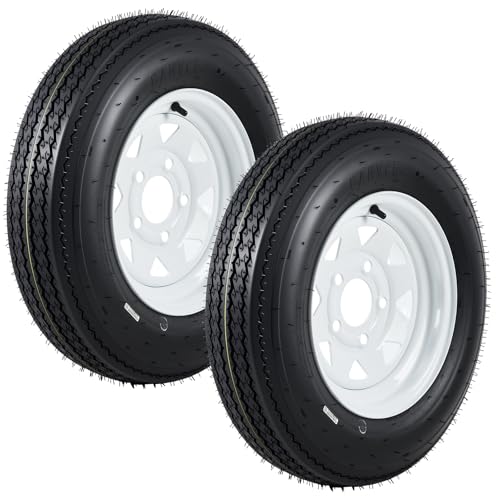
This 2-pack uses 5.30-12 tires with Load Range C 6PR, mounted on 12″ white spoke wheels, 5 lug 4.5″ PCD. It’s better for trailers that regularly carry heavier loads or travel longer distances, offering a higher max load of 1050 lb at 80 PSI. Durable construction with nylon cords and double steel belts supports stable towing. Choose this if your trailer carries significant cargo or gear and you want a margin of safety.
eCustomrim 2-Pack 4.80-12 On Rim

This complete DOT-approved assembly includes a bias ply tire rated for 990 lbs, 60 PSI max, 20.5″ overall diameter, and a 12×4 inch rim with 5 lug on 4.5″ center bolt pattern. It’s best for buyers who want a ready-to-use, roadside-supported package with a two-year warranty. The limitation is the lower tire pressure ceiling compared to some aluminum rims, which can influence load planning in extreme heat.
eCustomrim 2 Pack 4.80-12 On Black Aluminum Rims

This set offers 4.80-12 tires with 12×4 aluminum rims in a black finish, 5 lug on 4.5″ bolt pattern, and a max load of 990 lbs at up to 90 PSI. It’s best for buyers seeking a sleeker appearance without sacrificing stability. The center bore is 3.19″ for compatibility with certain hubs. Note that aluminum rims may require more care to prevent corrosion in marine environments compared with steel rims.
Garvee 2 Pack 4.80-12 On White Rims

This two-assembly package features 4.80-12 tires on white 12″x4″ rims with 5 lug 4.5″ bolt pattern and a center bore of 2.95″. It’s best for mid-size trailers that prioritize a traditional look and reliable performance. A limitation to note is the 90 PSI max inflation for tire safety margins, which should align with your axle and load specs.
GarveeTech 4.80-12 480X12 Set
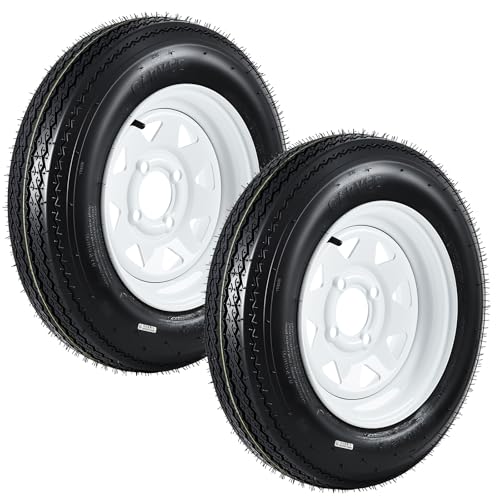
This 2-pack includes 4.80-12 bias ply tires with Load Range C 6PR, 12″ white spoke wheels, 4 lug 4″ PCD, and a max load of 990 lb at 90 PSI. It’s best for trailers requiring a 4-lug hub configuration and durable towing stability. A caution: ensure your hub uses a 4-lug pattern to avoid incompatibility with 5-lug hubs.
Buying Guide
What matters most when choosing 12-inch trailer wheels and tires?
- Hub pattern compatibility: 4-lug vs 5-lug. Confirm bolt pattern and center bore before purchase.
- Load capacity: Match max load per tire to your trailer’s gross load plus cargo margin. Look for Load Range C (6PR) for typical utility and boat trailers.
- Tire type and rating: Bias ply tires are common for trailers; ensure PSI ratings meet your operating range and ambient conditions.
- Rim material: Steel white rims are durable and classic; aluminum rims are lighter and look premium but may require more care in salty environments.
- Assembly vs. individual components: DOT-approved assemblies provide a ready-to-run option with warranty support; buying tires and rims separately offers customization but adds mounting steps.
Practical questions to consider
- How will I use the trailer—light cargo, or frequent long hauls with heavy loads?
- Do I prefer steel or aluminum rims for corrosion resistance and weight?
- What is my trailer’s max legal load, and how much headroom do I need above that?
- Are my hubs compatible with a 4-lug or 5-lug configuration?
Quick comparison tips
- Best for cost efficiency: 4.80-12 sets with steel white rims.
- Better for higher loads: 5.30-12 sets for up to 1050 lb per tire.
- Best all-around look with balance of weight: aluminum rim options.
Frequently Asked Questions
- Q: Can I mix tire sizes on a single trailer?
- A: It is not recommended; mismatched diameters can affect stability and axle load balance.
- Q: Do these assemblies come with a warranty?
- A: Some listings offer warranties or roadside assistance with DOT-approved assemblies; verify with the seller.
- Q: How do I know the correct wheel bolt pattern for my trailer?
- A: Check your hub or user manual for the bolt pattern and center bore size, then choose a matching assembly.
- Q: Are aluminum rims better for boats?
- A: Aluminum rims are lighter and look premium, but may require extra care in saltwater environments to prevent corrosion.
- Q: What PSI should I run these tires at?
- A: Adhere to the tire’s max PSI indicated (often 60–90 PSI) and balance with trailer weight and axle ratings.