When selecting a fuel flow monitor for a boat, you want accurate data, easy installation, and compatibility with your existing marine instruments. This guide highlights five reliable options to help boaters optimize fuel consumption, choose the right sensor for their setup, and avoid common pitfalls. Each pick targets different needs—from simple inline meters to advanced NMEA 2000 systems—so you can match the product to your vessel and operation style.
Buyer profiles: casual anglers may prefer simple inline meters for quick readouts. Sailors and boaters with a complete instrument suite might opt for NMEA 2000-compatible solutions. Commercial operators seeking precise fuel management will prioritize devices offering robust data and reliability. Below is a quick buying guide to help you compare at a glance.
Quick Product Comparison
| Product | Best For | Key Benefit | Note |
|---|---|---|---|
| Garmin GFS 10 Fuel Sensor | Everyday boaters | Easy integration with Garmin ecosystems | Basic sensor for flow data |
| Fuel Flow Sensor PK | LMF/HD units users | Compact family of sensors with 10 ft cable | Compatibility depends on system |
| Maretron FFM100 | NMEA 2000 networks | Advanced fuel flow management | Designed for professional-grade monitoring |
| 1 Inch Digital Turbine Fuel Flow Meter | DIY installations | High-precision digital readout | Not waterproof—sheltered use only |
| Maretron FFM100 (alternate listing) | Extended monitoring needs | Standalone fuel flow option | Check compatibility with your network |
Garmin GFS 10 Fuel Sensor

The Garmin GFS 10 Fuel Sensor is a straightforward option for boaters who want reliable fuel flow data without a complicated setup. It comes with a basic package and a dedicated Garmin ecosystem user base. Best for anglers and cruisers who rely on Garmin electronics for navigation and engine monitoring.
Why chosen: This sensor provides essential flow data that can be integrated into compatible Garmin displays and apps, helping you track consumption. It’s suitable for boats that need simple, accurate readings and easy installation.
Limitation: The package emphasizes core components, so users seeking advanced diagnostics may need to pair it with additional Garmin tools or third-party interfaces.
Fuel Flow Sensor PK

The Fuel Flow Sensor PK is designed for use with LMf and HDS units, featuring a 10 ft cable and a T-connector. It’s ideal for boaters who want a compact sensor package that can integrate with specific Lowrance/LMF units. Best for anglers and skippers using compatible displays in mixed electronics environments.
Why chosen: Its focused compatibility with LMF-200, LMF-400, and HDS units makes it a practical upgrade for those systems seeking reliable flow readings without adding bulk or complexity.
Limitation: Compatibility depends on the exact unit family; verify your display supports this sensor before purchasing.
Maretron Fuel Flow Monitor, FFM100-01

The Maretron FFM100-01 is designed for advanced fuel flow monitoring within a NMEA 2000 network. It emphasizes precision and reliability, using positive displacement metering for accurate consumption data. It’s a strong choice for boats that run on complex instrument layouts and require high-quality fuel statistics.
Why chosen: This monitor supports true temperature compensation via built-in thermistors and auto-detection of reverse flow, improving data accuracy under varying engine conditions.
Limitation: Higher complexity and installation cost may be a consideration for smaller vessels or simpler setups.
1 Inch Digital Turbine Fuel Flow Meter
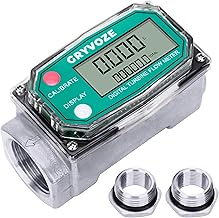
The 1 Inch Digital Turbine Fuel Flow Meter offers precise readings with a stated accuracy of ±1% and supports a range of liquids, including water, diesel, and various fuels. It features a digital LCD display for real-time flow rates and totals. Best for DIY installers who need a highly readable, inline flow meter.
Why chosen: Its digital readout makes monitoring straightforward, and the wide compatibility with different liquids offers flexibility for test rigs and non-typical setups.
Limitation: Not waterproof and intended for sheltered locations, so placement is limited to dry environments to avoid damage.
Maretron Ffm100 Fuel Flow Monitor (Alternate Listing)

This Maretron listing represents the same FFM100 model with potential packaging or SKU variations. It remains a solid option for NMEA 2000 setups that require precise fuel flow data and compatibility with Maretron’s networked suite.
Why chosen: For operators who already utilize Maretron products, this monitor aligns with existing sensors and displays, helping unify data across the vessel’s systems.
Caution: Confirm the exact model and network compatibility before purchase to ensure seamless integration with your current hardware.
Buying Guide: Key Considerations For Fuel Flow Monitors
- Network compatibility: If your boat uses NMEA 2000, prioritize FFM100 or equivalent devices that integrate cleanly with your network and displays.
- Sensor type and accuracy: Positive displacement vs turbine meters offer different accuracy and maintenance profiles. Consider the operating environment and liquid types used on your boat.
- Installation complexity: Inline sensors are typically easier to install, while networked sensors may require more wiring and configuration.
- Data accessibility: Check if the monitor provides real-time readouts, data logging, and compatibility with your existing chartplotter or app ecosystem.
- Environmental conditions: Some meters are not waterproof and must be installed in sheltered areas. Plan placement accordingly to avoid exposure to rain or spray.
- Maintenance needs: Consider how often sensors require calibration or maintenance and whether the manufacturer provides clear guidance.
Frequently Asked Questions
What is a fuel flow monitor used for on a boat?
It measures and reports the rate of fuel consumption, helping optimize engine efficiency and plan refueling or trips more effectively.
Do I need a NMEA 2000 network to use these monitors?
Not always. Some sensors work as standalone devices or with specific displays, while others integrate into NMEA 2000 networks for broader data sharing.
Which sensor type is more accurate, turbine or positive displacement?
Positive displacement sensors generally offer higher accuracy for fuel measurement, especially at varying flow rates, but turbine meters can be sufficient for many applications.
Can I install these myself, or do I need a technician?
Depends on the system. Inline meters are often DIY-friendly, while NMEA 2000 installations may benefit from professional help to ensure correct network wiring and configuration.
What should I consider regarding sensor placement?
Place sensors where they measure representative flow and are protected from moisture, heat, and vibration. Avoid high-temperature zones or direct exposure to rain unless the unit is rated for outdoor use.
Will these monitors work with all marine displays?
Compatibility varies by model. Verify that your display or chartplotter supports the chosen sensor’s communication protocol and data outputs before purchase.