When choosing a small outboard jet motor, look for compact power, reliable cooling, and easy control for tight spaces. This guide highlights five capable options that target different buyers: casual anglers, light-day weekend boaters, inflatable boat users, and compact craft operators. Each product is evaluated for ease of use, maneuverability, and fuel or energy efficiency, helping you pick the right fit for your boat and water conditions.
Summary of chosen products:
| Product | Best For | Key Benefit | Notes |
|---|---|---|---|
| JDCEREN 4HP 55CC Jet | Inflatable and wooden boats | Strong power and 360-degree rotation | Manual start; CDI ignition |
| MOCHAG 4HP 55CC Jet | Tough, versatile boats | Premium materials and step-less speed | Rotating head; wind cooling |
| Pxolerig 4HP 55CC Jet | General use on small craft | Clean design; efficient | Good reverse gear action |
| JDCEREN 1000W Electric Jet | Inflatable and light boats | Brushless efficiency; flexible control | Short shaft |
| Newport NT300 Electric Outboard | Salt or freshwater with minimal noise | Quiet, long runtime | Digital throttle; 66-mile range |
JDCEREN 4HP 55CC Jet Pump Outboard
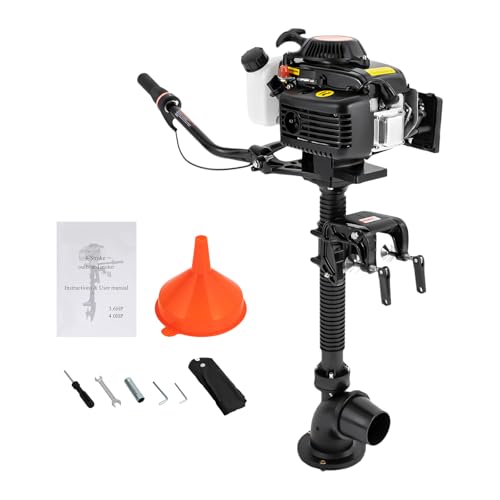
Best for light to medium loads on rubber and wooden boats, this 4-stroke 55cc engine delivers steady power at 2900W and 4500-5500rpm. The unit features a tilt function and 360-degree rotation for versatile maneuvering, including a 180-degree reverse gear. CDI ignition provides reliable starting and engagement.
Who it’s for: boaters needing dependable on-board power with straightforward controls for small inflatables or wooden craft. Why selected: strong power in a compact package with user-friendly ignition and direction control. Caution: as a gas engine, fuel management and regular maintenance are essential to preserve performance over time.
MOCHAG 4-Stroke 55CC Jet Pump Motor

Better for boats needing durable construction and precise speed control, this 4HP unit uses premium materials like nylon and aluminum alloy. It offers step-less speed change, 2900W power, and a 4500-5500rpm range. The tilt and 360-degree rotation support flexible handling, with a 180-degree reverse capability for tight navigation.
Who it’s for: anglers and small-boat users who value rugged build and fuel efficiency with a smooth throttle response. Why selected: strong power plus environmental considerations thanks to four-stroke efficiency. Caution: higher-quality components may come with a higher upfront cost but can extend service life in rocky or brackish waters.
Pxolerig 4HP 55CC Jet Pump Engine
Designed for general use on small craft, this model emphasizes a balanced combination of power and efficiency. It provides 2900W output, 4500-5500rpm, and a 180-degree reverse via the head rotation. Step-less speed control helps tailor performance to conditions like current and wind, while the wind cooling system supports continuous use.
Who it’s for: boaters who want a versatile, easy-to-control motor for sunlit freshwater days. Why selected: straightforward operation with a focus on fuel economy in a compact design. Caution: ensure propeller and mounting hardware are compatible with your specific hull to avoid vibrations or mounting issues.
JDCEREN Outboard Motor 1000W 48V Electric Jet

Best for inflatable, iron, or plastic boats seeking low-maintenance propulsion, this 1000W brushless motor emphasizes efficiency and ease of control. Features include a rotatable stand and omnidirectional joystick for flexible operation, plus a brushless design that reduces maintenance needs over time.
Who it’s for: users preferring electric propulsion over gas for noise-sensitive environments or frequent use near marinas. Why selected: high efficiency and simplified maintenance, with versatile steering control. Caution: battery and charging considerations will influence overall runtime and range on longer trips.
Newport NT300 Electric Outboard

Best for quiet, low-emission propulsion on saltwater and freshwater, the NT300 delivers 3HP equivalent (1300W) with 110lb thrust and 66-mile range on a single charge. It includes a digital throttle, 24.6-inch shaft, 9.8-inch two-blade propeller, and adjustable trim/tilt angles for varied conditions.
Who it’s for: anglers and day-trippers who prioritize quiet operation and extended electric range. Why selected: long runtime and field-oriented control for smooth, responsive performance. Caution: ensure battery capacity and charging infrastructure match your typical trip length.
Buying Guide: What To Consider Before You Buy
Power needs and boat size: match horsepower and displacement to your hull weight and typical load. For inflatable craft, 4HP units often suffice, while wooden or aluminum small boats may demand more torque for planing.
Fuel vs. electric: gas engines offer longer runtime in remote areas but require fuel management. Electric motors reduce noise and emissions, with easy maintenance, but runtime depends on battery capacity and charging options.
Cooling system: wind cooling helps prevent overheating in compact engines, especially when used in warm climates or heavy workloads. Look for integrated cooling features when choosing a jet pump model.
Control and maneuverability: 360-degree rotation, tilt, and 180-degree reverse capabilities improve docking and tight-space handling. A step-less throttle is beneficial for fine-tuning speed in calm or choppy water.
Build quality and materials: corrosion resistance matters in saltwater use. Premium plastics, aluminum alloys, and sealed components contribute to longer service life in harsh environments.
Maintenance and parts availability: check for CDI ignition reliability, ease of starting, and the availability of spare parts and compatible propellers or gear sets in your region.
FAQ
- What size small outboard jet motor should I choose for a rubber dinghy? A 4HP (55cc) class unit is commonly suitable for light inflatable boats, offering adequate thrust without excessive weight.
- Are electric outboard motors better for quiet lakes? Yes. Electric motors produce less noise and no fuel emissions, making them ideal for noise-sensitive areas and frequent shore moments.
- Is a 360-degree rotation important? It helps with tight navigation and docking, especially on small craft where precise steering matters.
- Do I need a reverse gear? A 180-degree rotate-and-reverse feature allows you to back away from docks or obstacles without starting the engine in reverse manually.
- What maintenance is required for gas outboards? Regularly check the fuel system, oil mix (for 2-stroke units if applicable), carburetor cleanliness, and air cooling passages to prevent clogs and overheating.
- Can I use a small outboard jet motor on a wooden boat? Yes, select models with compatible mounting and sufficient thrust for your hull and typical loads, and ensure the propeller clearance is appropriate.