Answering the top question for boaters: choose an outboard motor gas tank that fits your engine, boat size, and refueling habits. The right tank reduces vapor loss, prevents spills, and simplifies transfers on deck or at the ramp. This guide highlights five well-suited options for common recreational boats, from compact 3-gallon tanks to larger portable units for longer trips. Each choice targets a specific use case—compact, mid-size, or higher capacity—and notes its ideal buyer profile and any limitations to consider.
Summary table of selected products
| Product | Capacity | Best For | |
|---|---|---|---|
| AloneGoer 3 Gallon Portable Tank | 3 gal / 12 L | Compact boats, emergency spare fuel | Yamaha connector compatible; UV and corrosion resistant |
| VEVOR 12L/3.17 Gal Marine Tank | 12 L / 3.17 gal | General recreation fishing boats | Long hose included; avoid direct sun |
| PeakPursuit Portable Boat Tank | 3 gal / 12 L | Under-seat storage, easy carry | Dual venting; universal 9.8 ft hose |
| LIZHOUMIL Portable 3 Gal Tank | 3 gal / 12 L | Easy refueling anywhere, built-in gauge | Ergonomic handle; built-in filter |
| Scepter 6 Gallon Portable Gas Can | 6 gal / 22.7 L | Longer trips, under-seat storage | EPA/CARB compliant, dual vent cap |
AloneGoer 3 Gallon Portable Boat Fuel Tank
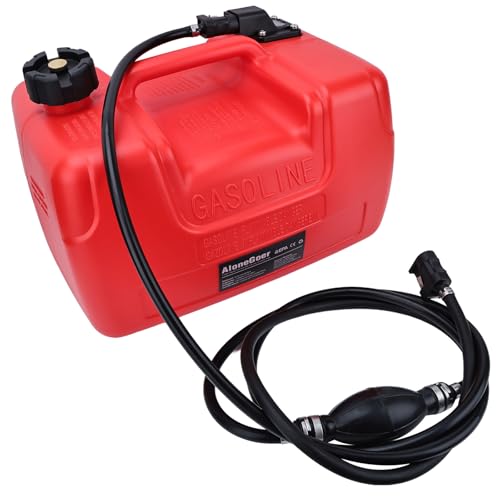
Best For: Small inflatables, dinghies, or as a compact spare fuel source on deck. Why: This 3-gallon tank uses a multi-layer HDPE-EVOH-HDPE barrier to reduce fuel permeation and evaporation, helping keep fuel fresh on longer trips. It includes a marine fuel line connector compatible with Yamaha 6YL-24201-24-00, making it ideal for Yamaha outboards with a portable tank setup.
Limitations: As a small tank, it offers limited range on bigger outboards; ensure your engine’s fuel flow requirements align with a 3-gallon capacity.
VEVOR 3.17-Gallon Marine Transfer Tank

Best For: Regular day trips on fishing or deck boats. Why: This 12L tank ships with a 9.8 ft hose and is built from HDPE for durability. It’s sized well for mid-sized engines and ensures secure storage. The long hose provides flexibility for fueling away from the motor.
Caution: Prolonged direct sunlight can age the plastic and impact performance over time.
Portable Boat Tank 3 Gal, Outboard Marine Tank

Best For: Boats needing a compact, maneuverable tank with a long hose. Why: Dual venting and a 9.8 ft hose with a robust HDPE body make refueling easier and safer in tight spaces. This unit is designed for simple transfers and on-board storage.
Limitation: Venting design requires proper cap handling to avoid leaks during transport.
LIZHOUMIL Portable Boat Fuel Tank, 3 Gal
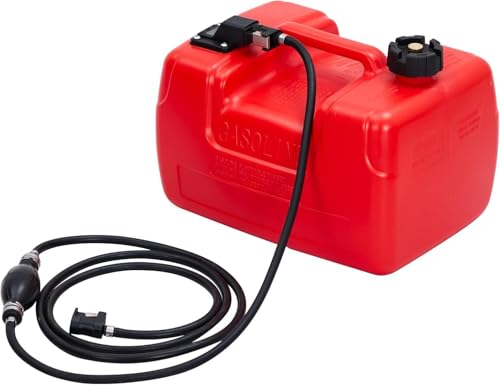
Best For: Boaters who value built-in gauges and clean fuel transfer. Why: This tank emphasizes durability with a premium build, includes an ergonomic I-shaped handle for easier carrying, and features a clear fuel gauge plus built-in filter to ensure cleaner fuel reaches the engine.
Caution: Like other small tanks, it holds less fuel and may require more frequent refueling on longer trips.
Scepter 6 Gallon Portable Marine Gas Can

Best For: Longer trips or engines with higher fuel demands. Why: The Scepter can features EPA/CARB-compliant venting and a built-in fuel gauge with a top handle for portability. It is compatible with common marine fittings and supports quick transfers from a larger capacity tank.
Limitation: Slightly heavier and bulkier than 3-gallon tanks; ensure under-seat or deck storage is adequate.
Buying Guide
- How much capacity do you need? Evaluate your typical trip length and engine size. Smaller 3-gallon tanks suit dinghies or backup fuel; larger 6-gallon units serve longer days or high-demand engines.
- Tank material matters Most marine tanks use HDPE with EVOH barriers to limit fuel permeation and aging. This helps reduce fuel loss and keep fuel fresh in salt spray environments.
- Venting and caps Vented caps prevent pressure buildup but require proper handling to avoid spills. Some models offer dual sealing options for flexibility in different conditions.
- Hose length and compatibility Check hose length (commonly 9.8 ft) and inner diameter to ensure a secure fit with your outboard connectors.
- Gauge visibility Built-in gauges help monitor fuel level, reducing guesswork during dockside refueling.
- Portability and storage Consider under-seat storage or deck clearance. Lightweight, ergonomic handles assist with transport between the dock and boat.
- Usage environment In salt spray or high-humidity conditions, opting for UV-stabilized and corrosion-resistant tanks extends service life.
Frequently Asked Questions
- What size tank should I choose for a typical 4-stroke outboard? For common small to mid-size boats, a 3 to 6 gallon tank balances weight, range, and portability. Choose larger only if you routinely require more fuel away from shore.
- Are vented caps necessary? Vented caps help prevent vapor buildup during fueling, but require careful handling to avoid spills. EPA/CARB-compliant vents regulate pressure safely.
- Will these tanks fit Yamaha outboards? Several models provide Yamaha-specific connectors or compatible hoses. Verify the connector size and hose length before purchasing.
- Can I store these tanks on deck? Yes, most are designed for deck storage, but ensure they are secured and not exposed to direct sunlight for extended periods.
- Do all tanks include gauges? Not all models come with gauges; if monitoring fuel level is important, select a tank with a built-in gauge or add an aftermarket gauge.
- What maintenance is required? Regularly inspect hoses for cracks, keep caps tight, and avoid freezing temperatures which can affect plastic tanks.