Answering the demand for eco-conscious boat maintenance, this guide highlights effective antifouling paints with low environmental impact. The top picks are suited for fiberglass, wood, and steel hulls, and favor low odor and low VOC formulations. Ideal buyers include marina-dwellers seeking low-toxicity options, casual recreational boaters, and captains prioritizing easier cleanup and reduced cleanup time between seasons.
| Product | Best For | Why It Ranks Here |
|---|---|---|
| TotalBoat JD Select Ablative Antifouling Bottom Paint (Black, Quart) | Pleasure boats in saltwater or freshwater | Low odor and low VOC; self-polishing for reduced seasonal buildup |
| TotalBoat JD Select Ablative Antifouling Bottom Paint (Green, Quart) | Pleasure yachts and small to mid-size vessels | Same environmentally mindful profile with color option for identification |
| TotalBoat Underdog Marine Antifouling Bottom Paint (Black, Gallon) | Boats used frequently; varied water types | Economical single-season protection with copper biocide; durable finish |
| TotalBoat Underdog Marine Antifouling Bottom Paint (Blue, Gallon) | Work boats, sailboats, and fishing vessels | Economical choice with continuous release of biocide under way |
| TotalBoat Outdrive AF Antifouling Paint (Quart) | Aluminum boats and outdrives | Copper-free formulation; single-season protection across water types |
TotalBoat JD Select Ablative Antifouling (Black, Quart)

This ablative antifouling paint uses a unique hybrid film that prevents barnacles, weeds, and slime from clinging to hulls for a full season. It is suitable for fiberglass, wood, and steel boats in both salt and freshwater. The coating renews itself as the boat moves, reducing paint buildup and easing next-season prep. It features low odor and low VOCs and cleans up with soap and water. Best for owners prioritizing environmental restrictions in marinas and quick cleanup.
Who it’s best for: Owners who want a low-odor, low-VOC option with easy reapplication and less yearly sanding. Choose this if you value burnishing for a smoother, faster hull and fuel efficiency.
Caution: No maximum dry time before launch is stated; ensure marina rules align with any local guidelines before launch after application.
TotalBoat JD Select Ablative Antifouling (Green, Quart)
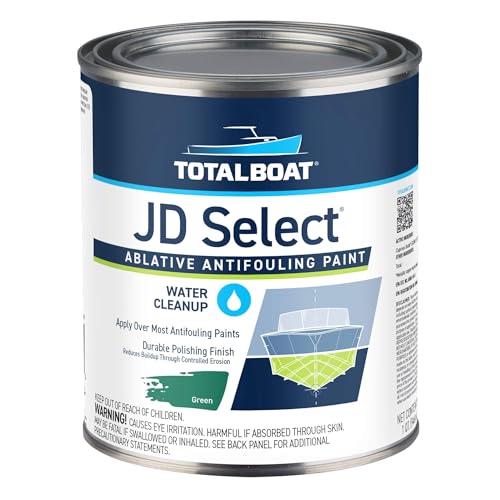
This green variant shares the same protective features as the black version: a self-polishing ablative film that reduces bottom paint buildup and improves smoothness, speed, and fuel efficiency. It is low odor and low VOC, enabling use in marinas with environmental restrictions. It’s ideal for fiberglass, wood, and steel hulls in mixed-water conditions.
Who it’s best for: Boats that operate year-round in diverse waters and marinas that require low-emission coatings. Choose this if color coding helps you differentiate multiple boats or seasonal teams.
Caution: As with other ablatives, expect wear through the season rather than a permanent film, which means reapplication planning is essential.
TotalBoat Underdog Marine Antifouling (Black, Gallon)
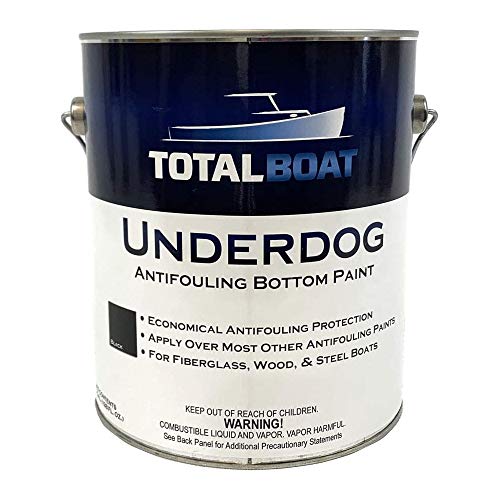
This economical option provides single-season protection with a copper biocide designed to deter barnacles and mussels. It’s suited for sailboats, power boats, fishing, and work boats operating in various saltwater conditions. The coating’s durable finish withstands trailering and beaching better than some traditional ablatives, reducing mid-season maintenance.
Who it’s best for: Budget-conscious operators who need reliable protection for a single season and frequent use. Best for boats that are hauled and launched often.
Limitation: Copper biocides, while effective, are not the most environmentally friendly option in some marina contexts; verify local rules on biocide presence before application.
TotalBoat Underdog Marine Antifouling (Blue, Gallon)

The blue Underdog variant emphasizes economical single-season protection with ongoing copper biocide release as water flows beneath the boat. It’s designed for boats used frequently, including sail and power craft, and remains durable during trailering and beaching. It’s appropriate for properly prepared fiberglass, wood, steel, and iron hulls.
Who it’s best for: Operators needing a cost-effective, widely compatible antifouling option for frequent use. Choose this if you want visible color coding while maintaining performance across water types.
Caution: Ablative wear means you’ll need to repaint next season; plan reapplication cycles accordingly.
TotalBoat Outdrive AF Antifouling Paint (Quart)

This copper-free antifouling paint is especially suitable for aluminum boats, outdrives, and outboards. It provides single-season protection below the waterline and is formulated for use in fresh, salt, or brackish water. The copper-free approach may be preferable in environments sensitive to copper exposure.
Who it’s best for: Aluminum boats and outdrives where copper-based coatings are restricted or avoided. Choose this when environmental restrictions or personal preference favor copper-free formulations.
Limitation: Copper-free products can sometimes have different performance characteristics than copper-based paints; verify compatibility with your hull material and operating conditions before use.
Buying Guide: How To Pick The Right Environmentally Minded Antifouling Paint
- Water Type and Boat Use: Consider whether your vessel spends most time in saltwater, freshwater, or brackish water. Some formulations excel in one environment but underperform in another. If you trailer and beach often, look for durable finishes that resist wear.
- VOC and Odor Levels: Low VOC and low odor are crucial for marinas with strict rules and for small hatch openings. These features also reduce indoor air exposure during application and cleanup.
- Application and Cleanup: Water-based or low-toxicity paints clean up easily with soap and water. They tend to have less harsh fumes but may require more careful maintenance planning between seasons.
- Abalative vs. Non-Ablative: Ablative paints wear away as you move, reducing buildup and sanding next season but requiring reapplication. Non-ablative layers stay more constant but can accumulate more hull coating over time.
- Environmental Considerations: Copper-based paints are effective but may be restricted in sensitive marinas. Copper-free options like Outdrive AF provide alternatives for environments prioritizing minimal copper exposure.
- Hull Material Compatibility: Ensure the product lists compatibility with fiberglass, wood, steel, or aluminum as appropriate for your craft. Some formulas are optimized for specific substrates.
Frequently Asked Questions
- What makes antifouling paint environmentally friendlier? Look for low VOC content, low odor, water-based formulations, and copper-free options where possible.
- Is ablative paint better for the environment? Ablative coatings shed material as you sail, which can reduce buildup but may require more frequent reapplication depending on usage.
- Can I use copper-based antifouling paints near marinas? Some marinas restrict copper-based products due to environmental concerns. Check local rules before application.
- How long before launching after painting? Manufacturer guidelines dictate dry time and launch readiness; ensure compliance with marina policies and weather conditions.
- Are copper-free options as effective as copper-based paints? Copper-free options can be effective for many applications, especially where copper exposure is a concern; always consider water type and boat usage when choosing.
- What maintenance should I expect after a season? Ablative paints typically wear away; expect hull re-painting next season and plan accordingly to minimize downtime.