Need a reliable outboard motor lifting solution? This guide highlights five top options designed to lift 2–30 HP engines safely, with clear suitability for beginners and seasoned boaters alike. Each product targets a different use case—from inflatable dinghies to heavier four-stroke motors—so you can choose the best fit for your setup. The quick-reference table below helps you compare at a glance.
| Product | Best For | |
|---|---|---|
| Dinghy – Lift for Davits | Inflatable dinghy lifting and stabilization | Long retainer strap; gentle on fabrics |
| DotLine Outboard Tilter | Motors without power tilt; precise angle control | Fine tilt adjustment; marine-grade durability |
| FEIJAZUM Hoist Harness | Small to mid-size outboards; quick setup | High-strength webbing; fast buckle |
| YaBeHo Lifting Ring Tool | Mercury and similar flywheel engines | Direct compatibility; robust iron construction |
| GliCraft Hoist Harness | Universal 2–30 HP engines; secure lifting | Durable polyester webbing; storage buckles |
Note: This article presents objective, specification-based guidance to help you compare options. Each section explains who the product is best for, why it was selected, and a practical caveat to consider before purchase.
Dinghy Lift for Davits
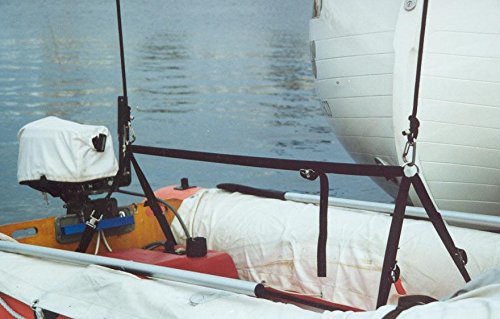
The Dinghy – Lift is designed for inflatables and dinghies. It uses a long retainer strap to steady the craft during lifting and features nylon webbing legs that are gentle on fabrics. Best for boaters with inflatable dinghies or light craft that require stable, fabric-friendly lifting. The product is best for users who prioritize fabric safety and straightforward setup. A potential limitation is that it may be optimized for lighter loads rather than heavier or rigid hulls.
DotLine Outboard Tilter

The DotLine Outboard Tilter is ideal for motors without power tilt systems. It supports engines up to 75 HP and offers precision tilt adjustment for improved handling, fuel efficiency, and trim in various water conditions. This option suits boaters who need reliable manual tilt control and durability in corrosive marine settings. Best for boats without hydraulic tilt systems. A limitation is that it requires manual effort for tilt adjustments, which may be less convenient during frequent shifts in water conditions.
FEIJAZUM Hoist Harness

The FEIJAZUM hoist harness is designed for 2–30 HP engines with a wide, high-strength 1.97-inch webbing and reinforced buckle. It emphasizes easy installation with a quick buckle for fast attachment and semi-permanent fixation that doesn’t interfere with engine operation. Best for users who want a simple, reusable harness for frequent lifting and storage. A caveat is that it may be less suited for engines exceeding 150 pounds or those requiring more robust supports on very heavy vessels.
YaBeHo Outboard Lifting Ring Tool

The YaBeHo lifting ring tool is designed for Mercury and similar outboards with a 1.5″ threaded flywheel. It includes AMT0022 universal ring adapters and is built to replace OEM parts like 91-904551. Best for technicians or boat owners who want a direct, compatible replacement option with solid iron construction. The tool supports up to 1,000 lbs working load, which is a practical limit to respect for safety. A limitation is that it targets specific flywheel threading, so verify compatibility with your engine model before purchase.
GliCraft Hoist Harness Set

The GliCraft hoist harness is a universal kit supporting 2–30 HP engines with durable 1.97-inch polyester webbing and storage buckles for secure lifting and transport. It emphasizes a hassle-free, permanent setup that doesn’t interfere with engine controls. Best for boaters who want a long-term, secure storage solution and easy maintenance. A caution is that heavier four-stroke engines near the top of the HP range may require additional support or a higher-capacity system.
Buying Guide: Key Considerations for Outboard Lifting Davits
- Engine HP and weight: Ensure the harness or lifting system supports your engine’s horsepower and weight. Most options here cover 2–30 HP, with some extending toward heavier builds.
- Attachment method: Quick-release buckles and secure loops speed up installation but verify that they won’t interfere with engine controls or mounting hardware.
- Material durability: Look for marine-grade, UV-resistant, corrosion-resistant materials like heavy-duty polyester webbing and stainless hardware to withstand saltwater exposure.
- Compatibility: Some tools target specific flywheels or motor designs. Confirm threading, mounting points, and shroud shapes before buying.
- Portability and storage: For seasonal storage, consider harnesses with compact storage features and lightweight construction for easy handling.
- Safety limits: Adhere to the stated working load limits and never exceed them. Use stable, level lifting points and avoid dynamic loads that exceed product specifications.
FAQ
- What kind of motor can a lifting harness handle? Most harnesses in this guide are designed for 2–30 HP engines; always verify weight and dimensions before purchase.
- Do these tools require power tilt? No; some tools are designed for motors without power tilt, while others support manual tilt adjustments.
- Are these products suitable for inflatable dinghies? Yes, some options like the Dinghy Lift are tailored for inflatable fabrics and provide fabric-friendly lifting support.
- Can I use these with Mercury engines? Some lifting rings and adapters are compatible with Mercury models; check threading and model compatibility.
- What is the difference between a hoist harness and a lifting ring tool? A hoist harness wraps around the engine for lifting, while a lifting ring tool attaches to the flywheel area to provide a pick point for hoisting.
- Is professional installation required? Most are designed for DIY installation, but always follow manufacturer instructions and observe safety guidelines during hoisting.