Buying the right boat polisher or buffer hinges on power, versatility, and ease of use. This guide highlights five top options for boat detailing, from corded workhorses to cordless conveniences. Each pick suits different boat sizes, detailing styles, and user skill levels. Whether you’re a DIY hobbyist or a professional detailer, these selections help you remove oxidation, smooth swirls, and restore gloss efficiently.
| Product | Best For | Key Benefit |
|---|---|---|
| LDHTHOPI Buffer Polisher | Medium to large boats | High power with adjustable speeds |
| AOBEN Car Buffer Polisher | All-around detailing | Ergonomic, multi-use with detachable handles |
| Niusken Cordless Buffer Polisher | Beginner to intermediate | Cordless freedom with LED display |
| AVID POWER Car Buffer Polisher | General detailing and waxing | Balanced power and control |
| Avhrit Cordless Car Buffer Polisher | On-the-go polishing | Cordless with multiple speeds and attachments |
LDHTHOPI Buffer Polisher 1600W 7 In/6 In

Best for: Enthusiasts who need a high-powered, versatile machine for tougher boat surfaces. The LDHTHOPI offers a 1600W motor and seven speed settings from 1000 to 3500 RPM, enabling both aggressive oxidation removal and gentle waxing. The detachable handle design supports three operating modes for comfort during extended sessions. The high torque helps tackle stubborn stains on fiberglass and gel coat.
Why selected: It combines robust power with flexible control, making it suitable for mid-sized boats where oxidation and scratches require a steady, durable approach. The multiple grip options can reduce fatigue on longer sessions. A potential limitation is the weight and leverage needed for larger projects, which may benefit from a secondary, lighter tool for finishing passes.
AOBEN Car Buffer Polisher 6 Inch
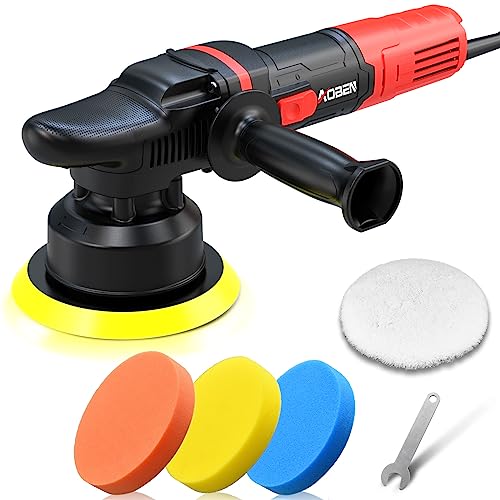
Best for: Detailers who want a compact, ergonomic buffer with solid performance for boats and other surfaces. This 6-inch dual-action polisher uses six speeds (1000–4500 RPM) and includes three foam pads plus a synthetic wool pad for waxing, polishing, or sealant work. It features an ergonomic side handle and a fixed top handle to reduce fatigue during long sessions. A note: the machine may momentarily stop under heavy pressure at lowest speeds, so moderate pressure is advised.
Why selected: Its balance of power, control, and included accessories makes it a versatile choice for boat owners who do routine polishing and waxing. It’s less intimidating for beginners yet capable of removing light defects on fiberglass. Limitations include its lower torque at ultra-high loads compared with some corded pro models.
Niusken Cordless Car Buffer Polisher Kit

Best for: Beginners and professionals who value cordless operation for boats or remote spaces. This kit includes two 2000mAh 21V batteries and six-speed levels (2800–5800 RPM) with an 8mm dual-action orbit for swirl-free results. The LED display provides real-time speed and battery status. It also includes a fast charger and battery swap capability to extend detailing sessions. A caution: prolonged use at high speeds can trigger the overheat protection system, requiring a brief cooldown.
Why selected: The cordless setup eliminates cord management challenges on decks or tight compartments and the LED readout helps users monitor performance. It’s a practical pick for boat owners performing periodic polishings, waxings, and light scratch removal without tethering to a power outlet. Limitation: battery dependency means runtime depends on battery health and speed settings.
AVID POWER Car Buffer Polisher 1200W

Best for: Those seeking a reliable, mid-range polisher for boat detailing and waxing. The 1200W motor provides solid power with a 1600–3500 RPM range and six-speed control. It includes two detachable handles, improving control on large or awkward surfaces. A built-in switch lock helps maintain continuous speed during longer passes, reducing fatigue. Caution: The tool’s true torque increases with speed; apply even pressure to avoid swirl marks at higher speeds.
Why selected: It strikes a good balance between performance and usability, suitable for regular boat care tasks like polishing hull surfaces, applying coatings, and removing minor oxidation. It’s a straightforward option for users who want dependable results without specialized training. Limitation: not the best option for heavy oxidation removal on very large vessels compared with higher-wower models.
Avhrit Cordless Car Buffer Polisher Kit

Best for: Detailing on the go, including boats, with fast setup and flexible speed control. This cordless kit includes two 2000mAh 21V batteries and six adjustable speeds up to 6000 RPM, plus extra attachments for varied tasks. The 8mm dual-action orbit supports swirl-free finish, and the copper motor offers efficient performance with lower noise. A caution: high-speed operation may heat the tool; allow cooling between extended sessions.
Why selected: Its powerful cordless operation and included attachments make it a versatile all-in-one solution for quick boat polishing, scratch removal, and finishing tasks. It’s particularly appealing for those who value mobility and a broad accessory set. Limitation: at very high speeds, heat buildup can require pauses to prevent overheating.
Buying Guide: Key Purchase Considerations
Power and speed range: Choose a polisher with enough wattage or RPM range to handle fiberglass gel coat, oxidation, and light scratches. Higher wattage often corresponds to better heat tolerance for long sessions.
- Corded vs cordless: Corded units offer consistent power for extended work; cordless models provide mobility but depend on battery life and charge cycles.
- Orbital motion vs rotary: Orbital polishers (dual-action) reduce swirl risk; rotary polishers offer more aggressive cutting when used by experienced detailers.
Ergonomics and comfort: Detachable or adjustable handles help reduce fatigue on large boats. A well-balanced tool improves control during long sessions on hull surfaces.
- Weight and balance: Lighter tools reduce wrist strain; heavier models may require two-handed operation for precision.
- Grip and heat: Rubberized grips and insulated housings improve comfort and temperature management during high-speed use.
Accessories and compatibility: Look for kits with a range of pads, backing plates, and safety gear. A larger accessory set can reduce the need for additional purchases.
- Pad variety: Foam pads for polishing, wool pads for heavy cutting, and backing plates sized for 6″ or 7″ applications.
- Maintenance: Consider the availability of replacement brushes or carbon brushes and the ease of replacing parts.
Durability and safety: For marine use, corrosion resistance and heat management are essential. Some models include overheating protection to prevent motor damage.
FAQ
- What is the difference between a dual-action and a rotary polisher? A dual-action (orbital) polisher moves in two patterns for swirl-free finishes, while a rotary polisher spins on a single axis for more aggressive cutting. Use dual-action for finishing; rotary for tough defects with experience.
- Which speed setting should I use for waxing a boat hull? Low to mid speeds (around 1000–2000 RPM) are typically best for waxing and light polishing to avoid uneven film buildup.
- Is cordless better for boat detailing? Cordless tools offer mobility and are ideal on decks or cramped spaces; however, ensure batteries provide enough runtime for your session and have a spare charged.
- How do I prevent swirl marks when using a polisher? Start with clean surfaces, use appropriate pads, apply light pressure, and choose a suitable speed for the material. Avoid pressing hard or staying too long in one spot.
- What about safety and maintenance? Wear eye protection and gloves, keep cords away from water, and clean pads after use. Replace worn pads promptly to maintain performance.
- Can these buffers remove heavy oxidation on boats? Some high-power, corded models can remove mild to moderate oxidation, but for severe oxidation, specialized marine oxidation removers or professional-grade products may be required.