Answering the common need for reliable, compact, and maintenance-friendly boat pumps, this guide highlights five top electric water pumps suited for bilge and other marine uses. Each pick is chosen for ease of installation, built-in features, and practicality on boats of various sizes. Ideal buyers include weekend boaters needing quick bilge drainage, RV or small yacht owners seeking portable pump options, and anyone upgrading an older system to a safer, more energy-efficient model.
Summary of selected products
| Product | Best For | Notes |
|---|---|---|
| 12V 2000GPH Automatic Electric Bilge Pump | Small to mid-size boats needing auto-bilge control | Built-in float switch; quiet operation |
| SEAFLO 110V 1.5 GPM Diaphragm Pump | RVs, boats with 110V shore power | High pressure, self-priming, built-in switch |
| 1-1/8 Inch 1500GPH Electric Bilge Pump Kit | Yachts and marine systems with thru-hull needs | Includes fittings and clamps |
| Sanuke 1-1/8 Inch Automatic Kit | Automatic bilge setup with easy hose routing | Automatic kit with thru-hull fitting |
| MAXZONE 1100GPH Submersible Pump | Quiet, non-automatic needs in pools/ponds/boats | Non-automatic, versatile for various water tasks |
12V 2000GPH Automatic Electric Bilge Pump

Features: Compact, efficient, long-life electric pump; built-in float switch; marine-grade blocked wiring; silent and vibration-minimized operation. Best for small to mid-size boats needing automatic bilge control without extra wiring complexity.
- Best for: Boats requiring automatic bilge drainage with a built-in float switch.
- Why selected: The built-in float switch simplifies installation and reduces the risk of bilge flooding.
- Caution: Ensure compatible electrical supply and mounting to minimize vibration.
SEAFLO 110V 1.5 GPM Diaphragm Pump

Features: 110V operation, 1.5 GPM, 200 PSI, self-priming, built-in pressure switch. This pump is suited for higher-pressure needs in shore-powered boats or RV setups where 110V is available.
- Best for: Boats or campsites with access to 110V power that need strong pumping and precise pressure control.
- Why selected: High pressure capability supports more demanding water transfer tasks.
- Caution: Requires suitable electrical supply and secure mounting to manage vibration.
1-1/8 Inch 1500GPH Kit

Features: 12V, 1500GPH, includes thru-hull fitting and two stainless steel clamps. Best for yachts and marine systems with through-hull requirements where robust mounting and leak-safe connections matter.
- Best for: Systems needing a complete kit with fittings for reliable installation.
- Why selected: All-in-one package reduces setup time and hardware sourcing.
- Caution: Verify compatibility with hull fittings and space for thru-hull components.
Sanuke Automatic Kit
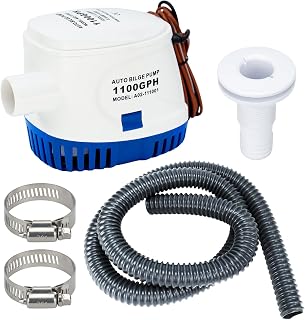
Features: Automatic operation with a kit including a thru-hull fitting, 6 ft kink-free hose, and two clamps. Best for: Boats needing a ready-to-install automatic bilge solution with reliable hose routing.
- Why selected: Pre-included components reduce installation complexity and potential leaks.
- Caution: Ensure hull penetration is compatible with thru-hull fittings and that the deck space accommodates the hose routing.
MAXZONE Submersible 1100GPH Pump

Features: 1100 GPH, 12 VDC, submersible design suitable for ponds, pools, spas, and boats. Non-automatic operation for versatile water-moving tasks.
- Best for: Non-automatic needs where a compact, quiet pump is desirable in various water applications.
- Why selected: Submersible design provides flexible placement and reduced noise.
- Caution: Not automatically triggered; consider a float switch or separate controller if auto-bilge is required.
Buying Guide: Key Purchase Considerations
What to prioritize when selecting an electric boat pump
Power type (12V vs 110V) should match your boat’s electrical system. For bilge use, automatic operation with a float switch reduces manual checks. Inline compatibility, such as 1-1/8″ or 1″ outlets, is crucial for fitting hoses and fittings. Consider pump head, GPH rating, and durability of marine-grade materials for saltwater exposure.
Should you choose automatic or non-automatic?
Automatic pumps are ideal for unattended bilge drainage. Non-automatic pumps are simpler and cheaper but require manual activation or a separate control system. If you frequently travel without a crew, automatic is usually safer to prevent flooding.
What about installation considerations?
Look for pumps with included fittings, clamps, and thru-hull options when applicable. Ensure there is a secure mounting surface and that wiring is protected from water and vibration. For through-hull fittings, verify compatibility with hull material and space for secure sealing.
Durability and maintenance tips
Choose pumps with corrosion-resistant housings and sealed motors suitable for saltwater. Regularly inspect seals, hoses, and clamps. Test the pump periodically to confirm auto-switch accuracy and drainage efficiency.
Comparing common use scenarios
- Small boats needing automatic bilge drainage: 12V 2000GPH Automatic Bilge Pump is a strong, self-contained choice.
- Shore-powered setups with high-pressure needs: SEAFLO 110V Diaphragm Pump offers robust performance.
- Yachts or systems requiring complete kit with fittings: 1500GPH kit from a 12V line fits well.
- Automatic installation-friendly options: Sanuke Automatic Kit provides a ready-to-install solution.
- Versatile, non-automatic tasks: MAXZONE Submersible Pump works well for ponds and other water transfer needs on board.
Frequently asked questions
- What is a bilge pump’s primary purpose on a boat? A bilge pump moves water out of the bilge area to prevent flooding and maintain buoyancy.
- Do I need a built-in float switch? A built-in float switch enables automatic operation, reducing manual checks.
- Can I use a 110V pump on a boat? Use a 110V pump only if your boat has a reliable 110V shore power or inverter setup; otherwise a 12V pump is typically safer and more common on smaller boats.
- What size pump should I choose? For bilge use, a higher GPH rating drains faster but may require more power and space; choose based on expected water volume and pump placement.
- Are through-hull fittings necessary? Through-hull fittings are common for permanent and robust installations on larger vessels; ensure proper sealing and compatibility with hull material.
- How do I avoid pump vibration? Mount on a stable, vibration-damping surface and use compatible fasteners to minimize movement and noise.