Answering the common question “Which sailboat solar panel mount is right for my setup?”, this guide reviews top-rated, on-deck mounting solutions for boats, RVs, and other flat surfaces. Each option helps you optimize sun exposure, avoid drilling, or secure panels on moving water. This article highlights five mounts that accommodate a range of panel sizes and mounting surfaces, so you can choose the best fit for your boat and off-grid needs.
| Product | Best For | Surface Fit | Tilt Range |
|---|---|---|---|
| Oungy Adjustable Tilt Mount Brackets | General flat surfaces and small to mid-size panels | Flat roofs, RVs, boats, walls | 15–30° |
| LINOVISION Pole Mount Bracket | Pole-based mounting on decks and masts | Round poles 4.33″–4.72″ diameter | 20–45° |
| PFCTART 45 Inch Rails Mount | Longer rails for multiple modules | Balconies, roofs, RVs, boats | 0–90° |
| SUNER POWER Adjustable Pole Bracket | Pole-based mounting with variable angles | Pole 1.5″–3.0″ diameter | 0–60° |
| BougeRV Crab Mounting Kit | Crossbar roof racks on vehicles | Most cross bars; not rounded | Fixed via crossbars |
Oungy Adjustable Tilt Mount Brackets For Solar Panels

Best for: DIY boat decks, small to mid-size solar installations, and flat surface mounts on boats or RVs. This mount offers adjustable tilt from 15° to 30°, which helps capture more sun as seasons change. It fits panels from 50W to 400W and extends from 14 to 27 inches, accommodating a range of panel sizes. It’s suitable for DIY enthusiasts or off-grid setups needing a straightforward attachment on flat surfaces.
Why selected: It combines adjustable tilt with a broad panel size range, making it a versatile option for sailors who want a simple, secure, surface-mounted solution that can be installed on flat boat decks or RV surfaces without complex hardware.
Limitations: Best used on flat surfaces; vertical mounting may require additional fasteners or reinforcement. Ensure all screws are tight for stability on moving decks.
LINOVISION Pole Mount Bracket For Solar Panels
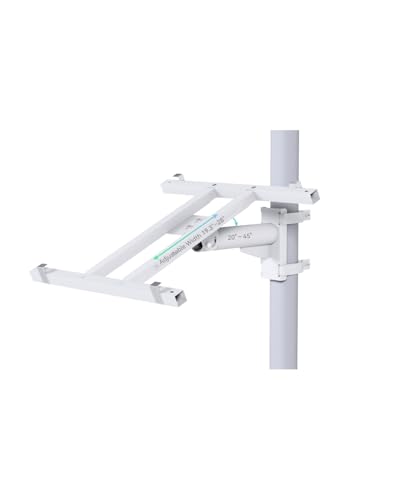
Best for: Decks or masts with round poles, especially when you need a sturdy, pole-based mounting solution. This bracket supports solar panels in the 50W–150W range with adjustable width to fit 19.3″–28″ (49–71 cm) panels and 0.9″–1.26″ (2.3–3.2 cm) thickness. It accommodates poles 4.33″–4.72″ in diameter and provides a tilt range from 20° to 45° for optimal sun exposure.
Why selected: A robust galvanized steel structure and clear tilt adjustment help sailors maximize power while keeping the setup compact and secure on a deck rail or mast.
Limitations: Designed for specific panel wattage and pole diameters; verify your pole size and panel dimensions before ordering.
PFCTART 45 Inch Solar Panel Rails Mount Kit

Best for: Longer installations that require multiple modules and flexible orientation. The set includes four aluminum rails about 45 inches long, suitable for modules up to 115 cm and 100–500 watts. Panels can be attached horizontally or vertically, and the tilt angle can be adjusted from 0° to 90° without tools. This makes it a strong choice for boats with larger deck spaces or rooftop layouts.
Why selected: The long rails and dual-orientation capability support higher wattage arrays and easier alignment on curved or flat boat surfaces, ideal for upgrade paths or more aggressive power generation.
Limitations: Longer rails may require more space and careful handling to avoid interference with deck gear.
SUNER POWER Adjustable Pole Mounting Bracket Kit
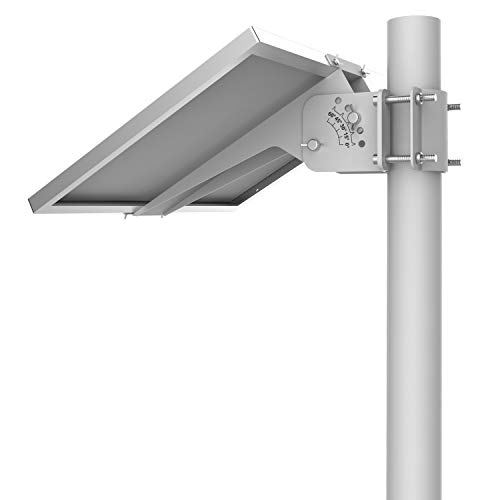
Best for: Pole-based installations on boats or RV decks where you need reliable tilt control. This kit fits poles with a diameter from 1.5″ to 3.0″ (40 mm to 80 mm) and supports tilt angles at 0–60 degrees, enabling flexible sun tracking without tools. It emphasize ergonomic design and weather resistance for harsh marine conditions.
Why selected: It provides a practical, adjustable angle range on a corrosion-resistant pole bracket, suited for temporary or semi-permanent marine deployments where quick repositioning may be needed.
Limitations: Check pole compatibility with your vessel’s existing hardware; not all crossbars or deck fixtures may support this bracket without adapters.
BougeRV Crab Mounting Kit For Roof Racks

Best for: Vehicles with crossbars and roof racks where you want a crossbar-friendly mounting solution for 100–200 watt panels. The crab design clamps to crossbars without drilling, and it’s described as suitable for both permanent and temporary installations. It’s ideal for caravans, boats with roof racks, or overland setups requiring portable solar boosts.
Why selected: Its crossbar compatibility and drill-free installation offer a convenient option for on-the-go sailors who frequently move between locations or need to remove the system for travel.
Limitations: Not compatible with rounded cross bars; verify crossbar dimensions and panel width before purchasing.
Buying Guide: How To Choose The Right Sailboat Solar Panel Mount
- Mounting surface matters. Flat decks, railings, masts, and roof racks each require different mounting styles. Flat-surface mounts are easier to install but may need additional bracing on a moving vessel.
- Panel size and wattage. Match the rail length or mounting arms to your panel dimensions (height, width, and thickness). Larger wattage panels may need longer rails or multiple supports for balance.
- Tilt and orientation. Tilt range affects sun exposure throughout the day and seasons. Consider models with adjustable tilt or fixed angles optimized for your latitude and sailing patterns.
- Weather resistance. Marine environments demand corrosion-resistant materials (aluminum, stainless steel) and UV-stable plastics to endure salt spray and humidity.
- Installation style. Drill-free options are popular for boats and rental vessels, but ensure the chosen kit offers secure attachment without compromising hull integrity or structure.
- Portability and maintenance. If you move installations between boats or RVs, choose clamps or crossbar mounts that are easy to remove and reattach with minimal tools.
- Compatibility checks. Confirm pole diameters, crossbar types (aero, oval, square), and panel dimensions to avoid mounting conflicts.
FAQs
- What type of mounting is best for a sailboat deck? Flat-mount brackets or rail-mounted kits with corrosion-resistant hardware are commonly best for secure, low-profile installation on a deck that experiences motion.
- Can these mounts support 100–200 watt panels? Yes, several kits are designed to support panels in that wattage range, but confirm rail length, tilt range, and panel thickness before purchasing.
- Do I need tools for installation? Some kits are tool-free or tool-light, while others require basic hand tools. Check the product details for assembly requirements.
- Are drill-free options durable on rough seas? Drill-free mounts can be secure if properly braced and fastened to strong surfaces; always follow installation diagrams for best results.
- How do I choose tilt angles for my latitude? A tilt between 20° and 45° is typical for moderate latitudes, while higher latitudes may benefit from steeper angles during peak sun months.
- Can I reuse the same mount on a different vessel? Many crossbar or rail kits are portable, but verify compatibility with new mounting surfaces and rail sizes before transfer.