Choosing the right marine fuel tank vent is essential for preventing pressure buildup, controlling fumes, and keeping contaminants out. This guide highlights five reliable options, explaining who each vent is best for and why it stands out. Ideal buyers include skippers of small to midsize boats, sailboats, and yachts who want corrosion-resistant materials, easy installation, and compatibility with standard 5/8″ hose fittings. The table below summarizes key picks to start your comparison.
| Product | Best For | Key Benefit |
|---|---|---|
| Universal 90° Fuel Vent (316 Stainless) | Boats needing a compact 90° elbow with stainless durability | Solid metal, 316 stainless, mounting gasket included |
| Seachoice Fuel Tank Vent Chrome 5/8 in. | High-corrosion resistance and flame arresting screen | Chrome-plated zinc, flame arresting screen |
| Seachoice Thru Hull Fuel Tank Vent, Chrome Brass | Through-hull installations requiring robust brass | Chrome-plated brass, two vent holes |
| Universal 90° Flush Mount Fuel Vent (316 Stainless) | Flush-mitted installations with 90° elbow | 316 stainless steel, strong, easy to mount |
| EEYAD 316 Stainless Steel Vent | Durable all-stainless option with standard hose | Corrosion-resistant 316 stainless, 5/8″ hose |
Universal 90° Fuel Vent 316 Stainless Steel Marine Grade

This vent uses 316 stainless steel for durability in harsh marine environments. It requires roughly a 1 3/8-inch through-hull or mounting hole and is designed to connect with a 5/8-inch interior diameter hose. The solid metal slab construction provides long-lasting strength, making it a strong option for boats subject to spray and salt exposure. Best for boaters who need a reliable, corrosion-resistant elbow vent that fits standard hose fittings. A potential limitation is the need for precise hole sizing during installation.
Best for: Owners seeking a rugged, stainless vent with a 90-degree orientation for tight spaces. Why selected: It combines stainless durability with a simple mounting setup and standard hose compatibility, reducing installation complexity on deck or near the cockpit.
Caution: Ensure proper sealing around the mounting hole to prevent leaks and verify that the 1 3/8-inch hole matches your hull thickness and mounting gasket requirements.
Seachoice Fuel Tank Vent Chrome 5/8 in.

This vent is chrome-plated zinc with a stainless-steel flame arresting screen to block contaminants while maintaining proper fuel flow. It is designed to fit a 5/8 inch hose and is USCG approved, highlighting compliance with marine standards. Best for: Boat owners who prioritize corrosion resistance and an integrated flame arresting feature for added safety. Limitations: Chrome plating adds a potential surface highlight; ensure compatibility with existing hardware and hull fittings.
Best for: Those who want a chrome-plated vent with an added flame arresting screen for contaminant protection. Why selected: It maintains fuel flow during filling and adds corrosion resistance, making it a practical upgrade for many vessels.
Caution: Ensure proper installation to avoid hose kinks and verify the flame arresting screen remains clean and unobstructed.
Seachoice Thru Hull Fuel Tank Vent

Designed for through-hull venting via a hose (not included), this chrome-plated brass vent provides durable ventilation with a corrosion-resistant finish. It features two vent holes to facilitate balanced airflow. Best for: Boats with through-hull installation needs where brass construction is preferred for its ductility and marine compatibility. Limitation: Requires a separate hose as part of the system, so ensure hose length and routing fit your hull design.
Best for: Through-hull applications needing two vent pathways and brass construction. Why selected: Brass offers strong corrosion resistance and a traditional marine look, suitable for classic or mixed-material hulls.
Important: Check for proper sealing and anti-siphon behavior in your hose routing to maintain safe venting during rough conditions.
Marine Grade 316 Stainless Steel Vent Cowl
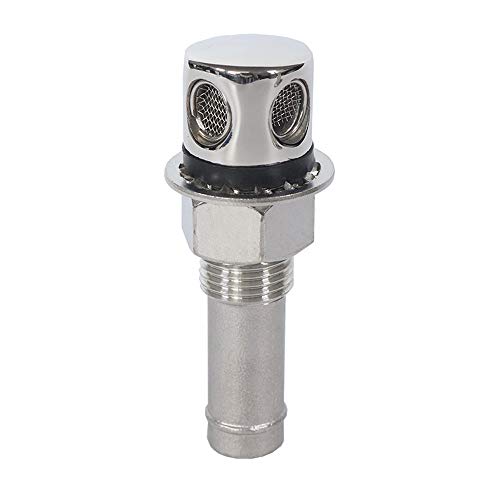
This cowl vent is crafted from 316 stainless steel, offering corrosion resistance suitable for marine use. It requires roughly a 1 3/8-inch hole and is designed to connect with a 5/8-inch interior diameter hose. The left-picture details provide reference for tank fitment and mounting. Best for: Boaters needing a polished, corrosion-resistant vent that coordinates with stainless hardware. Limitation: Data notes refer to left-picture tank sizes, so verify compatibility with your specific vessel’s tank dimensions.
Best for: Stainless steel purists who want a high-grade vent with a clean look. Why selected: 316 stainless ensures longevity against salt spray and humidity while maintaining a standard hose connection.
Caution: Confirm exact hole size and mounting clearance before drilling to avoid misfit or water intrusion.
Buying Guide: How To Choose The Right Marine Fuel Tank Vent
- Material and finish: Stainless steel (316) offers longevity and corrosion resistance; brass provides ductility and classic marine aesthetics; chrome-plated options add a sleek look with corrosion resistance. Choose based on your hull material, environment, and maintenance preference.
- Connection and hose sizing: Most vents use a 5/8 inch interior diameter hose. Confirm your hose size before selecting a vent to ensure a secure, leak-free fit.
- Installation style: Consider straight, 90-degree, or through-hull configurations. Through-hull vents require proper hull piping and may need additional sealing steps or anti-siphon considerations.
- Vent design features: A flame arresting screen or dual vent holes can improve safety and airflow. Ensure the design aligns with your fuel system’s risk profile and maintenance plan.
- Regulatory compliance: Look for USCG or ABYC references if applicable to your boat’s class and operation area. Compliance supports safer, standardized installations.
- Maintenance and accessibility: Opt for vents with easy access for inspection and cleaning. Clear housings and screens help keep airflow unobstructed during routine checks.
Frequently Asked Questions
- What is the standard hose size for marine fuel vents?
Most vents use a 5/8 inch interior diameter hose for compatibility with common marine fittings.
- Why choose stainless steel vents over brass or plastic?
Stainless steel, especially 316 grade, offers superior corrosion resistance in saltwater environments, contributing to longer service life.
- Do vents require a flame arresting feature?
Flame arresting screens help prevent ignition of fumes by blocking flames from the vent outlet, improving safety in some installations.
- Can I install a through-hull vent on any boat?
Through-hull vents require appropriate hull fittings and careful routing. They may need additional sealing and clearance checks to avoid leaks.
- Is a 90-degree vent better than a straight vent?
90-degree vents are advantageous in tight or vertical spaces, while straight vents are simpler to install and service in accessible areas.
- How do I know which vent is best for my boat?
Consider material, mounting style, hose compatibility, and installation space. The best choice balances durability, fit, and maintenance needs.