Answering the demand for reliable, marine-friendly charging, this guide highlights top jet ski battery chargers. These options suit boaters, personal watercraft riders, and RV or trailer-tow enthusiasts who need dependable 12V or 6V charging, maintenance, and desulfation in one package. The selected products balance versatility, temperature compensation, and compact design. Best fits include riders who store their jetskis seasonally, boat owners with multiple batteries, and anyone seeking automatic maintenance to prevent sulfidation and performance drops.
Overview at a glance: the following table lists five recommended jet ski battery charger models, their general use-case, and notable strengths. Use this quick reference to compare purposes like single-battery maintenance, multi-battery charging, onboard mounting, and compatibility with lead-acid and LiFePO4 cells.
| Product | |||
|---|---|---|---|
| NOCO GENIUS5 | 5A Smart Charger | Single-manaque 12V or 6V jetskis and powersports batteries | Higher power, compact size, temperature compensation |
| NOCO GENIUS2 | 2A Smart Charger | Everyday maintenance for 12V lead-acid and LiFePO4 | Versatile, energy-efficient, supports Force Mode |
| NOCO GENIUS2X2 | 4A/Two-Bank Charger | Two batteries simultaneously for boats and jetski setups | Two-bank convenience with balanced charging |
| NOCO GENIUS2D | 2A Onboard Direct-Mount | Under-hood or in-vehicle battery charging for marine use | Direct-mount reliability for tight spaces |
| Battery Tender Plus | 1.25A Maintainer | Seasonal storage for automotive, motorcycle, and small marine batteries | Smart 4-step program with extended warranty |
NOCO GENIUS1: Compact 1A Battery Charger

The GENIUS1 offers a compact solution for 6V and 12V lead-acid and LiFePO4 batteries, including AGM and flooded varieties. Best for small jetskis, personal watercraft with modest charging needs, or as a portable maintainer for trailered setups. It combines charging, maintenance, trickle charging, and desulfation in one unit with overcharge protection and temperature compensation. A potential limitation is its 1A charging rate, which may be slower for larger or deeply discharged batteries.
NOCO GENIUS2: Versatile 2A Charger

GENIUS2 stands out as an all-around option for jet skis and similar marine batteries. It supports both lead-acid and LiFePO4 batteries, including Flooded, Gel, AGM, and marine types. The new Force Mode lets you bypass sensing to recharge deeply discharged or zero-volt batteries. This makes it a strong pick for jetskis stored for long periods or after winterization when you need a reliable waking charge. Limitations include moderate charging speed compared to higher-amp models.
NOCO GENIUS5: 5A Smart Charger
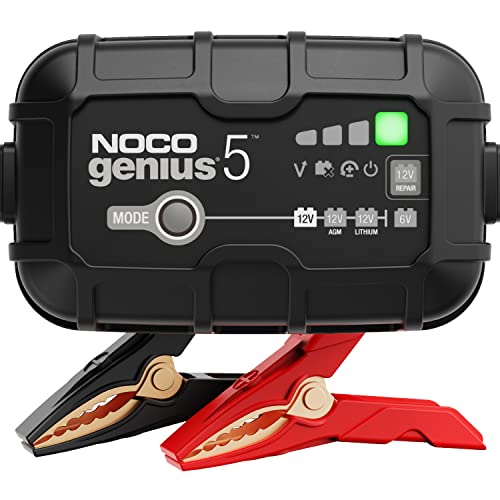
GENIUS5 provides a balanced blend of speed and intelligence for jetskis with larger battery banks or higher maintenance needs. Its 5A output accelerates charging while maintaining safety features like temperature compensation and overcharge protection. Suitable for 6V/12V lead-acid and LiFePO4 batteries, making it a strong choice for frequent storage cycles or multi-battery setups on a single craft. A note: its higher capacity may be unnecessary for smaller batteries and could be overkill for minimal maintenance tasks.
NOCO GENIUS2D: Onboard 2A Charger
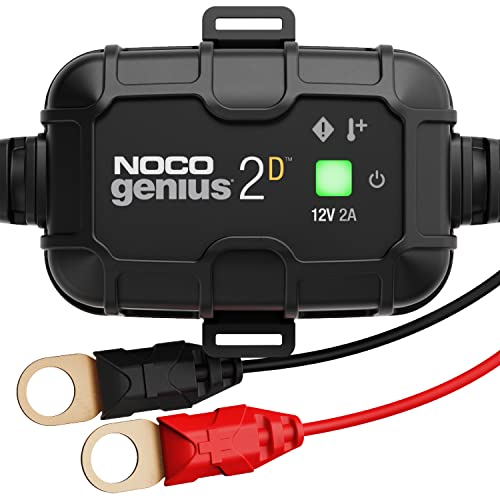
GENIUS2D is designed for direct mounting near the battery, ideal for jetskis with limited space or riders who want a clean, integrated charging setup on their vessel or trailer. It supports 12V lead-acid batteries, including AGM and flooded types. Best for installations where a rugged, space-saving solution is prioritized. Limitations include the need for mounting and potential compatibility checks with the mounting surface or hull hardware.
Corebox 6-Amp 12V Smart Charger

Corebox offers a 6A, 12V charging profile with seven-stage charging that includes desulfation and temperature compensation. It targets a broad range of 12V lead-acid batteries, including AGM, Gel, and Flooded variants, making it suitable for jetskis, boats, and other marine equipment. Better for users who want robust desulfation and quick restoration of older batteries. A limitation is that it may be more feature-rich than some casual users require and could be heavier for ultra-portable needs.
NOCO GENIUS2X2: Dual-Bank Charging

GENIUS2X2 is designed for two batteries in parallel or separate banks. This is advantageous for jetskis with dual battery setups or for those who need to manage two batteries in a single craft or while towing. It delivers 4A total (2A per bank) and includes temperature compensation and overcharge protection. Choose this if you operate multiple batteries and want synchronized maintenance. Limitation: more complex wiring and mounting considerations in tight compartments could apply.
Buying Guide: Jet Ski Battery Charger Essentials
- Battery type compatibility: Ensure the charger supports Lead-Acid (AGM, Flooded, Gel) and LiFePO4 where needed. Marine jetskis often use AGM or flooded lead-acid; LiFePO4 is growing in popularity for lighter weight and longer life.
- Output current: For smaller jetskis, 1–2A units keep batteries healthy without overcharging. For larger or dual-battery setups, 4–5A or dual-bank chargers improve maintenance speed and convenience.
- Temperature compensation: Chargers with this feature prevent overcharging in heat and undercharging in cold, essential for outdoor marinas and variable climates.
- Maintenance vs. charging: Distinguish between a pure trickle charger and a maintenance charger. Maintenance models automatically switch to float mode to sustain battery health during storage.
- Mounting and space: For boats or jet skis with limited space, onboard or direct-mount chargers reduce clutter. For portable use, compact wall-mounted units work well with trailers.
- Multi-battery support: If your jetski has dual batteries or you own a small craft with multiple marine batteries, consider two-bank or dual-bank chargers for synchronized charging.
- Safety features: Look for overcharge protection, reverse polarity protection, and short-circuit safety. These features protect both the battery and the charger during use.
Practical buyer questions
- Do I need a LiFePO4-compatible charger for my jet ski? If you use LiFePO4 batteries, yes. Many NOCO models cover LiFePO4 along with lead-acid types.
- Is a higher amperage charger always better for jetskis? Not necessarily. Smaller batteries benefit from 1–2A maintenance chargers; larger or dual-battery setups benefit from 4–5A or two-bank options.
- Can I mount a charger onboard my jet ski? Onboard, direct-mount models save space and streamline wiring, but require proper installation access near the battery.
- What about cold-weather storage? Chargers with temperature compensation and a float/maintenance mode help preserve battery health during storage in cold climates.
- Should I use a desulfator feature? Desulfation helps recover sulfated lead-acid batteries. Use it if your battery shows hard-start symptoms or prior sulfation issues, but not all batteries need it.
- Are two-bank chargers better for my jetski? If you regularly store or operate higher-capacity batteries, two-bank charging saves time and maintains both banks evenly.
FAQ
- What is the main benefit of a smart charger for jetskis? It adjusts charging based on battery needs and ambient temperature, preventing damage from overcharging or undercharging.
- Can I use a car battery charger for my jet ski? Not ideal. Jet skis typically use smaller 12V sealed batteries; choose a charger designed for 12V marine batteries or LiFePO4 if applicable.
- How often should I charge my jetski battery during storage? A maintenance charger can keep the battery healthy during long storage; aim for monthly checks or continuous float charging per device design.
- What maintenance steps accompany charging? Inspect battery terminals for corrosion, secure cable connections, and ensure proper ventilation to avoid fumes and heat buildup.
- Is four-stage charging important? Yes, it optimizes charging status, extends battery life, and reduces sulfation risk compared to simple two-step charging.