Answering the buyer’s search for a deep-V RC boat, these selections emphasize self-righting designs, high-speed brushless power, and ready-to-run convenience. Each option targets different user needs—from beginners who want stability to hobbyists seeking top speed and advanced control. The table below highlights the five featured boats for quick comparison.
| Product | Best For | Key Benefit |
|---|---|---|
| Pro Boat Sonicwake V2 36″ | Beginner to intermediate; stable deep-V with self-righting | Self-righting hull and reliable Spektrum radio |
| Pro Boat Recoil 2 18″ | Compact, entry-level performance | Deep-V styling with proven self-righting |
| Pro Boat Sonicwake 24″ | Smaller size, fast and easy handling | Self-righting with strong brushless power |
| DEERC Fast 30+ MPH | Budget-friendly speed racer | Self-righting and bright LED visibility |
| Cheerwing 25″ | Family-friendly pool and outdoor racing | Brushless motor with water cooling and self-righting |
Pro Boat Sonicwake V2 36″ Self-Righting Brushless Deep-V RTR

The Sonicwake V2 36″ is a deep-V, self-righting model designed for stable, high-speed runs. This RTR (ready-to-run) boat emphasizes ease of use with established radio control compatibility and a durable hull. Best for hobbyists who want a larger, more forgiving platform that transitions smoothly from slower practice to faster races. The included features support confident handling in varied water conditions.
Who it’s best for: intermediate to advanced hobbyists seeking a larger deep-V with dependable self-righting and a capable control system. Why selected: its size, stability, and proven radio setup make it a balanced choice for enthusiasts upgrading from smaller models. Limitation: batteries and charger are not included, so you’ll need compatible power packs to maximize runs.
Pro Boat Recoil 2 18″ Brushless Deep-V RTR

The Recoil 2 features an aggressive deep-V profile paired with brushless power for quick acceleration and high speeds, all in a compact 18″ package. It comes as an RTR model, ready to run with essential electronics in place. Best for drivers who want a nimble, high-performance boat suited to pool and calm-water lakes. It is chosen for its blend of compact footprint and strong, self-righting performance.
Who it’s best for: beginners who want a small but capable deep-V, or casual racers seeking a portable option. Why selected: proven self-righting capability paired with high-speed brushless power. Limitation: battery and charger are not included; plan for a compatible LiPo setup to avoid underpowering the boat.
Pro Boat Sonicwake 24″ Self-Righting Brushless Deep-V RTR

This 24″ Sonicwake model offers self-righting reliability with a potent brushless power system, paired with an easy-to-use RTR package. It’s best for pilots who want a mid-sized deep-V that’s quick to set up and forgiving in rough water. The SSL (Strap, Slide, Lock) battery installation simplifies maintenance during sessions.
Who it’s best for: users who want a balance between size and performance without adding complexity. Why selected: strong self-righting feature and practical battery installation. Limitation: specific battery type and charger may be required to fully leverage the SSL system.
Cheerwing 25″ RC Brushless 30 MPH Deep-V
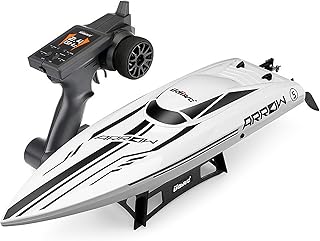
Cheerwing’s 25″ RC boat brings a budget-friendly option with a high-speed brushless motor and water-cooling for longer service life. It features a self-righting hull design to recover quickly after capsizing. Best for casual pool or lake racing without a large upfront investment. It’s selected for value and its capsize recovery capability, making it accessible for newer drivers.
Who it’s best for: families or hobbyists starting out who want reliable performance without premium cost. Why selected: strong power-to-price ratio and practical cooling design. Limitation: motor and control system are solid, but it may not have the same long-term durability as higher-end models in heavy-use scenarios.
Buying Guide: Deep-V RC Boats
What to consider when choosing a deep-V RC boat
- Self-righting capability: Prioritize boats marketed as self-righting or with proven recovery designs for easier handling after a tip.
- Hull size and stability: Larger boats offer smoother tracking in wind and wake but require more space for storage and operation.
- Motor type: Brushless motors deliver higher speeds and better efficiency, but may require more power management and appropriate batteries.
- Radio system compatibility: Ensure the included or compatible radio system provides reliable range and responsiveness for racing or open-water use.
- Battery and charger: Some RTRs exclude power accessories; confirm what’s included and plan for a suitable LiPo pack and charger.
- Usage environment: Pools, lakes, and ponds each impose different speed, wind, and surface conditions; match the boat size and power to typical environments.
Frequently Asked Questions
- What is a deep-V RC boat? A deep-V RC boat uses a deep V-shaped hull designed for stability and planing at speed, especially in choppy water.
- Do all deep-V boats come with self-righting? Not all, but many models use self-righting designs as a feature to improve recoveries after capsizing.
- Are RTR boats ready-to-run? Yes, RTR models come with most electronics installed; confirm battery and charger inclusion before purchase.
- What should I pair with an RTR boat? A suitable LiPo battery and compatible charger, plus a basic toolkit for maintenance and quick repairs.
- Which size is best for beginners? Smaller boats (around 18–24 inches) are typically easier to manage in pools and calm waters.
- What maintenance is needed for brushless systems? Regular inspection of propellers, water cooling, and battery connections helps ensure longevity and performance.