Choosing the right bilge pump speed controller helps protect pumps, extend life, and tailor performance to vessel needs. This guide highlights five top options suited for 12V to 60V DC bilge pumps, explains who each is best for, and flags key limitations. Ideal buyers include DIY boaters seeking adjustable flow, small workshop projects, or inline control for water removal on boats, docks, or kayaks. Below, a quick summary table profiles the recommended products for fast comparison.
| Product | ||||
|---|---|---|---|---|
| Hosyond PWM DC Motor Speed Controller | 7–70V | 30A | General purpose bilge pumping with braking capability | Includes a 30A fuse; standard 15 cm pot cable |
| RioRand 7–70V PWM Controller | 7–70V | 30A | DIY projects requiring reliable duty-cycle control | Heat and margin considerations; loaded measurements advised |
| EPLZON DC Motor Speed Controller | 12–60V | 20A (continuous) | Compact installations with forward/stop/reverse control | Soft-start feature; ensure mounting fits small spaces |
| PEMENOL PWM Motor Driver | 5–24V | ≤15A | Low-voltage, compact projects with soft-start | Not suitable for higher current heavy bilge pumps |
| matell DC 12–60V 20A Controller | 12–60V | 20A | Forward/Reverse operation in tight spaces | Basic feature set; verify wiring for reversible operation |
Hosyond PWM DC Motor Speed Controller

The Hosyond model supports a wide voltage range (7–70V) and up to 30A, making it suitable for many bilge pump setups. Its board includes a run/stop/brake function, which can simplify emergency handling. A 30A fuse provides motor protection against short circuits, and a detachable potentiometer cable (about 15 cm) adds installation flexibility. Best for: boaters needing adjustable speed and braking capability in a mid-range controller. Caution: ensure the fuse rating matches your pump’s peak current to prevent nuisance blows.
RioRand 7–70V PWM DC Motor Speed Controller

RioRand provides a broad 7–70V range with a 30A capability, and claims 1%–100% duty cycle at 12 kHz PWM. Built for brushed DC motors, it emphasizes low heat and a rugged aluminum housing, with an extra fuse for backup. Best for: DIY robotics or small ships projects where steady voltage under load is important. Avoid if you need brushless motor compatibility or very high continuous load beyond 450W at 60V.
EC Buying ZK-BMG DC Motor Speed Controller

EC Buying’s ZK-BMG module handles 9–60V and up to 20A, with a 1 KHz–99 KHz adjustable frequency range and 0–100% duty cycle. It features a digital display for duty cycle, frequency, and limits, plus a knob operation for easy adjustments. Best for: users who want clear real-time feedback while tuning motor speed. Caution: ensure the device is mounted securely to avoid vibration affecting the display or wiring.
PEMENOL DC 5V-24V Motor Speed Controller
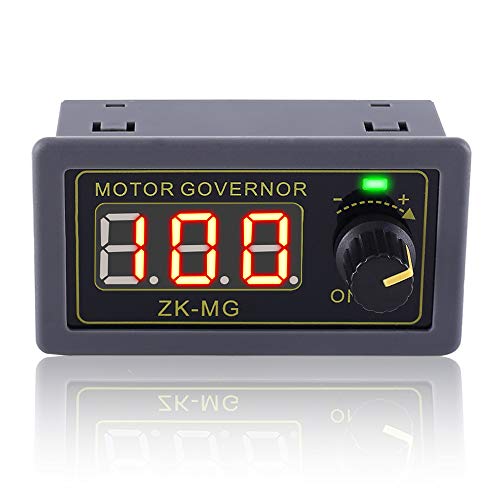
PEMENOL offers a compact driver for 5–24V systems with up to 15A and a soft-start function. It saves parameters after power-off, which helps maintain settings between uses. Best for: portable bilge pump installations where space is limited and soft-start reduces motor stress. Caution: verify your pump current won’t exceed the module’s 15A continuous rating.
Automatic Submersible Bilge Pump with Float Switch (MAXZONE)

MAXZONE’s 12V bilge pump is a compact, auto-relief option with a built-in float switch and a 1-1/8″ (29 mm) outlet. It’s designed for automatic operation and continuous pumping in small boats and yacht compartments. Best for: vessels needing a plug-and-play solution with reliable automatic activation. Caution: internal float switch wiring should be checked for compatibility with your controller to avoid mis-triggering.
Acogedor DC 12–60V Motor Speed Controller
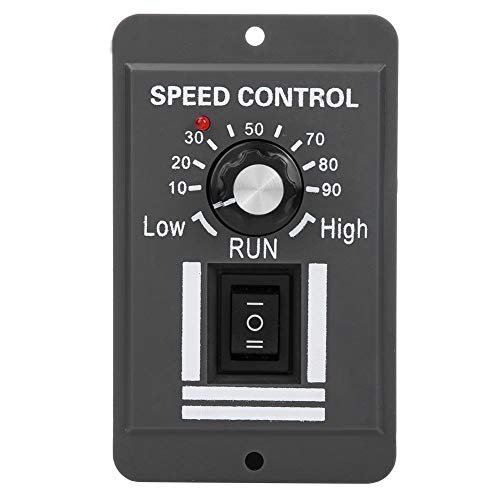
Acogedor’s controller covers 12–60V with forward/stop/reverse functions, aiming for flexible operation in compact spaces. It emphasizes high-quality electronics and ease of installation. Best for: users who need reversible motor control in tight bilge pump installations. Caution: reverse wiring and compatibility with your pump’s impeller should be reviewed to avoid motor stress.
Buying Guide: Key Purchase Considerations
- Voltage Range and Current Rating: Match the controller to your bilge pump’s voltage and peak current. Choose a model with some headroom to prevent overloading.
- Control Features: Consider forward/stop/reverse, soft-start, and load protection. Soft-start reduces inrush and prolongs motor life; a brake or stop function can improve safety in pumping tasks.
- Installation Fit: Check enclosure size and mounting hole patterns to fit spatial constraints on a boat or dock box. Compact units may be easier to hide but harder to wire securely.
- Feedback and Indication: Some models include digital displays or indicator LEDs. Real-time feedback helps with precise tuning, especially in DIY or engineering projects.
- Protection and Safety: Fuses, anti-reverse wiring, and thermal considerations protect both controller and pump. Ensure compatibility with marine environments if used on boats.
- Wiring Practices: Use appropriate gauge cables for the current, secure connections, and proper insulation to withstand moisture and vibration.
FAQ
- Q: What is a bilge pump speed controller used for? A: It regulates pump speed to match water removal needs and reduces electrical load during operation.
- Q: Do I need a high-current controller for all bilge pumps? A: Not always; choose a controller whose continuous current rating covers the pump’s running current with some margin for startup.
- Q: Can I use any PWM controller with a bilge pump? A: Most brushed DC bilge pumps work with PWM controllers, but check compatibility for voltage range and current handling.
- Q: What about protection features? A: Fuses, overload protection, and soft-start features help protect both the pump and controller during operation.
- Q: Is soft-start important for bilge pumps? A: Yes; soft-start reduces inrush current, minimizes electrical noise, and extends motor life in demanding environments.
- Q: How should I wire a speed controller to a bilge pump? A: Connect power to the controller input, motor output to the pump, and ensure correct polarity. Follow the manufacturer’s wiring diagram for best results.