Choosing the right full synthetic marine oil helps protect engine components, extend service intervals, and reduce wear in harsh marine environments. This guide highlights five top options, explains who each product suits best, and compares key features to aid a confident purchase decision for boaters, racers, and commercial operators alike. The selections favor oils designed for 4-stroke inboards, outboards, and personal watercraft, with emphasis on corrosion protection, stability, and high-temperature performance.
Liqui Moly Marine PWC Oil SAE 10W-40

Liqui Moly Marine PWC Oil 10W-40 is a full synthetic 4-stroke marine oil designed for personal watercraft and similar performance engines. It emphasizes excellent corrosion protection, outstanding engine cleanliness, and optimum lubrication under a broad operating range. Best for high-load PWC usage and mid- to high-temperature conditions where cleanliness and corrosion resistance are priorities. A potential limitation is reliance on synthetic formulation that may require drainage intervals aligned with high-heat racing or continuous heavy use.
TRIAX Marine Ultra 10W-30 Full Synthetic

TRIAX Marine Ultra 10W-30 Full Synthetic is formulated for NMMA FC-W four-stroke engines across inboards, outboards, and personal watercraft. It offers a true full synthetic formulation that can extend life and protection under heavy loads, including supercharged marine engines. It’s well suited for high-mileage or demanding operation. Choose this if you need strong protection across varied marine OEMs and want long-life performance; a potential caveat is its specific formulation aimed at FC-W engines, which may limit compatibility with non-FC-W engines.
Valvoline 4-Stroke Marine Full Synthetic Engine Oil 1 Gallon

Valvoline’s 4-Stroke Marine Full Synthetic is designed to meet the heat and RPM demands of marine engines. It emphasizes stronger wear protection and rust defense for running or stored engines, aligning with boats that sit idle or endure high-temperature operation. Best for engines that face moisture exposure and extreme operating heat. Consider this option if you need robust rust protection and wear resistance; note that some users may require matching the oil’s viscosity to specific engine manufacturer recommendations.
Quicksilver 25W-40 4-Stroke Synthetic Blend

Quicksilver 25W-40 is a synthetic blend formulated for 4-stroke marine engines, serving as a direct replacement for Mercury Marine 8M0078630 in certain setups. It provides corrosion resistance and wear protection at high RPMs and is a practical option for engines that require a robust blend without full synthetic requirements. Best for owners seeking a reliable, OEM-aligned option for high-speed outboards; better for engines that tolerate slightly heavier viscosity in hotter climates but may be less ideal for ultra-long oil life decisions in mild conditions.
Quicksilver 10W-40 4-Stroke Marine Oil

Quicksilver 10W-40 is designed for a broad range of 4-stroke marine outboards and inboards, offering corrosion protection and wear resistance under high RPM operation. Choose this when you need dependable protection across a wide temperature range and want a single oil that works in multiple engine configurations. A limitation is that viscosity may be higher than lighter-year models in cooler climates, potentially impacting cold-start performance in very cold waters.
Valvoline 4-Stroke Marine Full Synthetic Engine Oil 1 Quart

Valvoline’s 1-Quart option focuses on high-performance needs for a range of 4-stroke marine motors, with emphasis on wear protection and rust defense. It is suited for boaters who perform frequent engine maintenance and store their vessels in humid environments. Better for owners who prefer a compact oil size for top-offs or smaller engines; avoid this if you operate engines that require a higher oil capacity or longer drain intervals in high-stress conditions.
LIQUI MOLY Marine 4T Motor Oil SAE 10W-40
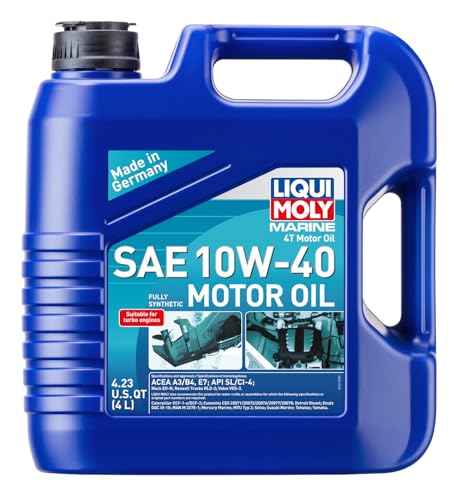
Liqui Moly Marine 4T 10W-40 emphasizes rapid oil penetration, strong corrosion protection, and aging stability. It’s a practical choice for boats facing fluctuating operating conditions, including seasonal storage and varied temperatures. Best for engines requiring reliable startup lubrication after periods of inactivity; a limit is that some marine operators may prefer higher-viscosity options in extreme heat or heavy-load cycles.
TRIAX Marine Ultra 25W-40 Full Synthetic

TRIAX Marine Ultra 25W-40 Full Synthetic is designed for FC-W 4-stroke engines that require higher viscosity. It suits all inboard, outboard, and personal watercraft with heavy-load applications and long hours. It provides extended life and protection compared to conventional oils, and is compatible with major OEMs like Kawasaki, Volvo, Mercury, and Yamaha. Choose this if you operate hotter climates or high-RPM engines; avoid if your engine calls for lighter 10W-30 or 10W-40 formulations for cold-start efficiency in cooler waters.
Buying Guide
- Most 4-stroke marine engines run well on 10W-40 or 25W-40, but some require 20W-50 in extreme heat or high-load conditions. Check the manufacturer’s specification for your engine.
- Full synthetic oils offer better protection under high-temperature and high-load conditions, while synthetic blends can provide a balance of price and protection.
- Marine environments promote rust; look for oils with robust rust defense and moisture tolerance, especially if your vessel spends time in saltwater or humid storage.
- Some brands target specific OEMs; align your oil with the recommended OEM specification to avoid warranty or performance issues.
- Oils with longer life can reduce maintenance frequency, but always follow the engine’s drain intervals and oil-change recommendations for reliability.
- In cold climates, lighter grades improve startup, while hotter climates may benefit from heavier grades to maintain film strength.
FAQ
- Use the viscosity and specification recommended by your engine’s manufacturer, typically 10W-40 or 25W-40 for many 4-stroke marine engines. Full synthetic formulations offer enhanced protection in harsh conditions.
- Full synthetic oils generally provide superior protection against heat and wear, though synthetic blends can be a cost-effective compromise.
- It’s best to avoid mixing brands; use a single product that matches the engine requirements and stay consistent to maintain additive balance.
- follow the engine manufacturer’s recommended intervals, considering usage patterns such as high-speed operation or long idle periods.
- It reduces rust on internal components caused by moisture exposure, extending engine life in saltwater and humid environments.
- Not always; verify compatibility with your engine’s OEM, especially for high-performance or supercharged models.
| Product | Best For | Viscosity | Key Benefit |
|---|---|---|---|
| Liqui Moly Marine PWC Oil 10W-40 | Personal watercraft, high-load PWC | 10W-40 | Excellent corrosion protection and engine cleanliness |
| TRIAX Marine Ultra 10W-30 | Inboards, outboards, FC-W engines | 10W-30 | Long life, high-load protection across OEMs |
| Valvoline 4-Stroke Marine Full Synthetic | Marine engines facing heat and rust risk | 10W-40 or similar | Strong wear and rust defense |
| Quicksilver 25W-40 Synthetic Blend | High RPM 4-stroke engines | 25W-40 | Corrosion resistance and OEM compatibility |
| Quicksilver 10W-40 4-Stroke | Broad 4-stroke marine motors | 10W-40 | Corrosion protection and wear resistance |
Notes on Selection
Each oil listed targets a different set of engine configurations and operating conditions. When selecting, prioritize the engine’s official viscosity and specification requirements, the typical operating environment (saltwater, heat, humidity), and the desired maintenance cadence. The goal is sustained protection, clean internals, and consistent performance across seasonal changes.