Finding the right heat exchanger for a boat depends on your vessel size, existing heating or cooling system, and whether you prioritize energy efficiency, space, or durability in harsh marine environments. The following five products are selected for diverse boating needs—from retrofit heating to onboard engine cooling—so you can compare options side by side. This guide highlights who each product is best for and why, plus practical cautions to consider before you buy.
| Product | Best For | Key Benefit |
|---|---|---|
| GPOAS 20×20 Heat Exchanger | Small to mid-size boats needing compact, durable water-to-air heat exchange | High-pressure, temperature-resistant copper tubes and 306 steel housing |
| Marine Engine Water Cooler (Titanium Exchanger) | Direct engine cooling on saltwater vessels | Premium titanium exchanger with corrosion resistance |
| AB Plate Exchanger 4×12 (Copper/SS316L) | High-efficiency water-to-water heating or cooling on larger boats | brazed plates for strong heat transfer and compact form |
| Whale S600 Water Heater | Onboard hot water supply for boats needing reliable 6 gal capacity | Rear heat exchanger design, rugged construction |
| Kuuma 11810 6-Gallon Water Heater | Compact marine water heating with efficient heat exchange | Marine aluminum tank and efficient heat exchanger |
GPOAS 20×20 Heat Exchanger Water To Air

This water-to-air heat exchanger is designed for compact spaces on a boat or small cabin system. It uses a 20×20 steel shell with 12 fins per inch and three rows of 3/8″ copper tubes to maximize heat transfer. The unit is base brazed at edges and contact points for strong performance under high pressure and temperature. It’s best for boaters seeking a sturdy, low-maintenance option that can be slid into a plenum without extra tools.
Best for: small to mid-size boats where space is at a premium and a robust water-to-air transfer is desired. Why selected: durable construction, simple installation process, and good heat transfer characteristics without additional power use.
Caution: ensure your plenum and ducting can accommodate any size increase and verify compatible fittings for your system. The product emphasizes energy-saving heat transfer but does not include integrated power components.
Marine Engine Water Cooler (Titanium Exchanger)
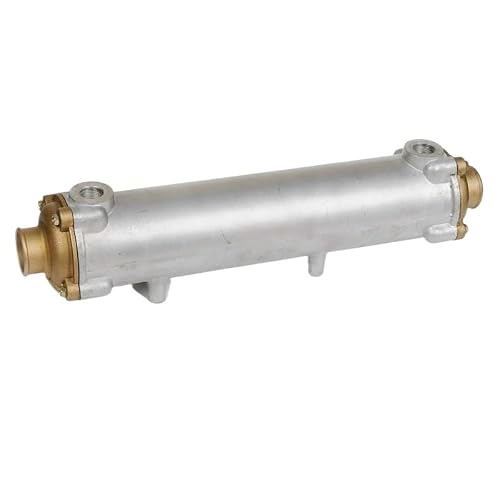
This marine water cooler uses a premium titanium heat exchanger to deliver efficient, stable heat transfer while maintaining engine temperatures in demanding marine conditions. The heavy-duty cast iron construction provides structural strength and corrosion resistance suitable for saltwater environments. It handles high-temperature exposure, with a resistance up to 105°C, helping protect engine performance under tough operating conditions.
Best for: diesel or high-load marine engines requiring reliable heat dissipation in harsh seas. Why selected: corrosion resistance, strong temperature tolerance, and compatibility with demanding engine cooling needs.
Caution: titanium exchangers can be more expensive and may require specialized fittings or mounting considerations on older boat builds.
AB Plate Exchanger, 4″x12″ 30 Plates

This plate heat exchanger is built from high-quality 316L stainless steel with 99.9% copper brazed at the edges to maximize leakage resistance and durability under high pressure and temperature. With 30 plates and a 4″x12″ footprint, it offers strong heating or cooling performance without requiring electricity. The smooth thread connections simplify installation, making it a practical option for boatowners seeking efficient, compact heat transfer between water loops.
Best for: systems needing compact, high-capacity water-to-water heat exchange on larger boats. Why selected: strong construction, high heat transfer potential, and flexible connections. Caution: ensure the system pressure stays within the exchanger’s design range to prevent leaks over time.
AB Pool Heat Exchanger 155kBtu Stainless Steel

Although marketed for pools, this stainless steel 316L unit is suitable for boat systems needing large heating or pool-spa style heat exchange capabilities. It has a high heat transfer capacity (250,000–330,000 BTU per hour, 30 plates) and corrosion resistance, with ports sized for standard FPT connections. It’s best for boats with high hot-water demand or integrated spa features on longer voyages. Caution: pool-oriented design means you should assess compatibility with marine heating fluids and chemistry; ensure proper sealing for saltwater use.
Kuuma 11810 6-Gallon Water Heater
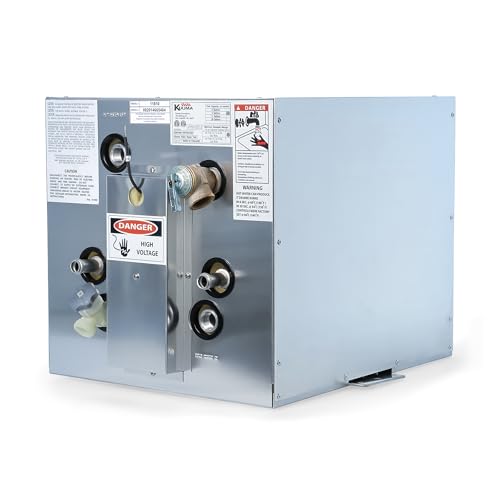
This marine water heater supplies a steady 6-gallon hot-water reserve for boats. It operates at 120V, 60Hz, 1500W, providing consistent onboard hot water with an efficient heat exchanger inside the tank. The aluminum construction is light for marine use, balancing capacity with space on relatively small vessels. Best for: boaters needing dependable hot water with moderate energy use. Why selected: proven form factor for small to mid-sized boats with straightforward electrical requirements.
Caution: check electrical system capacity and shore power availability; higher energy use may impact overall electrical load on vessels with limited power resources.
Buying Guide: Key Purchase Considerations
- Application type: Choose water-to-air if you want space heating via air ducts, or water-to-water for direct heating or cooling between loops. Determine whether you need onboard hot water, engine cooling, or cabin heating.
- Material and corrosion resistance: Stainless steel and copper alloys are common for marine use. Titanium exchangers offer exceptional saltwater resistance but can be more costly. AB units with 316L stainless steel plates provide robust corrosion resistance and high pressure tolerance.
- Capacity and size: Match BTU/h requirements to your vessel size and desired comfort level. Larger boats or spa-equipped decks require higher capacity units. Check physical dimensions to ensure a proper fit in the engine room, cabin, or mechanical area.
- Installation and fittings: Look for units with easy installation features such as base brazed joints, smooth-thread connections, and MNPT ports. Consider available space for plenum integration if choosing a water-to-air model.
- Power and energy use: Water-to-air and water-to-water systems differ in energy needs. If you rely on shore power, ensure your electrical system can handle the heater’s load. Some options provide energy-efficient heat transfer with minimal draw on electrical systems.
- Maintenance and durability: Seek corrosion-resistant housings, robust seals, and straightforward service access. Marine environments demand components designed for salt, humidity, and vibration.
- Suitability for marine fluids: Ensure the exchanger is compatible with the fluids used in your system (antifreeze, saltwater, freshwater) and with any onboard chemical treatments.
FAQ
- What should I consider when choosing a heat exchanger for a boat? Consider vessel size, heating or cooling needs, space constraints, corrosion resistance, and electrical power availability.
- Is a titanium heat exchanger worth it for marine use? Titanium offers excellent corrosion resistance in saltwater environments, but cost and compatibility with existing plumbing should be evaluated.
- Can I retrofit a heat exchanger into an existing boat system? Yes, but verify port sizes, flow rates, and mounting space. Some units have standard MNPT ports for easier integration.
- Do I need to bypass a heat exchanger in summer? A cooling-focused exchanger may be used as part of a summer cooling loop; verify compatibility with your climate and cooling strategy.
- What maintenance is required? Regular inspection for leaks, checking seals, and ensuring clean fins or plates is recommended to maintain efficiency and prevent corrosion.
- How do I choose between water-to-air and water-to-water? Water-to-air is ideal for cabin heating via ducts, while water-to-water is often the most efficient for direct heating or cooling within the boat’s system.